Pentagon’s decades-long quest for powered exoskeletons falls short of Iron Man vision
The U.S. military has spent decades trying to build powered exoskeletons inspired by science fiction, but the systems that actually work are far simpler than the Iron Man suits once imagined.
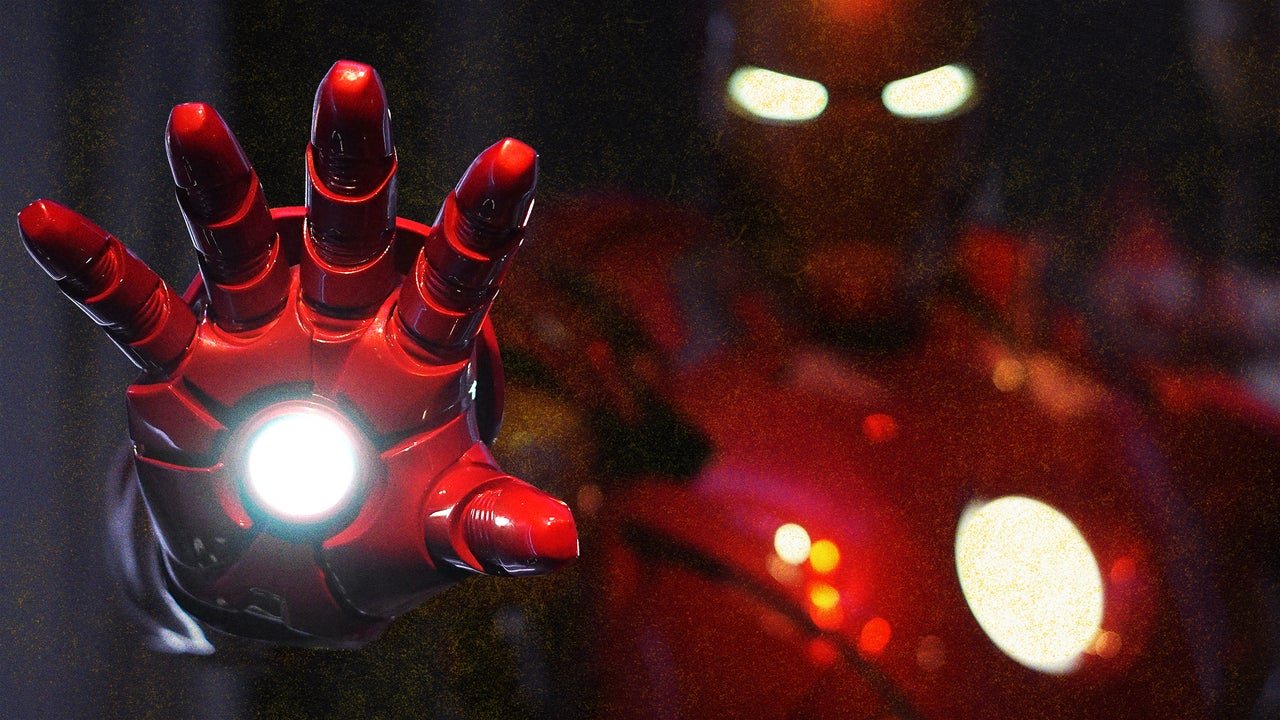
The U.S. military’s decades-long pursuit of a powered exoskeleton that would turn soldiers into superhuman warriors has repeatedly fallen short of the science-fiction vision that inspired it. From Robert Heinlein’s 1959 novel Starship Troopers to Marvel’s Iron Man, the dream of a suit that makes its wearer faster, stronger, and nearly invulnerable has driven defense research for more than 60 years — yet the systems that have actually reached the field are far more modest than the fantasy.
The quest began almost immediately after Starship Troopers was published, when the Defense Department solicited the defense industry for a real “servo-soldier” wrapped in powered armor. The idea was older still: the first U.S. patent for a spring-powered exosuit was granted to Russian engineer Nicholas Yagn in 1890, and an American inventor named Leslie Kelly patented a steam-powered “running device” in 1919. In 1951, Serge J. Zaroodny of the U.S. Army’s Ballistic Research Laboratory began investigating biomechanical augmentation, producing a 1963 report on a pneumatically powered prototype that wearable robotics pioneers Aaron Dollar and Hugh Herr later described as possibly the first powered performance-augmenting exoskeleton ever created.
Zaroodny could not secure Pentagon funding, but his work identified challenges that would haunt every subsequent effort: portable power supply and the human-machine interface. Those problems proved insurmountable for the ambitious projects that followed. General Electric’s “Hardiman” suit, developed in the 1960s under a joint Army-Navy program, was designed to let a soldier haul 1,000 pounds across rough terrain. Instead, the hydromechanical system could not move faster than two miles per hour and suffered from what testers called “violent and uncontrollable motion by the machine,” according to a 1971 report. In the 1980s, Los Alamos National Laboratory engineer Jeffrey Moore proposed the “Pitman suit,” but it never advanced beyond a concept.
In 2001, the Defense Advanced Research Projects Agency awarded $50 million to the Berkeley Robotics and Human Engineering Laboratory and Sarcos Research Corp. under its Exoskeletons for Human Performance Augmentation program. Lockheed Martin later licensed the Berkeley Lower Extremity Exoskeleton and developed it into the Human Universal Load Carrier, or HULC, a hydraulic system that let operators carry up to 200 pounds with minimal effort. Sarcos, acquired by Raytheon in 2007, showcased a full-body Guardian XO exosuit for industrial use in 2020. Neither system proved suitable for field operations, let alone combat.
The most recent high-profile attempt was the Tactical Assault Light Operator Suit, or TALOS, launched by U.S. Special Operations Command in 2013. Known colloquially as the “Iron Man suit,” it was meant to produce an armor-plated super soldier capable of withstanding direct small-arms fire. More than 100 companies and universities participated over five years, but in early 2019 the command confirmed it had no intention of fielding the prototype beyond a demonstration. A spokesman said the suit was collecting dust in a box.
TALOS failed, its overseers concluded, because of “complex subsystem interdependencies” — too many disparate systems that could not operate seamlessly together in a way that felt natural to the wearer. That diagnosis echoed the fundamental problem identified by Zaroodny decades earlier. The powered, performance-enhancing exoskeleton that Heinlein imagined as “like your clothes, like skin” remains out of reach, and the Pentagon’s experience suggests that the simpler, unpowered systems already in use may be the realistic endpoint of a vision that proved far easier to imagine than to engineer.
91