Republicans Brace for Midterm Wipeout as Blame Game Begins
With weeks until Election Day, Republican strategists are privately preparing to assign blame for an expected defeat, with President Trump emerging as the central target of recriminations.
Republican strategists are quietly preparing for the possibility of a devastating midterm defeat, and they are already rehearsing who will take the blame if their worst fears materialize. With just weeks remaining before Election Day, Democratic strategists are feeling confident while Republicans range from uneasy to despondent, according to political analyst Mark Halperin.
The recriminations have already begun in private conversations with select audiences, including reporters. Two parallel campaigns are now underway on the Republican side: one to win the election, and another to win the argument about why it was lost. The simplest explanation, and the hardest to refute, points directly to President Trump.
One man controls the party, and his name is Trump. His advisers can recommend a message, a schedule, a spending plan, or a period of silence, but they cannot guarantee he will follow through. A Republican wipeout would therefore produce a comprehensive indictment of the president — his unpopularity, his indiscipline, his economic decisions, his foreign entanglements, his family's enrichment, and his apparently inexhaustible interest in attaching his name to things.
The defense from staff will be that they could not control him. The prosecution's response will be that taking responsibility for the consequences of not managing him properly was rather prominently included in the job description.
There had been a plausible Republican case for optimism late last year. Democrats were divided, the Senate map was favorable, and a novel mid-decade redistricting plan seemed to be working. Republicans hoped voters would tolerate an economic mixed bag if promised benefits began arriving. Instead, a voter worried about groceries sees a president worried about building names. A family falling behind on retirement savings hears about a ballroom. A young adult unable to afford a house watches the president's family make deals.
Each story supplies the caption for the next one. The political damage requires voters to conclude that the president is spending more time on his surroundings than on theirs. «Why is he focused on a Washington arts building instead of my wallet?» is a question no Republican media buyer can answer with another video invoking Zohran Mamdani or AOC.
The Iran conflict compounds the problem: higher energy costs, another foreign war that seems to be taking forever, and a president who campaigned on avoiding precisely that sort of entanglement. Trump's cheerleading for AI and data centers is also hurting Republicans, alienating voters who see higher electric bills and threats to their jobs where he sees a glorious future.
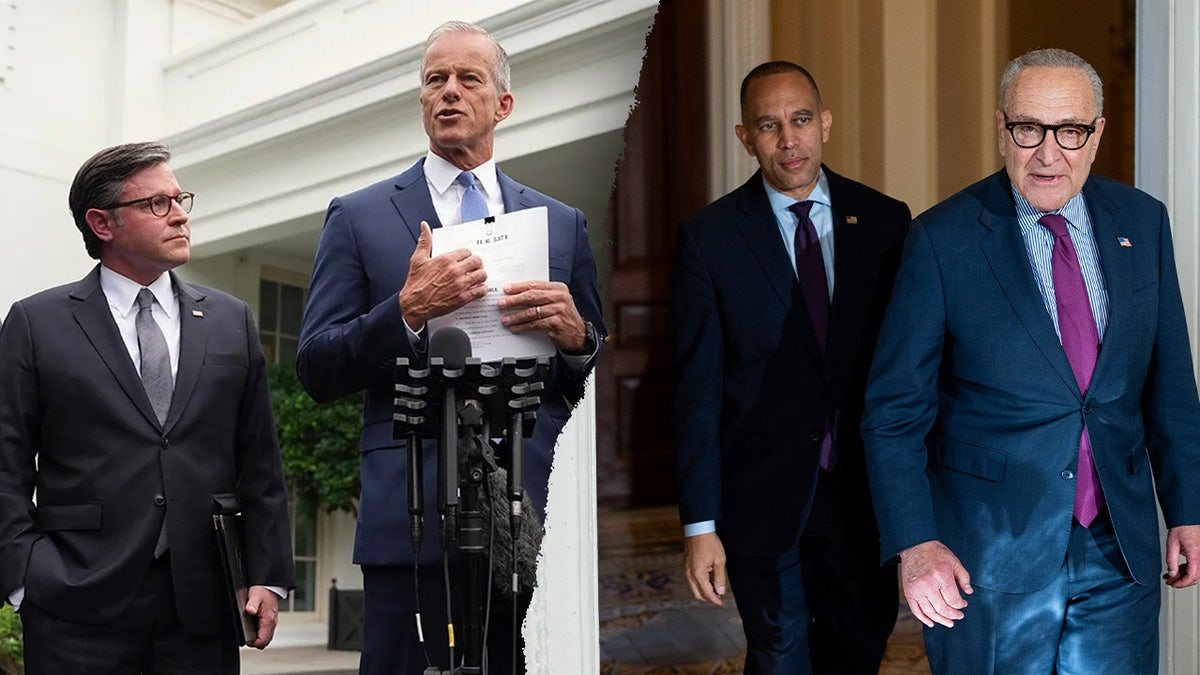
House Speaker Mike Johnson and Senate Majority Leader John Thune will face a related accusation: that congressional Republicans produced too little voters could feel, understand, or remember. A legislative accomplishment that requires a staff briefing to appreciate is difficult to sell in a 30-second spot.
Republicans have money. What they have lacked is a national message persuasive enough to make that money work. The consultants will say the committees commissioned stale spots and recycled attacks, and started airing them too late. If the spots fail, the people who approved them will explain that testing showed they worked. The people who opposed them will explain that they always knew the testing was wrong.
The turnout people will be asked why they could not bring Trump-only voters back for an election without Trump on the ballot. The candidate recruiters will be asked why loyalty at times outranked electability. Individual candidates will be blamed for hugging him too tightly or abandoning him too quickly. Some may achieve the distinction of being blamed for both.
And the media will occupy its customary place in the Republican explanation: burying accomplishments, magnifying liabilities, and making every Republican candidate answer for Trump. The Democratic version will be less centered on one man and considerably more crowded. Suppose Democrats barely take the House and fail to win the Senate. What might once have been celebrated as a successful midterm could become an indictment of the party's own strategic choices.
For now, the two campaigns proceed in parallel — the one to win, and the one to explain. Republicans are bracing for the possibility that both will end in defeat, and the blame game has already begun.
8