Honeywell Launches AI Building Platform With Nvidia and Dell, Keeps Humans in Control
Honeywell Technologies has unveiled Forge Cognition, an AI platform built with Nvidia and Dell that adds AI agents and digital twins to building systems. The company is deliberately holding back full autonomy, with its CTO saying humans will remain in the loop for two to three years.
Honeywell Technologies has launched Forge Cognition, an artificial intelligence platform that places AI agents and digital twins on top of the systems that heat, cool, secure and power commercial buildings. The product, built with technology from Nvidia and Dell, is the first major release from a slimmed-down Honeywell that has spun off its advanced-materials and aerospace businesses over the past year and now focuses on automation for buildings, factories and process plants.
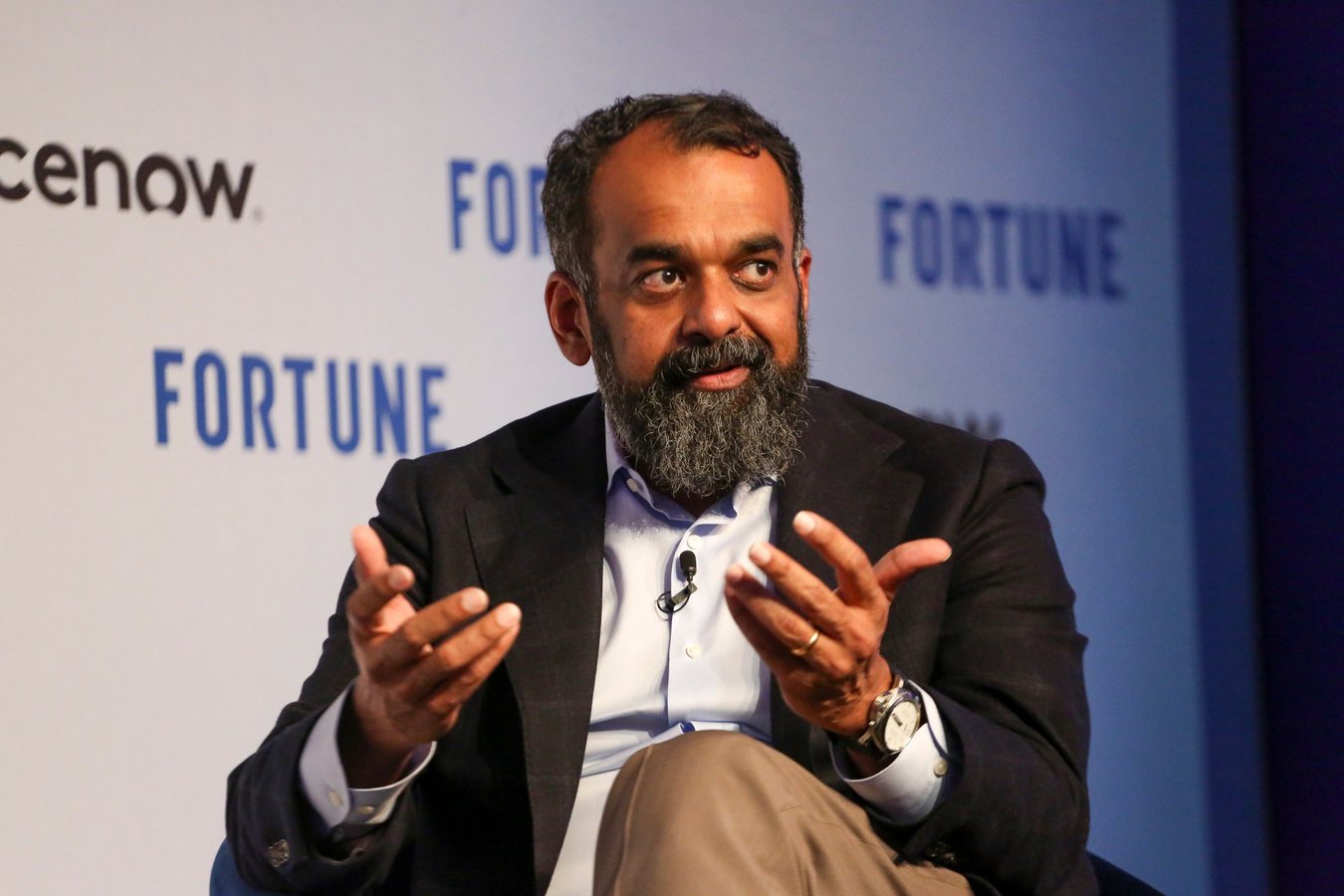
The platform can operate in three modes: manual, semi-autonomous and autonomous. Honeywell has not activated the third. «We have not opened up an autonomy right now,» chief technology officer Suresh Venkatarayalu said in an interview ahead of the launch. He said the company will likely stay in semi-autonomous mode for the next two to three years, after which customers will decide when to make the switch. «For me, I wouldn’t deploy these agents without my control system in place,» he said.
That gap between what the software can do and what Honeywell will allow it to do is central to the company’s strategy. While the launch announcement says the agents can «autonomously coordinate actions across existing systems,» Venkatarayalu describes the platform as «a brain behind a building» that advises while operators decide. The approach reflects a broader question facing companies deploying AI agents in physical operations: how much control should be handed to software that runs equipment people depend on.
The project began with a challenge at CES in January. Nvidia’s leadership heard Honeywell’s pitch for autonomous buildings and asked who its lighthouse customer would be — the real building that would prove the concept. Honeywell CEO Vimal Kapur turned the question around, asking Nvidia why it could not be that customer. Nvidia accepted. Within 30 days, Venkatarayalu was in Santa Clara pitching Nvidia’s operations and real estate team. The two companies then set a 90-day target to show meaningful results at Voyager, Nvidia’s roughly 750,000-square-foot headquarters, in time for Honeywell’s investor day in June.
Nvidia’s head of operations and real estate, Scott Ekman, wanted more than a demonstration. The teams agreed on five performance targets, measured the building’s baseline and tracked progress week by week across about 900 pieces of equipment. By late April, Honeywell had enough to show investors a three-minute live demonstration.
The first target was alarms. Building systems are designed to err on the side of caution, so they flag everything. In Voyager’s security and access-control system, close to 90% to 95% of alarms were false, and Nvidia had eight or nine people per shift clearing them. Honeywell took Nvidia’s open-source Nemotron model and trained it on Honeywell’s own engineering knowledge to sort real alarms from noise. Honeywell says the result at Voyager is up to a 90% reduction in unnecessary alerts related to the Building Management System. Operators can review every call the agents make and mark whether they agree, a feature Venkatarayalu described as bringing the operator into the loop so they can learn to trust the system.
The second target was energy. The agents broke Voyager’s utility bill down by floor, zone, and peak and off-peak hours, then flagged a pattern in how the building was heated. Venkatarayalu said they found many zones running the heating system at a standard setting of about 58 degrees throughout the year, without sensing external temperatures above that threshold. «We have identified close to 10% of energy efficiency,» he said. That figure represents potential savings identified through more intelligent understanding and optimization of operating conditions; it has not yet been achieved.
In its simplest mode, Forge Cognition works as a chatbot for infrastructure. Operators can ask about performance and trends, then click into a digital replica of Voyager built with Nvidia’s Omniverse simulation software, down to a single floor, zone or machine. Dell supplies the servers that run the platform on site. Venkatarayalu frames the shift as a change in what the system does. Traditional building automation could «see and act»: sensors collected data, and operators responded. The new version adds «think» and «learn»: AI models trained on Honeywell’s installed base and engineering documents interpret what the sensors pick up, and operator feedback improves them over time. «Autonomy for me is automation plus plus,» he said.
The learning works differently from site to site. At Honeywell’s campus in Bangalore, the goal was energy savings. At Voyager, Venkatarayalu said, Nvidia’s leadership told him comfort was more important. The agents have to learn what each operator is trying to achieve as well as how the equipment behaves. He sets a high bar for moving to full autonomy: before a customer makes that call, the system should have «10 out of 10 accuracy all the time.»
Venkatarayalu presents the product as help for operators rather than a replacement. «At least I do not think as replacement,» he said. «In an industrial environment, I need a co-pilot that aids and directs me and helps me to do my job better.»
5