Former ARPA-H Director Launches Transfyr to Capture Science's 'Magic Hands'
Renee Wegrzyn, the inaugural director of the Advanced Research Projects Agency for Health, has cofounded Transfyr to use computer vision and perception tools to capture the tacit laboratory techniques of expert scientists — a bottleneck she calls the 'magic hands' problem — arguing that solving it is a prerequisite for delivering on AI's promises in medicine.

Renee Wegrzyn, the inaugural director of the Advanced Research Projects Agency for Health, has cofounded a new company aimed at solving what she describes as one of the most overlooked problems in science: the difficulty of transferring the tacit laboratory skills of expert researchers to others. The venture, Transfyr, is building computer vision and perception tools designed to capture scientific work as it is performed, so that the subtle techniques that make certain experiments succeed can be understood, reproduced, and scaled.
Wegrzyn, who led ARPA-H — the White House agency created to accelerate health breakthroughs — until the Trump administration chose different leadership, said she remains enthusiastic about the agency's mission. She noted that she served as a presidential appointee with a term-limited appointment, which allowed her to serve through the transition and spend a few weeks in the new administration. She also pointed out that she had previously served during the first Trump administration, which gave her an opportunity to explain why the agency was built and to make the case for keeping it. She said she is proud of ARPA-H and its perseverance, and expressed hope that it will have the same longevity as DARPA, the Defense Advanced Research Projects Agency, which has operated for nearly 80 years.
The problem Transfyr addresses is what Wegrzyn calls the «magic hands» phenomenon. She compares it to a family recipe: a parent or grandparent may cook a favorite dish in a way nobody else can replicate, because the skill is embodied rather than written down. The same dynamic exists in science, she said. Some researchers simply have a knack for delivering excellent results repeatedly, but because they are such experts, they often struggle to describe exactly what they are doing. It is, in some ways, an art.
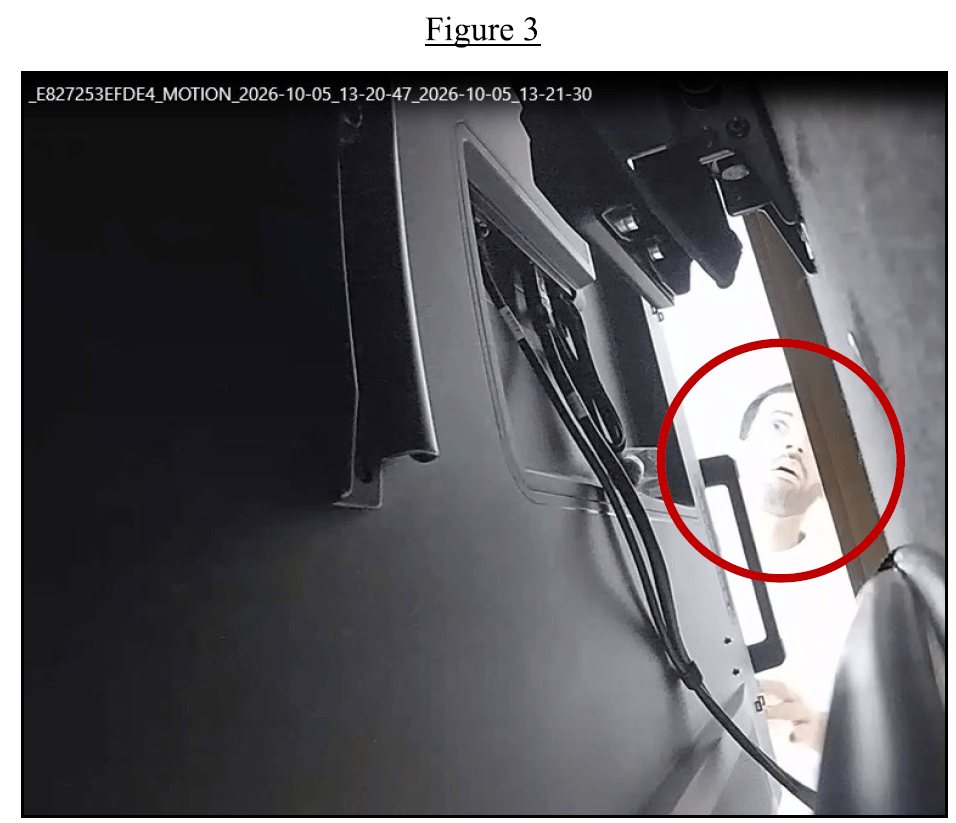
Transfyr's pipeline aims to change that by using computer vision and perception tools to observe laboratory work in detail. Wegrzyn offered a concrete example: if a protocol instructs a scientist to «mix the cells,» one researcher might gently invert the tube while another might shake or vortex it rigorously, potentially destroying the sample. Those small differences, compounded across many decisions over hours of experimentation, produce what is known as magic hands. By capturing these nuances, Transfyr hopes to make the invisible visible and transferable.
Wegrzyn said the issue became clear to her over the course of her career, during which she observed how fragile breakthroughs can be. A discovery is typically first communicated through a research publication, such as a paper in Science or Nature, but that paper is not a product, is not commercializable, and is not ready for a patient that day. It is, she said, the starting gun for what comes next. The ARPA-style agencies are excellent at reaching that initial breakthrough and demonstrating what is possible, but following through and delivering is not guaranteed.
At ARPA-H, Wegrzyn sought to address that gap by involving end users — the customers who would ultimately use the technology — in giving feedback during development. The goal was to ensure that by the final day of an experiment, those customers were demanding the product, rather than encountering it for the first time, which she said is unfortunately common in traditional grant-making organizations. She described the challenge as rethinking how knowledge is transferred off the back end of a program, because researchers in the lab are often focused on whether something works, not on how to make it scalable, and they may not know who to talk to next.
Transfyr's approach treats scientific transfer as a series of handoffs. The company deploys its technology in an originating lab to understand the science and what was important about a discovery, and also in a receiving lab to see how the work is being reproduced. Instead of the traditional method of transferring science — looking over each other's shoulders and pointing out small mistakes — Wegrzyn said the video-connectedness of the system allows teams to accelerate iterations of transferring the science.
Wegrzyn framed the effort as a prerequisite for everything artificial intelligence promises to deliver in medicine. Without reliable ways to capture and transfer the hands-on work of science, she suggested, the benefits of AI in health research will remain out of reach. She also said she can feel the next Sputnik moment coming, even if she cannot quite name it yet — a sign that she believes the stakes for American scientific leadership remain high.
5