Christa Pike Back in Prison After Failed Execution as Death Sentence Faces New Legal Test
Tennessee death row inmate Christa Pike has returned to prison after surviving a lethal injection attempt, and legal experts say her cognitive state and the botched procedure could complicate any future effort to carry out her sentence.
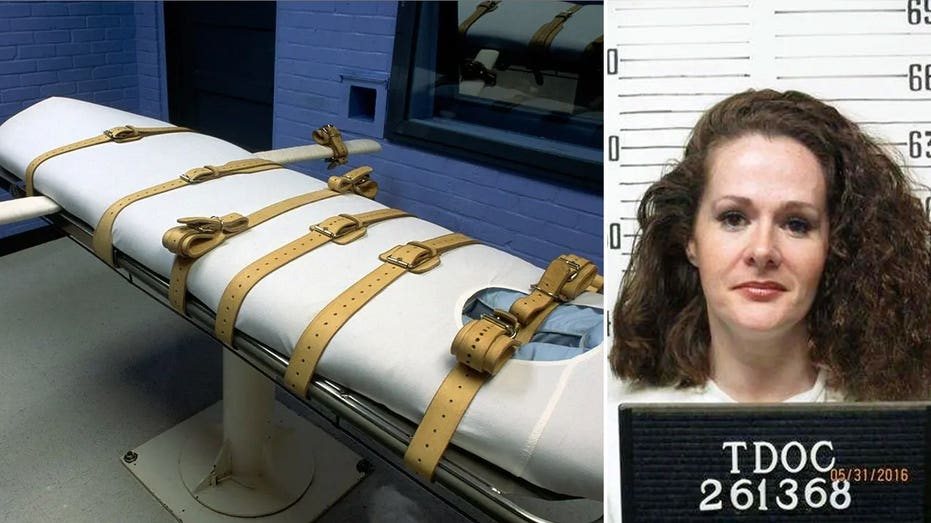
Tennessee death row inmate Christa Pike is back behind bars after surviving an attempted lethal injection, a development that has thrown her death sentence into uncertain legal territory and raised questions about whether the state can try again.
Pike was scheduled to be put to death on Sept. 30 after the Supreme Court vacated a last-minute stay, but the execution did not proceed as planned. She received two doses of the lethal injection drug pentobarbital and unexpectedly woke up while her lawyers believed she was brain dead. She is the only known person to survive a lethal injection attempt in the modern era.
Her attorneys have described her physical recovery as remarkable, and she has since been released from the hospital and returned to prison. But the legal and medical aftermath is far from settled. Fordham Law Professor Deborah Denno, a leading expert on capital punishment in the United States, said Pike's mental state in the wake of the failed procedure could become a central issue in any future attempt to execute her.
«Her attorney stated that she still seems a little confused about things and is not clear on, doesn't have a clear memory of what happened to her,» Denno said. «If that continues, that it could be very difficult for the state to execute her for that reason alone. In other words, you have to understand why you're getting a punishment and also connect that to whatever crime you committed.»
Denno noted that courts have barred executions of intellectually disabled inmates as well as prisoners whose cognitive impairments leave them unable to understand why they are being executed. She pointed to a 2019 Supreme Court ruling involving an inmate with dementia who could not remember his crime. «We also don't execute people who have intellectual disabilities,» she said.
Pike was convicted and sentenced to death for the 1995 torture and murder of 19-year-old Colleen Slemmer in Knoxville. Slemmer was a classmate Pike knew from a vocational school called the Job Corps Center. The case has haunted investigators for decades, with a former Knoxville police chief saying 31 years later that those who worked the murder remain deeply affected by it.
Now, with Pike back in custody, state officials have not publicly announced their plans. One option is that Gov. Bill Lee could commute her sentence to life in prison without the possibility of parole. Lee has already put a moratorium on executions in Tennessee for at least the rest of the year, but Denno said a commutation from the governor remains a long shot.
If state officials seek another death warrant, that would likely face another court battle. «It could go up to the Tennessee Supreme Court, could make that decision of whether she's going to get life in prison or whether there's going to be another execution or attempted execution,» Denno said. «If there's going to be another attempt at an execution, that could go several ways as well.»
One potential argument from Pike's lawyers could be a double jeopardy claim, Denno said. «In other words, that she has already received the state's punishment — from A to Z, they injected the drugs, she received the drug, they did everything they needed to do to actually execute someone — and she just simply didn't happen to die,» she said. «But that's on the state and how they chose to do this — or their incompetence.»
That argument would need to be tested in court. If it fails, the next question is what kind of execution Pike would face the next time around. «Are you gonna try to use lethal injection again? I think her attorneys have the best argument we've ever seen that that was cruel and unusual, in which case Christa Pike did ask for two other potential methods of execution: hanging and the firing squad,» Denno said. «So they could go in that direction.»
The case has also drawn attention from lawyers and experts who have urged Gov. Lee to commute Pike's sentence following the botched execution. Meanwhile, Tennessee's prison chief resigned after the failed procedure, and a former U.S. attorney was tapped to lead an independent review.
For now, Pike remains in prison as the state weighs its next move. Her fate rests on a mix of legal questions, medical assessments and political decisions that could take months to resolve. What is clear is that the failed execution has created a situation with little precedent in modern American capital punishment, leaving courts and state officials to determine what comes next.
6