Chinese humanoid robots beat Usain Bolt's 100-meter record at Beijing games
Humanoid robots at the World Humanoid Robot Games in Beijing broke human athletic records, including Usain Bolt's 100-meter sprint time and Javier Sotomayor's high jump mark, as China showcases its robotics progress.
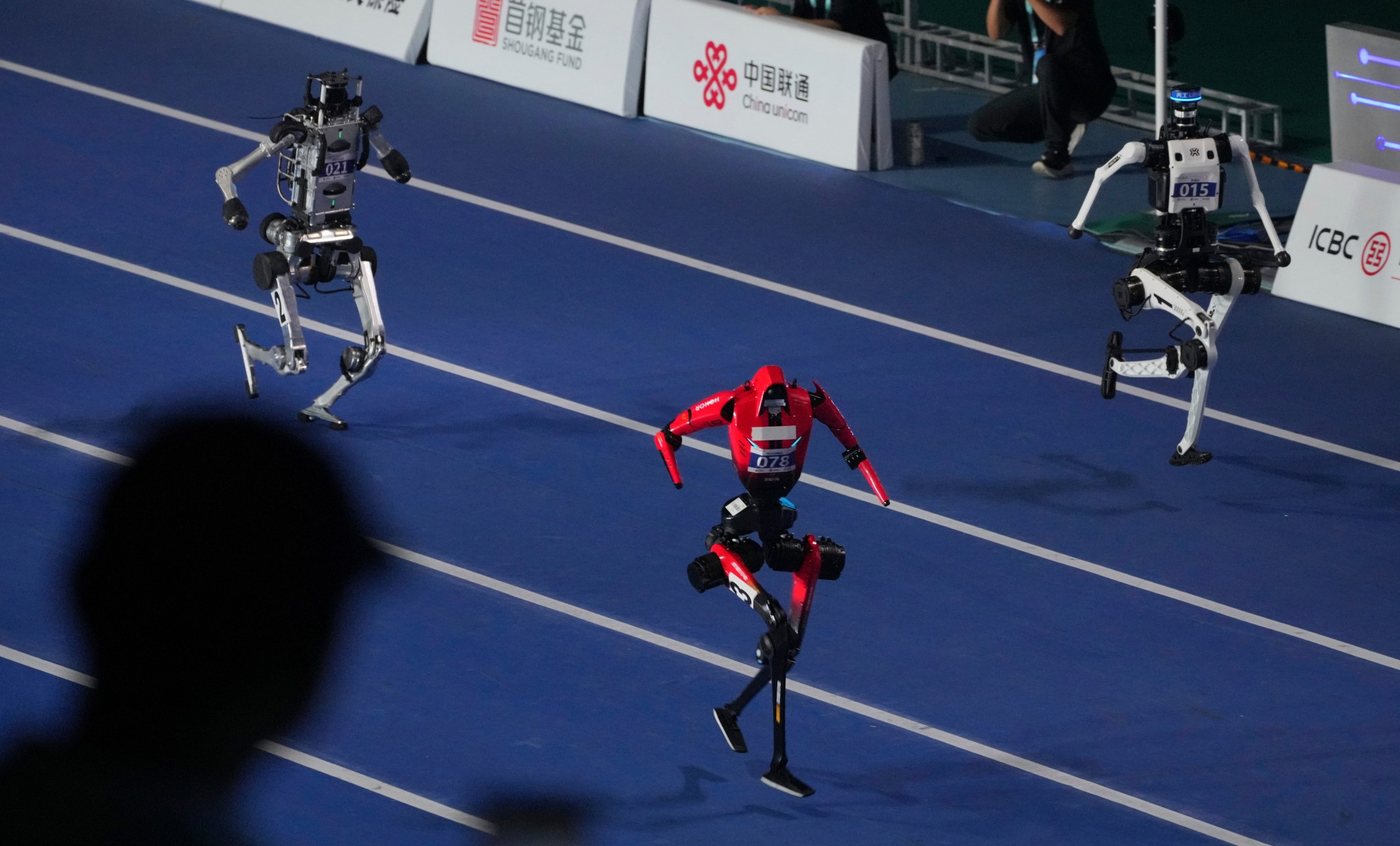
Humanoid robots shattered human athletic records on the opening day of the World Humanoid Robot Games in Beijing, including beating Usain Bolt's 100-meter sprint world record. The event, which organizers say features more than 2,000 humanoid robots, is a display of China's rapid advances in robotics as competition with the United States intensifies.
At the 100-meter sprint, a robot from Beijing-based X-Humanoid finished in 9.39 seconds, surpassing the 9.58 seconds Bolt ran in 2009. In the standing high jump, another X-Humanoid robot reached 2.88 meters, clearing the 2.45-meter human record set by Cuba's Javier Sotomayor in 1993. The high jump result also far exceeded the 0.95-meter best from last year's inaugural games.
The five-day competition, now in its second year, includes 51 events and more than 1,000 competitions, ranging from running and table tennis to soccer, weightlifting, and tug of war. Organizers said 16 countries are participating, including Germany, Japan, and the United States. The games are being held at the National Speed Skating Oval built for the 2022 Winter Olympics.
The event opened the same week as the 2026 World Robot Conference in Beijing, where companies showcased roughly 3,000 products, including humanoid robots. China produces the majority of the world's humanoid robots, a position that has drawn increased scrutiny from Washington.
Last month, the U.S. Federal Communications Commission announced a ban on imports of new foreign-made humanoid robots, citing national security concerns in a move widely seen as targeting China. The Pentagon also added Unitree, a leading Chinese humanoid robot maker, to its list of companies it says have ties to the Chinese military. Beijing has rejected the accusations.
Before the games opened, a humanoid robot from Chinese smartphone company Honor completed a 100-meter sprint trial in 9.32 seconds, reaching a peak speed of 14.5 meters per second, the company said. Hundreds of humanoid robots marched in formation onto the field during the opening ceremony in a synchronized display.
Experts caution that humanoid robots remain largely limited to demonstrations, performances, and research, and that mass real-world deployment will take time. Spectators at the games expressed a mix of excitement and reflection about the technology's trajectory.
Li Yanfeng, an education worker and Beijing resident, said she was initially resistant to artificial intelligence out of concern it might displace humans. Seeing the development as unstoppable, she decided to attend. Another spectator, Yang Shangzheng, said it was amazing that robots can now perform sports that are normal for humans. Liu Tao, watching with his son, said he hoped to see the best robots China currently has to offer.
68