Princeton Scientist Predicts Chatbots Will Become 'Truth Oracles' and Reshape Journalism
Arvind Narayanan, co-author of 'AI Snake Oil,' told a Northwestern journalism symposium that AI chatbots are evolving into trusted answer engines, threatening a core function of newsrooms while opening new space for narrative and contested reporting.
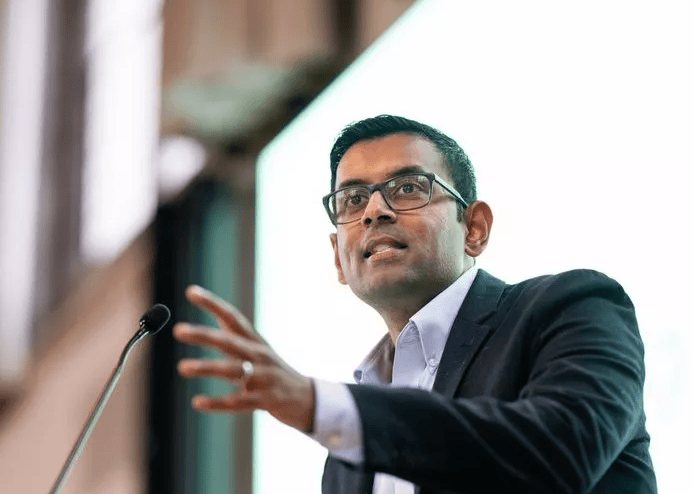
AI chatbots are on a path to becoming what many people treat as a «truth oracle» — a default destination for settling factual questions — and that shift could strip newsrooms of one of their most basic functions, Princeton computer scientist Arvind Narayanan warned at a journalism symposium this week.
Narayanan, co-author of «AI Snake Oil» and director of Princeton's Center for Information Technology Policy, delivered a keynote titled «AI and Journalism: Skating Where the Puck is Going» at the Computation + Journalism Symposium at Northwestern University's McCormick Foundation Center. His central argument: journalists should prepare for artificial intelligence not as it exists today, but as it will look five or ten years from now.
The stakes are already visible. Pew Research found this year that 10% of Americans already turn to chatbots to settle factual disputes. Narayanan said «virtually all» questions about straightforward matters — such as who is running for political office — are headed to these systems. If that happens, he argued, the newsroom loses one more piece of its traditional bundle, and arguably the most fundamental one.
What remains, in his view, is the work a machine cannot settle: contested questions, narrative, storytelling, and being explicit about what he called «positionality» — a difficult demand for an industry that prizes objectivity.
Narayanan said the common picture of chatbots as simple next-word predictors is outdated. Today's systems, he said, are «neurosymbolic» — a language model combined with tools that search the web, retrieve documents, and write code to analyze data. Errors that were common a year ago, such as miscounting the letters in «strawberry» or Google's AI Overviews suggesting glue on pizza, now rarely occur. He described the remaining problems as «gradually getting solved.»
He offered a generational analogy: his elementary-school-age children may never experience hallucination the way adults do, much as Wikipedia went from an untrusted reference to a far more authoritative source. «I'm not saying it's inevitable. I'm not saying it's a good thing,» he cautioned. On X, he noted, users already settle arguments by asking Grok, mostly conservatives with low trust in legacy media. He estimated the wider shift at about a decade out.
An audience member raised the danger of chatbots suffering from what press critic Jay Rosen famously called the «view from nowhere» — false neutrality born of a reluctance to exercise judgment. Daniel Trielli of the University of Maryland asked about that risk, and Narayanan agreed, calling it a challenge journalism must continue to define.
One of his most contrarian claims was that media agenda-setting has backfired. The Washington Post's role in Watergate was «an unalloyed good,» he said, but he cited research from «many communication scholars and economists» showing that efforts to replicate that in the Trump era, with audiences already splintered, have fed polarization and hastened the collapse of trust.
AI writing, he added, is similarly «largely a solvable technical problem.» A model could be trained to mimic one writer almost perfectly — mainly a question of cost — and detectors «might not work that well.»
Narayanan framed his talk as «as much about the continuing effects of social media on newsrooms as it is about AI.» The newsroom as a single institution bundling reporting, analysis, fact-checking, and distribution is «historically contingent,» he argued, not a given. The ad-supported penny papers of the 1830s broadened what counted as news; objectivity arose in response to World War I propaganda; paid reporters and interviews «had to be invented.» Calling someone a «hired reporter» was once an insult, «like a hired gun.»
He quoted Clay Shirky's line that «society doesn't need newspapers. What we need is journalism,» and noted Paul Starr's warning that the loss of newspapers' economics would leave public goods like accountability unfunded. Starr has been proven right «in many ways,» Narayanan said, «but it's maybe not been as apocalyptic» as feared, because philanthropy has stepped in.
His claim is that piece by piece, specialists now perform each newsroom job more cheaply than a newsroom can, and AI is accelerating that unbundling. He acknowledged he has never worked in a newsroom. «It's possible I don't know what I'm talking about,» he said — before laying out an argument the room took seriously.
9