Governors' Races Could Matter More Than Congress in November
With 36 governorships on the ballot, Republicans risk losing their 15-year majority in statehouses — a shift that could shape education, budgets, and public safety for millions of families.
Republicans are at risk of losing not only Congress but also their long-standing grip on governors' mansions, a shift that could have a more direct impact on American families than control of Capitol Hill. With 36 states electing governors on November 3, the GOP's 26-to-24 majority — held since 2011 — is under serious threat, and the consequences would reach into schools, budgets, and communities in ways federal gridlock rarely does.
Former Republican Governors Association chair Chris Christie warned that «for the first time in 15 years, we could be in a position to lose a majority of the governorships.» That prospect, he suggested, would be a bigger blow than losing Congress. Governors oversee education, public safety, and infrastructure, and many control their state's budget, setting spending priorities and deciding which programs receive funding. While Congress often remains mired in partisan stalemate, a governor's decisions land directly in neighborhoods and households.
Democrats' momentum began last fall when Abigail Spanberger flipped Virginia's governorship and Mikie Sherrill held New Jersey for her party. In less than a year, Spanberger has revived diversity, equity, and inclusion policies, backed an effort to bypass the state's bipartisan redistricting commission — an effort the state Supreme Court ultimately struck down — and raised the minimum wage, a move that has made it harder for small businesses to absorb rising costs.
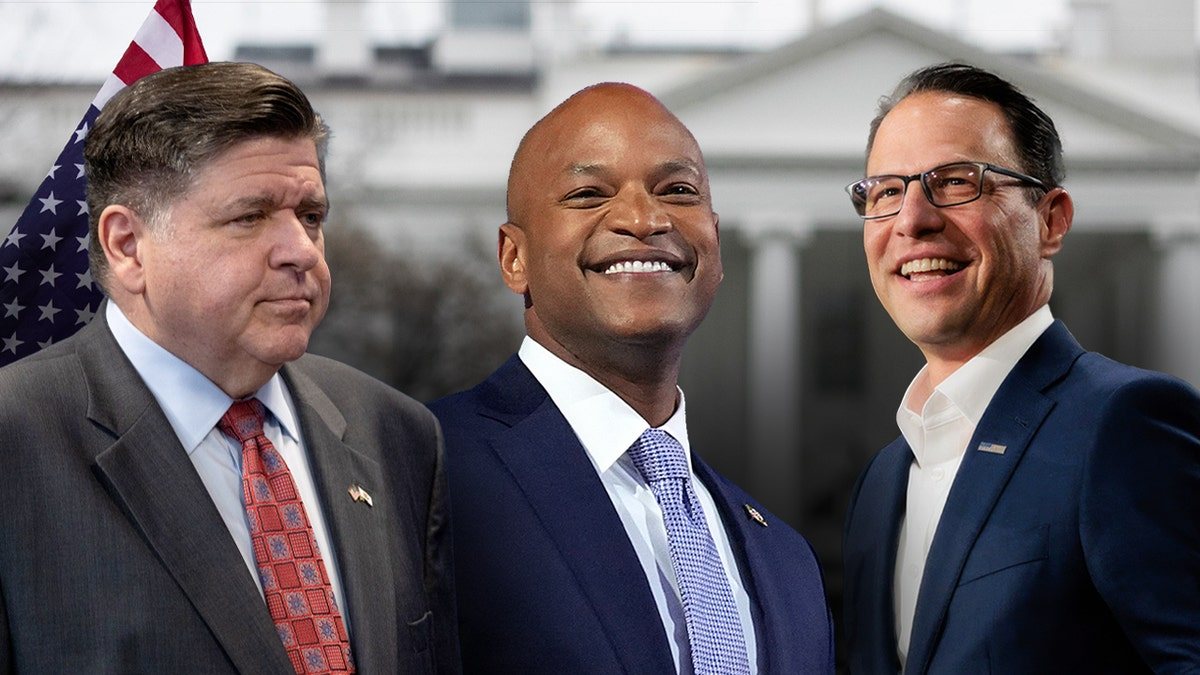
According to the Cook Political Report, 13 of this year's races are solidly Democratic, including incumbents with national ambitions such as Illinois' JB Pritzker, Maryland's Wes Moore, and Pennsylvania's Josh Shapiro. Arizona, Oregon, Michigan, and — most troubling for Republicans — Iowa all lean Democratic. Iowa has not elected a Democratic governor in two decades, but polls show gubernatorial candidate Rob Sand leading his Republican opponent, Zach Lahn. Republicans' best pickup opportunity is Kansas, where Democratic Governor Laura Kelly is term limited.
Five races are considered toss-ups: Alaska, Georgia, Nevada, Ohio, and Wisconsin. Four of those are Republican-held, leaving Wisconsin as the only Democratic-held toss-up. If Democrats net just two seats, they take the majority. Of the 14 states not holding elections this year, Democrats hold six governorships and Republicans hold eight.
The stakes extend beyond party scorecards. These races will determine which party's approach to governing shapes daily life in three dozen states for the next four years. Governors often serve as the last line of defense against an overreaching federal government, and with Democratic Socialists already eyeing 2028 — including talk of Rep. Alexandria Ocasio-Cortez as a potential presidential contender — the role of governors as a check on Washington could become even more pronounced.
As voters head to the polls this fall, the battle for statehouses may prove to be the most consequential contest on the ballot — one that will decide not just who governs, but how millions of Americans live, work, and learn.
7