Trump Praises Jeffries and Schumer, Signals Room for Deals With Democrats
President Donald Trump offered unusually warm words for Democratic congressional leaders Hakeem Jeffries and Chuck Schumer and suggested health care could be a area for bipartisan deals when Democrats take control of Congress in 2027.
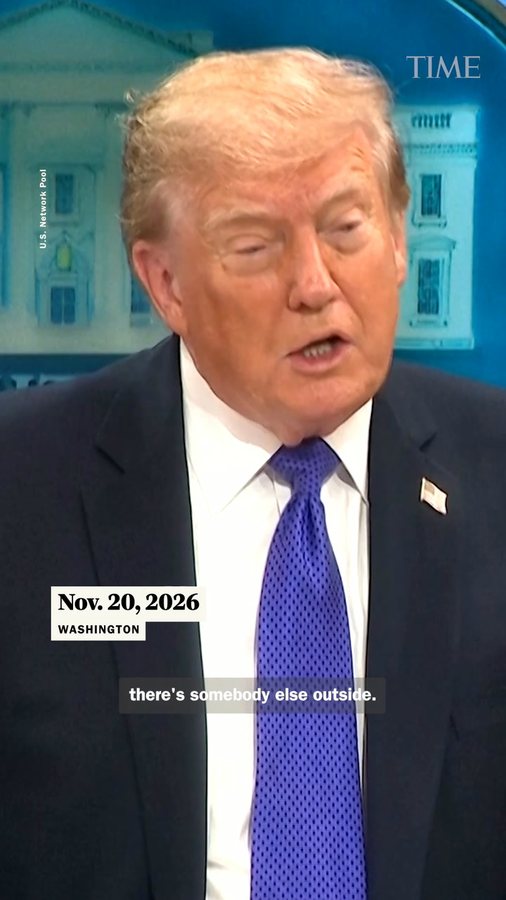
President Donald Trump on Friday offered unusually warm praise for the two top Democrats in Congress and suggested that the incoming Democratic majority could prove easier to negotiate with than Republicans. Speaking to reporters in the briefing room, Trump described Hakeem Jeffries, who is poised to become the first Black Speaker of the House, as «streetwise» and «smart». He also praised Senate Democratic leader Chuck Schumer, a striking shift in tone toward two lawmakers he has repeatedly clashed with.
Trump also said prominent Democrats had already reached out to him privately about possible deals next year on health care and immigration. He declined to name them, saying only that they were influential figures who wanted to discuss two of the most contentious domestic policy questions. «I've been called by a lot of Democrats,» he said. «People that matter, people that have a lot to do, and they want to talk to me about two things in particular: healthcare, because we can do something with healthcare together.» It was not immediately clear whom Trump had spoken with or whether substantive negotiations had begun. Jeffries said earlier this month that he had not spoken with the President since the election.
The comments offer one of the clearest signals yet of how Trump intends to navigate a changed political landscape after the midterm elections. Democrats won control of both chambers of Congress, leaving the President facing the prospect of two years of legislative gridlock, aggressive congressional investigations and possibly another effort to impeach him. Trump, however, has presented himself as a potential negotiating partner while stressing that he would use his veto to block legislation he opposes. He suggested Democratic leaders might eventually conclude that compromising with him would be more productive than repeatedly passing bills he would reject. «If they want to get things done, I want to get things done too,» he said. «There is a real possibility that we get a lot of great things done, especially on health care.»
Health care has emerged as the most plausible area of overlap, though significant disagreements remain over how far the federal government should go in expanding coverage and how to pay for it. Sen. Bernie Sanders of Vermont, who is expected to chair the Senate Health, Education, Labor and Pensions Committee when Democrats take power in January, has proposed a four-year transition toward Medicare for All. His plan would begin by lowering the Medicare eligibility age from 65 to 55, expanding benefits to include dental, vision and hearing care, and guaranteeing health coverage for children through age 18.
Jeffries has indicated a willingness to pursue some of those priorities. This week he said Democrats were preparing proposals to lower the Medicare eligibility age, expand benefits and ensure health coverage for children. He has pledged to move quickly to restore Affordable Care Act subsidies and reverse Medicaid cuts enacted under Republican control. Sanders has argued that Trump may be more receptive than many Republicans assume. «Trump may be crazy, but he's not stupid, and he is a good politician,» Sanders said in a podcast posted to his YouTube page. «If we were to pass something that guaranteed healthcare to all people, that was enormously popular, and Trump says, 'I'm vetoing it.' Not a smart political move.»
Whether Trump would embrace any of those proposals remains uncertain. Lowering the Medicare eligibility age would carry substantial federal costs, and the President has made no specific commitment to expanding Medicare or reversing Medicaid reductions. His suggestion that an agreement with Democrats could be easier than advancing legislation through budget reconciliation, a process that lets certain measures bypass the Senate's 60-vote filibuster threshold, nonetheless raised the possibility of a bipartisan alternative. «Can it be what they want? No, but it can be a combination of what we all want,» Trump said. «We could end up with great health care in our country.»
Immigration presents a more complicated opening. Trump elevated Stephen Miller, the architect of his hard-line immigration agenda, to White House chief of staff after the election, and Jeffries has denounced Miller as a «dangerous xenophobe and reckless extremist», underscoring the gulf between the Democratic leader and the administration. Yet Trump has acknowledged that his aggressive enforcement policies may have contributed to Republicans' election losses. In a recent interview with 60 Minutes, he conceded that deporting immigrants who had lived and worked in the United States for years may have alienated voters who otherwise backed his border security agenda. «I think it might be too tough,» Trump said of his deportation policies. «That hurt me.» He has suggested a deal with Democrats could protect certain longtime residents who had committed no crimes beyond entering the country illegally, while preserving his administration's ability to deport people convicted of serious offenses.
Source: time.com
36