Collins and Jackson Clash Over Voter ID, Trump and Seniority in First Maine Senate Debate
Republican Sen. Susan Collins and Democratic challenger Troy Jackson met Tuesday in the first of four debates in Maine's closely watched Senate race, sparring over voter ID, President Trump and the value of Senate seniority.
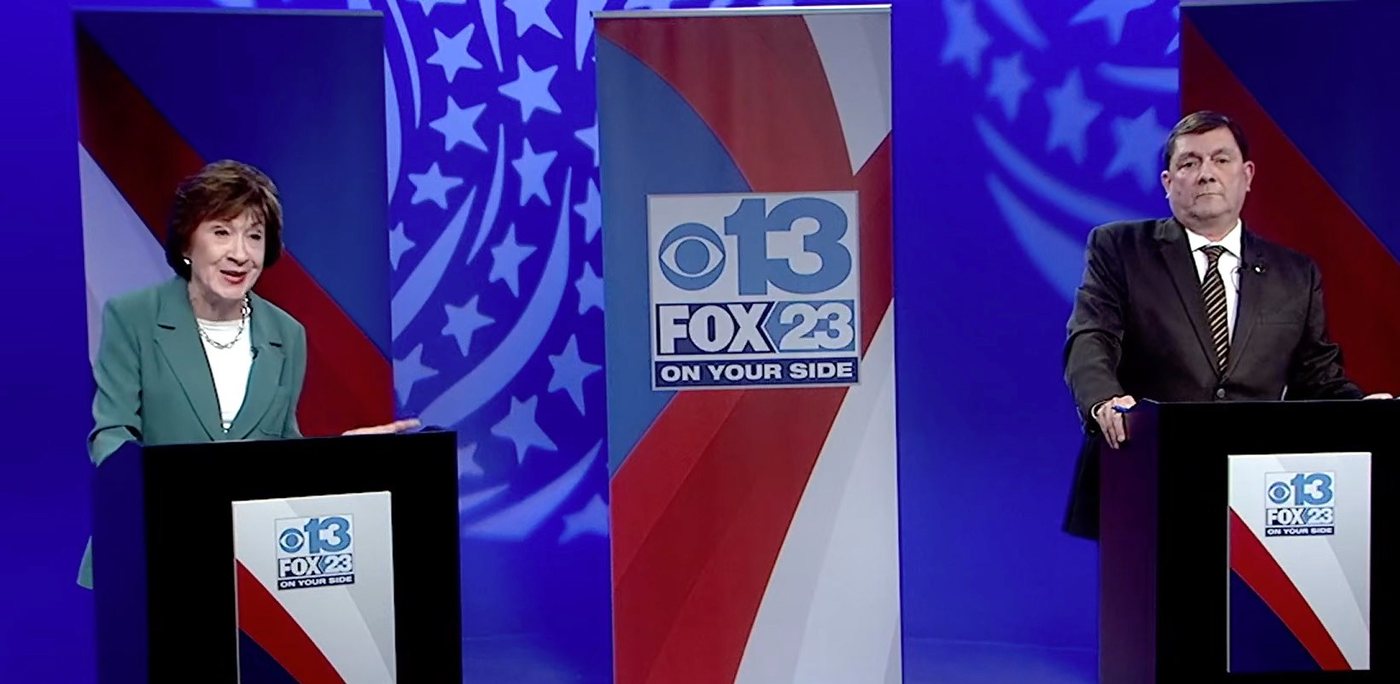
Republican Sen. Susan Collins and Democratic challenger Troy Jackson met Tuesday in the first of four scheduled debates in Maine's closely watched Senate race, clashing over voter identification policy, President Donald Trump and the question of whether seniority in Washington still benefits the state.
Jackson, the Democratic leader in the Maine Senate, used the debate to attack voter ID requirements, a position that put him at odds with a policy that has broad support among Maine voters. He leaned heavily on a thick binder of notes throughout the exchange, a visual that quickly became a talking point in the aftermath of the event.
Collins, who has represented Maine in the Senate since 1997 and is one of the longest-serving Republicans in the chamber, defended her record and argued that her seniority delivers concrete results for the state. The two also clashed over Trump, with the president's influence over the Republican Party looming over the debate as it has over races nationwide this cycle.
The debate was the first of four between the two candidates, giving Maine voters an extended look at a matchup that could help determine control of the Senate. Collins has built a reputation as one of the chamber's most independent-minded Republicans, while Jackson has sought to tie her to the national party and to Trump.
Voter ID emerged as one of the sharpest points of contrast. Jackson's criticism of the policy places him on the opposite side of a position that polls have consistently shown is popular with a majority of Americans, including many Democrats. Collins has supported voter identification measures during her time in the Senate.
The image of Jackson consulting a large binder of notes drew immediate attention, with critics arguing it suggested he was unprepared for an unscripted exchange. Supporters countered that thorough preparation reflects a serious approach to a high-stakes race.
Maine is one of the few states that splits its electoral votes, and its Senate contests have drawn national attention for years. Collins has survived previous challenges by appealing to independents and moderate voters, a coalition she will need again in a state that has trended slightly more Democratic in recent federal elections.
Jackson, who has served in the Maine Legislature for more than two decades and leads the Democratic caucus in the state Senate, has positioned himself as a champion of working-class Mainers. His campaign has focused on economic concerns, health care and the influence of money in politics.
The three remaining debates will give both candidates additional opportunities to sharpen their arguments before voters head to the polls. With control of the Senate potentially hanging in the balance, the Maine race is expected to remain one of the most closely watched contests in the country.
Both campaigns are likely to use the first debate's moments — Jackson's binder and his voter ID remarks, and Collins' defense of her tenure — as fodder for advertising and fundraising in the weeks ahead. The next debate is scheduled in the coming days.
8