Apple Adds Cryptographic Proof to iPhone 18 Pro Photos to Fight AI Fakes
Apple's new Reference Image mode on iPhone 18 Pro cryptographically signs every pixel at the sensor, creating an unalterable digital negative that can verify a photo's authenticity from capture to delivery.
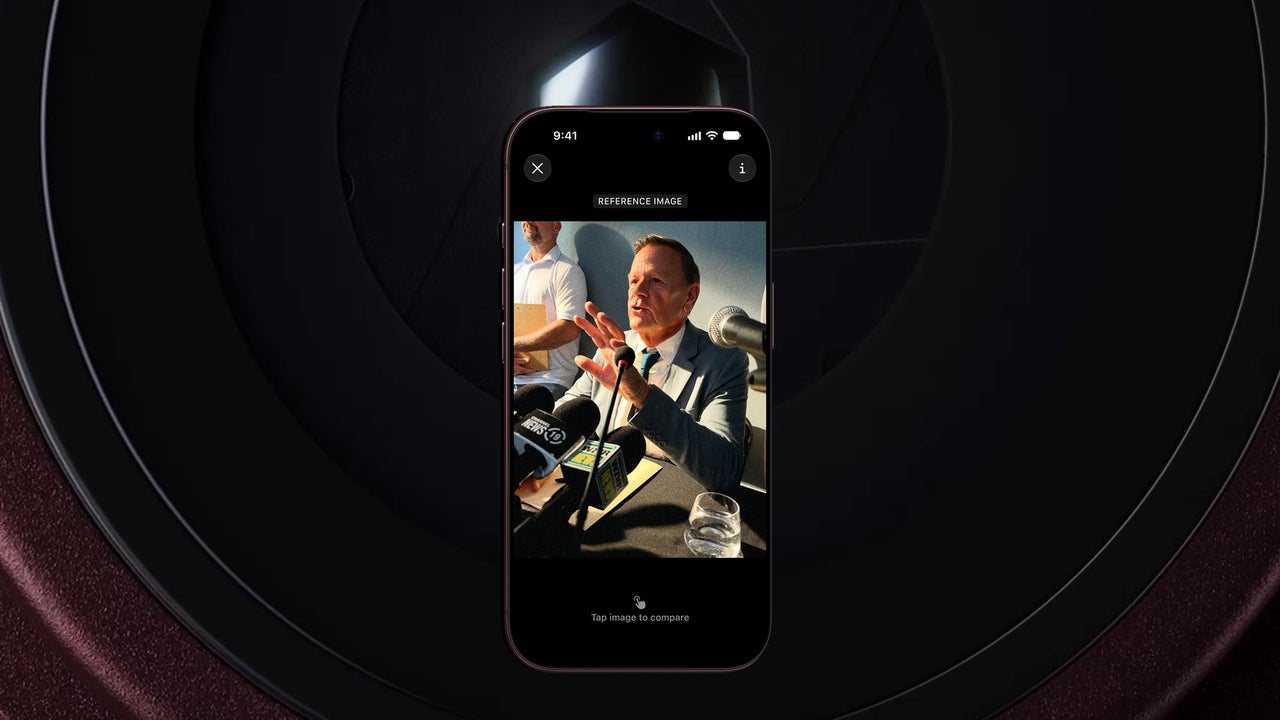
Apple is bringing cryptographic proof of authenticity to smartphone photography, introducing a feature called Reference Image on its new iPhone 18 Pro models that signs every pixel at the moment of capture. The company says the technology creates an unalterable record that can confirm a photo came from a real camera and has not been altered, a direct response to growing public distrust of images online as generative AI makes convincing fakes easier to produce.
When Reference mode is enabled, the iPhone's camera sensor cryptographically signs the raw sensor data along with unique hardware identifiers tied to the actual camera module. According to analyses of the iOS 27 beta code that revealed the feature, this happens inside the Secure Enclave, the iPhone's dedicated security chip, before the image leaves the camera pipeline. No app or external process touches the data. Apple's secure servers then develop that signed sensor data into what the company calls an unalterable reference image, which lives next to the editable picture like a digital negative.
The feature is off by default and requires a trip to the camera settings to enable. Once active, verification begins when a user taps a badge on an image in Photos or a compatible app. The iPhone sends the raw frame, sensor signatures, capture timing, and a file hash to Private Cloud Compute over an encrypted channel. That infrastructure, built on custom Apple silicon, processes the request and retains nothing afterward. It cross-checks the signatures against a database of valid hardware and can reject authentication if a sensor or key has been flagged as compromised, even retroactively revoking authentications from tampered sensors.
If everything checks out, the device confirms the photo came from that camera and has not been altered. An authenticated photo can travel by AirDrop or Messages with its proof attached, and the recipient can verify it on their own device without another trip to Apple's servers. Apple says it never learns which photos are being checked. APIs across iOS, iPadOS, and macOS 27 will let other apps, including newsroom verification tools, display reference images and see how a photo has been manipulated since capture.
The approach differs from what other phone makers do. Google's Pixel 10 signs every photo its stock camera app produces using C2PA Content Credentials, an open standard also used by Leica, Sony, and Canon, with signing keys stored in the Titan M2 security chip. But under current C2PA implementations, the cryptographic seal is applied by the device's main processor after the sensor's data has already crossed internal wiring to reach it. That seal is a hash covering every pixel, so any later edit breaks it, but the gap before the seal exists is the vulnerability researchers have identified. In theory, a capable attacker could tap that path and substitute an AI-generated feed for the real one, and the processor, with no way to tell the difference, would end up certifying a fabrication as genuine.
Apple is betting on sensor-level proof rather than file-level proof. The concept has academic roots. In March, researchers at ETH Zurich built a working prototype of a sensor chip that stamps a similar cryptographic signature the instant data is captured, placing the hashing and signing circuitry inside the same piece of silicon as the pixels themselves. ETH Zurich researcher Fernando Cardes said at the time that if data is signed the moment it is captured, any later manipulation leaves traces, and that forging it would require a physical attack on the chip so costly that mass generation of manipulated content for social media would be practically impossible. That chip remains a laboratory prototype with a patent application filed but no commercialization.
Apple's implementation is the first real-world commercial version of sensor-level security at this scale, from a company that sells hundreds of millions of cameras every year. The company has not built it on an open standard, however. Its C2PA support covers AI-generated and AI-edited images, not this capture proof. In ETH's design, each sensor's public key would live in a public, append-only register, allowing independent verification by anyone without having to trust any single company. Apple's version routes verification through its own servers, making the company the notary. The proof is strong, but the trust model is centralized, and that distinction may shape how widely the technology is adopted.
80