Pilot Warned Amazon Cargo Plane Was Approaching Too Fast Before Miami Runway Overrun
Newly released black box data shows alarms sounded in the cockpit as the crew of an Amazon cargo aircraft warned of excessive speed on final approach before the plane overran a Miami runway, killing five people.
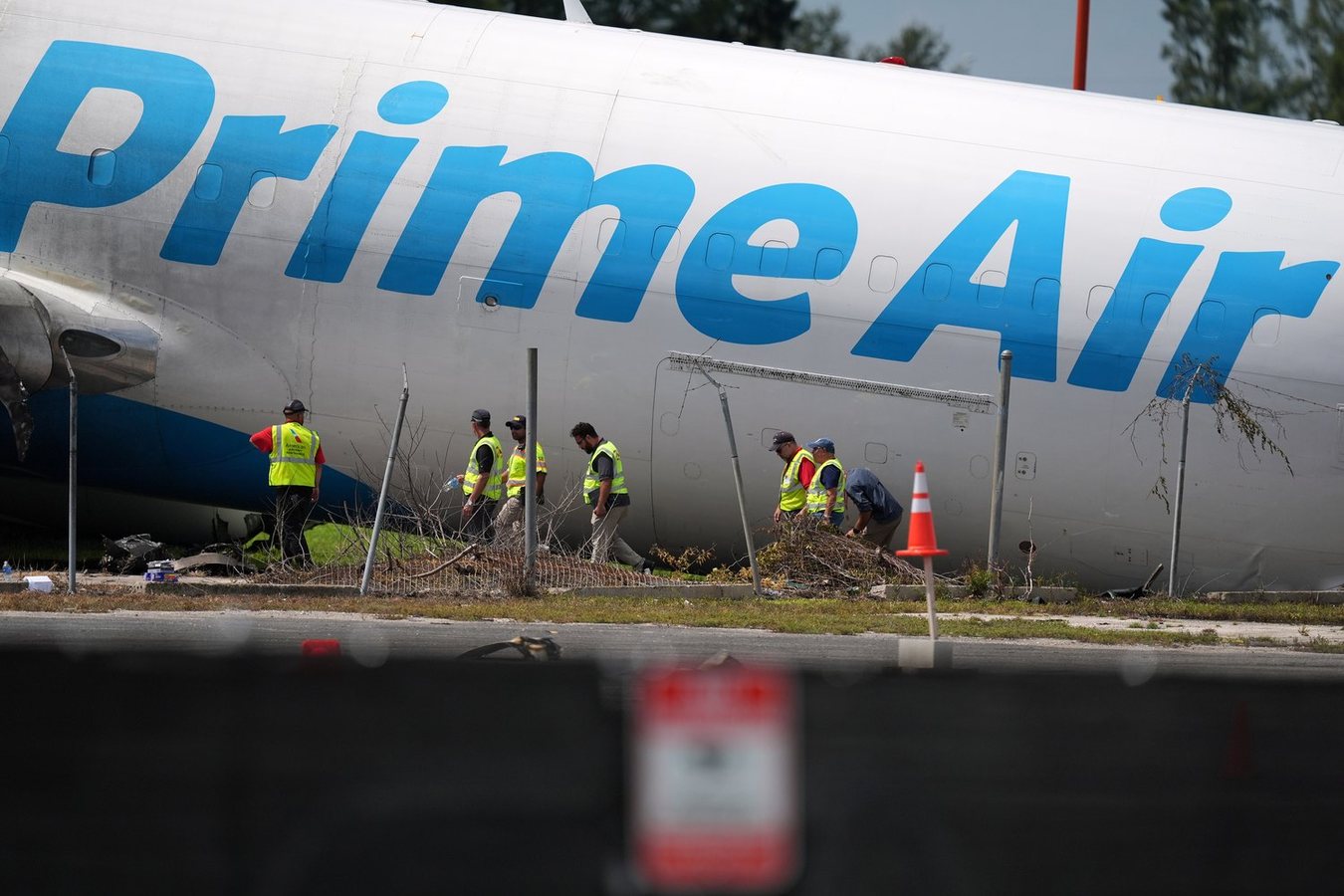
Investigators have released black box recordings showing that the crew of an Amazon cargo aircraft warned their plane was coming in too fast moments before it careened off a runway at Miami International Airport, an accident that killed five people. The cockpit voice and flight data, made public by the National Transportation Safety Board, capture alarms sounding as the aircraft approached the runway at a speed well above what the landing profile called for.
The recordings indicate the crew recognized the problem before touchdown. According to the data, one of the pilots cautioned that the plane was approaching too fast, and warning systems activated inside the cockpit as the aircraft descended toward the runway. The plane ultimately overran the end of the runway, departed the paved surface, and came to rest in a fatal crash that claimed five lives.
The disclosure offers the clearest picture yet of what happened in the final minutes of the flight, which was operating as Prime Air Flight 7598 for Amazon's air cargo network. The NTSB data has become the central piece of evidence in the investigation, pointing investigators toward the aircraft's speed on approach as a key factor in the sequence of events that ended in the deaths.
Excessive speed on approach is a serious concern in aviation because it leaves a crew with less distance to slow the aircraft and stop it once it touches down. Runway overruns can occur when a plane crosses the threshold faster than planned, particularly if other factors such as weather, aircraft weight, or braking performance reduce the available margin. Investigators have not yet assigned a final cause, and the NTSB's inquiry is expected to examine the full landing sequence, including how the crew managed the approach and what conditions prevailed at the airport at the time.
The crash has also drawn attention to the cargo carrier's safety culture. Documents reviewed in the aftermath of the accident show that former pilots for the cargo company involved in the Miami crash had previously raised concerns about safety, adding a broader dimension to the investigation beyond the immediate mechanics of the landing. Those concerns, reported by local media, suggest questions about training, operational pressure, and oversight within the cargo operation.
Amazon relies heavily on its air cargo network to move packages quickly across the United States, and the crash has focused scrutiny on the contractors and carriers that fly on its behalf. Cargo aircraft operations differ from passenger service in scheduling, payload, and crewing, but they face the same fundamental demands of safe approach and landing. The accident has renewed discussion about how speed, runway conditions, and crew decision-making intersect in the final seconds of a flight.
The NTSB has not issued final conclusions, and the release of the black box material marks an intermediate step in an investigation that could take months to complete. The data now in the public record establishes what the cockpit recorded: a crew aware of a speed problem, alarms sounding, and a landing that ended with the aircraft off the runway and five people dead. Further findings are expected as investigators continue to analyze the flight data and interview those connected to the flight and the cargo operation.
76