State Dept Warns of More Confrontational Protests as France Braces for National Rally Congress
An internal State Department assessment warns that antifascist groups plan a separate protest near the National Rally convention in Orléans this weekend, as France reels from Oct. 17 riots that left thousands arrested and exposed intelligence failures.
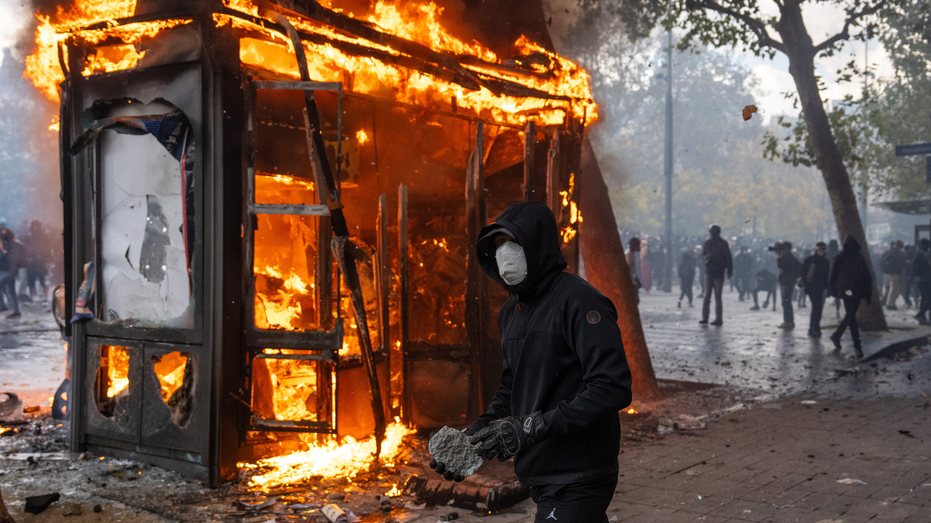
France is bracing for a second consecutive weekend of unrest as the far-right National Rally prepares to hold its party congress in Orléans, with the State Department warning that antifascist groups are planning a «potentially more confrontational protest» near the convention venue. The internal assessment, obtained by Fox News Digital, cautions that the demonstrations could «expose further security shortcomings and deepen political tensions» just days after widespread riots overwhelmed police and laid bare major intelligence failures.
The warning comes at a perilous political moment for President Emmanuel Macron. The same unrest that exposed his government's security vulnerabilities could also give the National Rally and center-right parties an opening to challenge his record, according to the State Department assessment. The violence has reshaped France's political debate just six months before voters choose Macron's successor, shifting attention away from the economic and education grievances that initially drove the protests and toward public security and government accountability.
As party leader Marine Le Pen prepares for the Oct. 24–25 gathering, where she is set to launch her presidential campaign, left-wing parties, unions and activist groups are planning a march on Saturday, while antifascist groups have announced a separate protest on Sunday near the convention venue. National Rally President Jordan Bardella has ruled out canceling the congress, and local authorities are preparing additional security restrictions around the event.
The looming confrontation follows the Oct. 17 unrest, when authorities badly underestimated the scale of demonstrations that descended into rioting and looting. Some 550,000 people joined 110 marches nationwide, according to France's Interior Ministry. More than 2,400 people were arrested, nearly 1,000 law enforcement officers and firefighters were injured, and thousands of businesses were damaged. Intelligence failures that far underestimated turnout left authorities overwhelmed and facing more than double the number of protesters originally estimated.
French officials have acknowledged that intelligence and planning failures contributed to authorities being overwhelmed. Interior Minister Laurent Nuñez offered his resignation after admitting police «lost control» in some major cities. Macron rejected it, citing the need for continuity in law enforcement command, and ordered «full transparency» over the failures in planning and intelligence-gathering that preceded the violence. Nuñez has said authorities need to improve their ability to anticipate large-scale mobilizations, putting added pressure on security services to avoid a repeat when demonstrators converge on Orléans this weekend.
The government may have little time to recover even if the National Rally congress passes without major violence. Labor organizations are already mobilizing for nationwide strikes and demonstrations on Nov. 5 over wages, public services and the proposed 2027 budget, according to the State Department document. The internal assessment said Macron faces competing pressure to restore order while addressing the grievances fueling the protests, with limited fiscal room for concessions as parliament debates next year's budget.
With parliamentary scrutiny looming and further demonstrations already planned, the State Department assessed that France faces another potential flash point that could «expose further security shortcomings and deepen political tensions.» The weekend will test whether French authorities have learned from the failures of Oct. 17 — and whether the political fallout will further weaken Macron's already embattled presidency.
9