Hungary and Poland Cite French Unrest to Defend Strict Migration Policies
Hungarian Prime Minister Péter Magyar and Polish Prime Minister Donald Tusk are pointing to violent unrest in France and Italy as justification for their restrictive border and asylum policies, arguing their countries will not repeat what they call the mistakes of Western Europe.
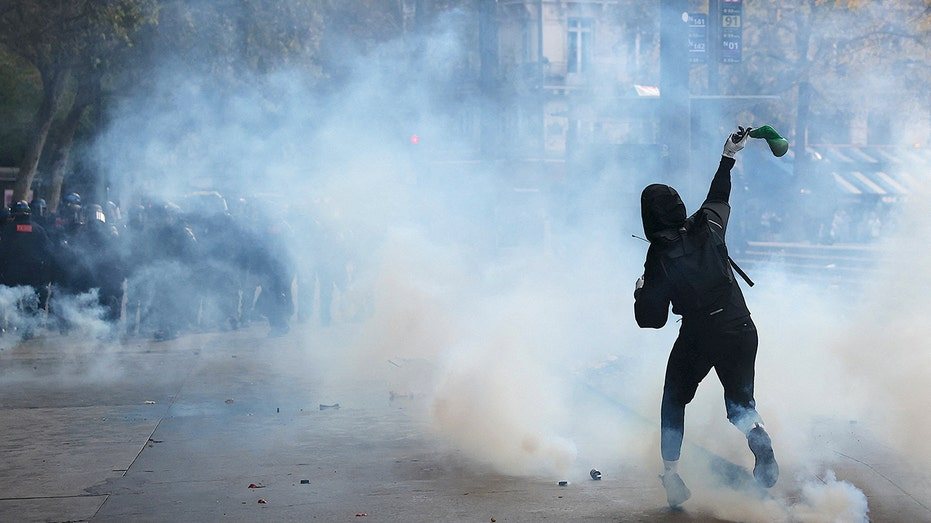
Hungary and Poland are using scenes of burning cars and damaged buildings in France and Italy to argue that their restrictive migration policies are the right model for Europe, turning unrest in Western Europe into a political message aimed at voters at home and at Brussels.
Hungarian Prime Minister Péter Magyar said on social media that «Europe can count on Hungary,» adding that the destruction and violence make clear why his country favors the strictest possible approach to migration and will not weaken border protection or immigration policy under any pressure. Poland's Prime Minister Donald Tusk struck a similar note, writing that «Poland will not repeat the mistakes of other European countries, nor will it pay for them.» Tusk said Warsaw is firmly defending its border against illegal migration, does not accept asylum applications, deports those who break Polish law, and will be relentless on security issues.
The contrast in scale is stark. According to the latest available Eurostat figures, France had almost 10 million foreign-born residents in 2025 and Italy about 7 million. Poland had roughly 1 million, about half of them from Ukraine, while Hungary had fewer than 700,000, most born in other European Union countries. Crime data points in the same direction: Eurostat recorded 304,900 police-recorded offenses in France in 2024, among the highest totals in the bloc, compared with 142,600 in Italy, 57,300 in Poland and 28,600 in Hungary. A separate Eurostat perception measure for 2023 found about 20 percent of people in France reported crime or vandalism in their area, against 14 to 17 percent in Italy, 7 to 8 percent in Poland and 6 to 7 percent in Hungary.
Analysts say the timing is deliberate. Daniel Schatz, a Sweden-based political scientist, said burning buildings and looted shops are becoming «political ammunition across Europe,» giving leaders who favor tougher immigration rules a blunt message for voters: «This is what we intend to prevent.» He added that images of chaos can carry more political weight than a hundred policy speeches, and that being pro-European does not mean signing up for liberal immigration policies.
Boštjan Udovič, who chairs international relations at the University of Ljubljana in Slovenia, said Central and Eastern European countries tend to link EU membership to a national identity built around a single nation, making it unrealistic to expect them to embrace a multiethnic model. He noted that Tusk is effectively entering a pre-election period in which migration will be an issue. Poland's next parliamentary election is scheduled for November 2027, and former Prime Minister Mateusz Morawiecki, a possible Tusk opponent, echoed the message, writing that «France is burning, and we must be wise before the harm is done» and promoting his center-right coalition's proposals to make Poland both prosperous and safe.
Magyar also pointed to last week's European Council summit, saying it showed that most European countries have woken up and want to break with the permissive policies of the past. He expressed solidarity with the French people while warning that «the Europe we all love is in serious trouble today.» Both governments have previously clashed with EU courts over migration, with Hungary fined and sanctioned for refusing to open its gates and Poland facing sanctions in 2025. Schatz summarized the dynamic: «The streets are French or Italian; the voters being addressed are Hungarian or Polish.»
3