Economist warns New York City grocery plan could force taxpayers to cover losses
A Heritage Foundation economist says Mayor Zohran Mamdani's proposed city-run grocery stores with 30 percent discounts would strain private grocers and require heavy taxpayer subsidies, citing past municipal failures.
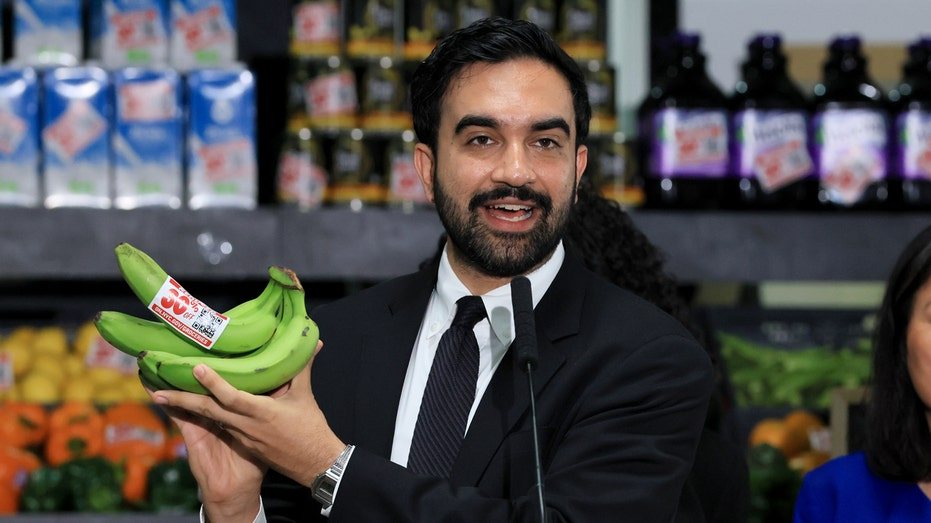
New York City's proposal to open municipally operated grocery stores selling essential goods at 30 percent below market prices would create deep financial losses that taxpayers would ultimately have to cover, according to economist E.J. Antoni, who warns the plan could also drive private supermarkets out of business.
Antoni, chief economist and Richard F. Aster fellow at the Heritage Foundation, laid out the case in an opinion column reacting to the announcement. At a July 27 press conference, Mayor Zohran Mamdani promised that the new city-run stores would undercut existing grocery prices by about 30 percent on essential products.
Antoni argues that the math does not hold up. Grocery retail, he notes, is a razor-thin business with profit margins of roughly 2 percent even for well-run chains. A mandated 30 percent discount, he calculates, would mean losing at least 28 cents on every dollar of sales before adding any of the inefficiencies typical of government operations. Because city agencies are likely to be less efficient than competitive private businesses, he predicts the actual losses would be even higher. Those losses, he adds, would be paid from taxes collected from New Yorkers, who already face some of the highest tax rates in the country.
The column also identifies a competitive threat to existing supermarkets. Private grocers have to account for rent, property taxes, insurance, labor, utilities, security, and the cost of complying with city regulations. Government-run stores, by contrast, could receive property tax exemptions and absorb operating deficits. Antoni argues that this combination would pull enough market share away from private stores to force marginal supermarkets to close and deter companies from opening new locations. He also raises the risk that independent retailers would buy deeply discounted goods from city stores and resell them, because 30 percent off could be cheaper than wholesale prices, and asks whether the city could stop that without turning checkout procedures into a divisive enforcement problem.
Antoni draws on previous government grocery experiments to support his warning. He points to Kansas City, which he says lost about $18 million on a grocery store that sold rotting food, and Chicago, where roughly $26 million was spent running seven stores before the effort collapsed. He also compares the grocery plan to New York City's transit system, noting that the Metropolitan Transportation Authority requires about $11.7 billion in annual subsidies, or roughly $3,000 per household. If city groceries became a similar money pit, pressure to cut subsidies could grow, and the stores would then have to reduce quality to control costs.
Rather than replacing private grocers with a public operation, Antoni recommends policies designed to help existing supermarkets expand. He suggests reducing property taxes, permitting fees, and construction costs, relaxing parking restrictions, leasing unused public space to grocery companies at discounted rates, and reforming zoning so that new stores can open without years of delay. He also calls for more consistent action against shoplifting. Antoni ends with a warning that placing the city's entire food supply under the same bureaucracy that has already allowed a shortage of grocery stores would turn a manageable problem into a crisis.