Sorority Alumnae Ask Federal Appeals Court to Revive Kappa Kappa Gamma Lawsuit
Two Kappa Kappa Gamma alumnae are urging the 10th U.S. Circuit Court of Appeals to revive their lawsuit against the sorority's national leadership, arguing that a University of Wyoming chapter improperly admitted a transgender woman without following member voting procedures.
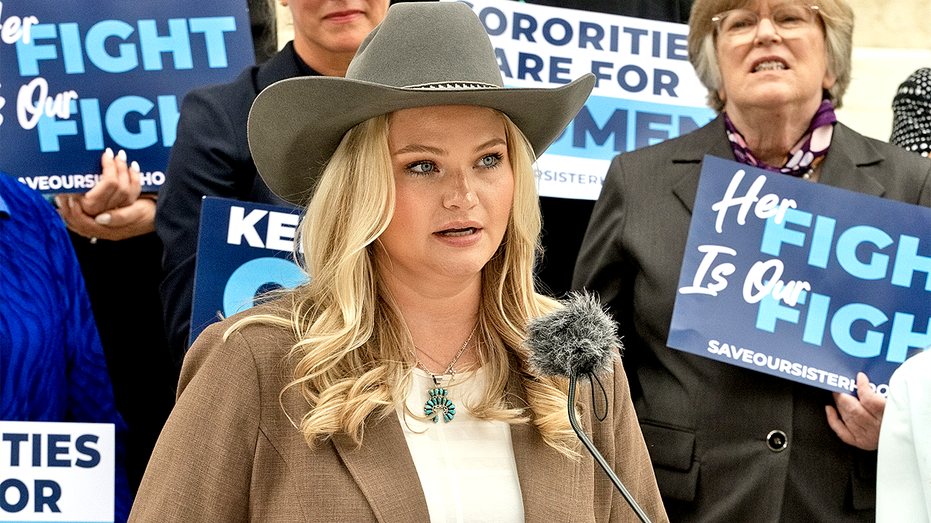
Two Kappa Kappa Gamma alumnae are asking a federal appeals court to revive their lawsuit against the sorority's national leadership, arguing that a University of Wyoming chapter improperly admitted a transgender woman in 2022 without following the organization's own voting procedures. The plaintiffs, Allie Coghan and Hannah Holtmeier, appeared before a three-judge panel of the 10th U.S. Circuit Court of Appeals in Denver on Monday, seeking to overturn a lower court's dismissal of their breach of contract claim.
The dispute began when transgender student Artemis Langford was admitted into the University of Wyoming chapter of Kappa Kappa Gamma. Coghan said she and other members had reservations about the admission, but the chapter did not use its traditional recruitment app to conduct the vote. Instead, members were required to submit non-anonymous Google Forms tied to their email addresses. Coghan said officers went door to door asking members for proof of how they had voted and warned that anyone who voted against membership would be labeled «transphobic.»
U.S. District Judge Alan B. Johnson dismissed the initial lawsuit, ruling that Kappa Kappa Gamma, as a private organization, could interpret its own membership requirements. The alumnae, represented by the Independent Women's Law Center, appealed to the 10th Circuit, which heard oral arguments Monday. The plaintiffs contend that the sorority's national leadership could not legally redefine core membership terms — including what constitutes being a «woman» — without a formal vote from the organization's members or an amendment to its bylaws.
Coghan, who has since graduated, said she hopes the appeal will establish a legal precedent protecting single-sex private spaces and preventing national organizations from overriding local member consent. «We were promised a sisterhood, and we were given a brother,» Coghan said. «If Kappa wants to redefine the word woman to include men in the definition, that's fine, but they have to go through the proper procedures to do so and allow members to vote, which they did not.»
Both plaintiffs described the atmosphere in the sorority house as a «political war zone.» Coghan said Langford did not live in the house but was granted 24/7 access to living quarters and common rooms, including an area young women had to walk through to reach the showers. Holtmeier said women would sometimes act as lookouts for one another, texting roommates to clear the hallway before walking to the shower in a towel. «It was definitely an unnerving feeling in those intimate spaces, especially upstairs when that's where our showers were,» Holtmeier said.
The plaintiffs also said the chapter president told members that if they did not like the change in their house, they were welcome to drop out of the group. «She basically told us, 'If you don't like it, your values don't align with Kappa's, and you can drop,'» Holtmeier said. «Being told that, 'If you don't like it, you can drop' and not live in a house that I had called a home for already a year and a half was absolutely mind-boggling to me.»
Coghan said members and parents tried to contact the sorority's national leadership but executives did not answer phone calls and eventually stopped responding to emails. She said a sense of duty to younger women keeps her involved in the case. «I don't understand how the feminist movement has shifted so much that it's no longer pro-women, it's pro-woman erasure,» Coghan said. «I hope that it will really set a standard of woman means woman.»
The three-judge panel is now considering whether to overturn the lower court's dismissal and revive the breach of contract lawsuit. A ruling is expected in the coming months. The case is being closely watched as part of a broader national debate over single-sex spaces and the authority of private organizations to define their own membership criteria.