
World Models Emerge as Next Frontier in Artificial Intelligence Development
Leading AI researchers and companies are shifting focus from large language models to world models that simulate physical dynamics, with potential applications in climate science, weather forecasting, and biology.
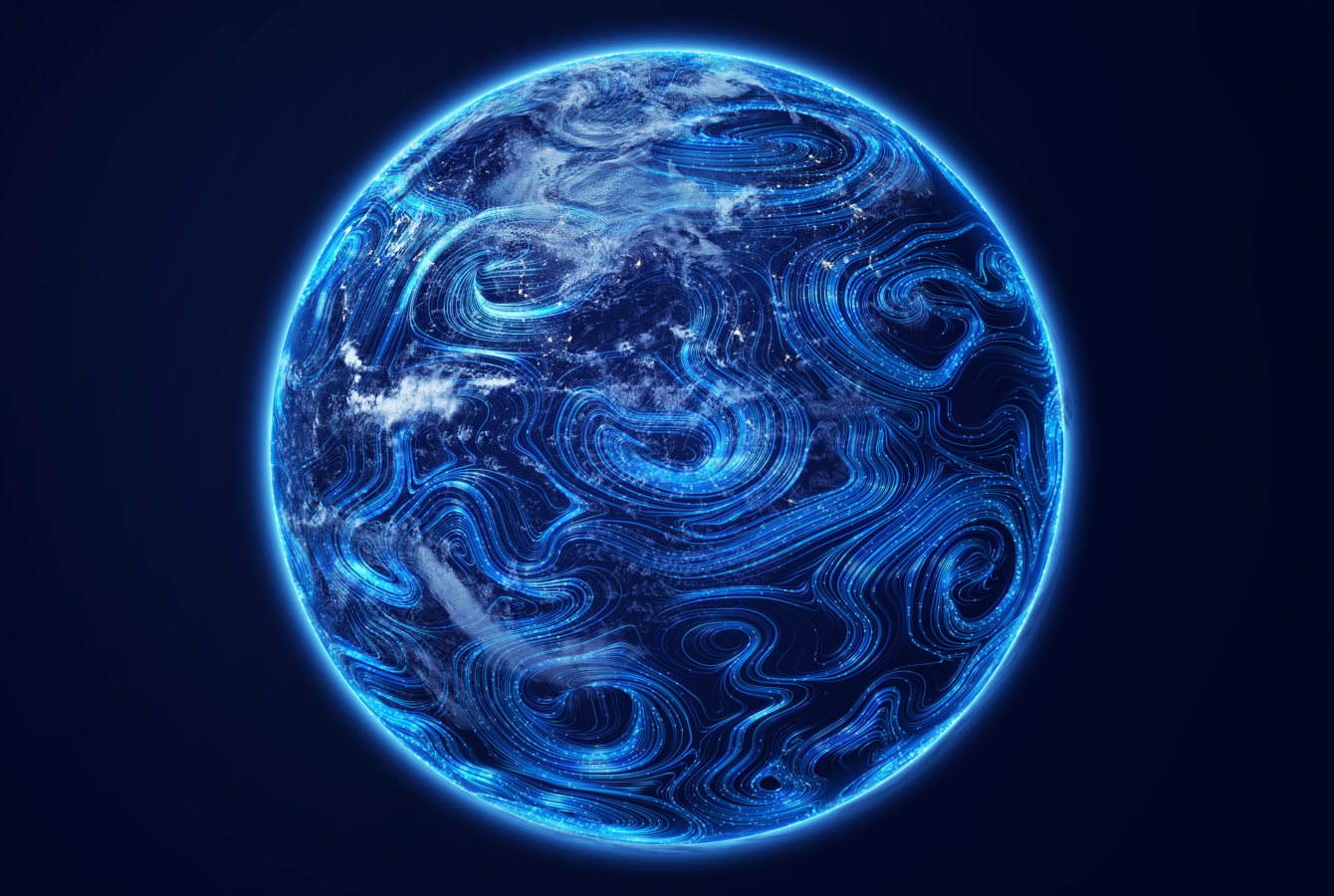
A growing number of leading artificial intelligence researchers and companies are turning their attention to a new paradigm known as world models, which aim to simulate the dynamics of the physical world rather than simply predicting the next word in a text. Unlike large language models such as ChatGPT, Claude, or Gemini, which learn patterns from text, world models learn from observation and simulate forward to test what happens next. This shift represents a fundamental change in how AI systems understand and interact with reality.
Prominent figures in the field have made world models central to their research agendas. Yann LeCun, who left Meta in late 2025 to launch Advanced Machine Intelligence Labs, has built his research program around this concept. Demis Hassabis, who runs Google DeepMind, has made world models a core component of the company's push toward more general AI. Sam Altman has described OpenAI's Sora as a world simulator, though that claim is contested. Fei-Fei Li raised a billion dollars for her company World Labs to pursue what she calls spatial intelligence. Jensen Huang, meanwhile, is building the simulation platforms and computing infrastructure that could power the next wave of AI, similar to what NVIDIA did for large language models.
The term world model is used loosely across the industry, and not everything marketed as such qualifies in the strict architectural sense. The key distinction, according to LeCun, is that a model trained on how a system behaves rather than how it looks—an architecture he calls JEPA—will generalize better to the physical world than video generators like Sora. This is not a product category but an architectural approach that could take AI from being fluent at language but lacking a real model of the physical world to having a grounded understanding of how that world behaves.
The potential applications for world models extend far beyond language processing. A former climate scientist who ran ocean-atmosphere simulations on supercomputers at NASA noted that while AI has already made significant contributions to Earth system science—spotting wildfires and methane leaks from orbit, improving weather forecasts, and running flood forecasting in over 150 countries—the hardest problems have barely moved. These include predicting what a hurricane will do at landfall, when the next drought will break, and how ocean circulation behaves as ice melts. Sub-seasonal weather forecasts, which drive water, energy, and agricultural planning, remain weak.
The forests, soils, and vegetation that absorb roughly a third of human emissions carry the largest uncertainty in the entire carbon budget. Unlike fossil fuel emissions or atmospheric carbon dioxide, this land carbon sink cannot be measured directly at the global scale and must be inferred. Tropical convection, the storm systems that deliver rainfall for billions of people, unfolds at scales too small for global models to capture, forcing scientists to rely on rough approximations that have proven difficult to improve for decades.
The bottleneck is not computing power, which is now trillions of times more powerful than in the past. It is not a lack of data, which is now planetary in scale. Nor is it a lack of physics for the parts of the Earth system that are well understood. The bottleneck is representation: finding a way to model systems that cannot be described exactly because the physics is only partly understood and the measurements are sparse. Simply scaling up today's language models does not solve that problem.
The Earth system is currently modeled in pieces—atmosphere, ocean, ice, land—which simplifies away the signals that live in the coupling between them. The variables that matter most are largely unobserved: root-zone soil moisture, the deep ocean, and the cavities under ice shelves. Higher resolution helps, but a finer grid running the same approximations is still running approximations. The hardest problems in science sit in the gap between what is too poorly understood to write down in equations and what is too sparsely observed to learn from data alone.
World models could address this gap, not by replacing physics, but by learning the dynamics from the joint Earth-system record, with the physics that is trusted enforced as hard constraints. For chaotic systems, a world model can learn the unwritten dynamics while respecting the written ones. Some of this is already visible in operational systems like AlphaFold, NVIDIA's Earth-2, and GraphCast, which are used across biology and weather forecasting. These systems work where physics is partly understood and observations are rich. What none yet does is learn the dynamics of open systems whose uncertainty has barely narrowed, such as sea level, the carbon cycle, and the coupled behavior of a warming planet.
World models will not deliver certainty. They will not collapse the sea-level range to a point estimate. Their value is narrower but real: tighter, more honest ranges of plausible futures that coastal planners and banks actually need for trillion-dollar adaptation choices. There is also a hard limit: a world model cannot forecast a regime the Earth has never entered, such as the world after an Atlantic circulation collapse, because there is no data from the far side to learn from. No method can. But the relevant question is how close we are to such a threshold, and these systems can begin to help answer that.
Three forces have converged to make this moment possible. The architecture has matured to the point where these systems can now be trained at scale. The Earth is now instrumented at a level that provides the observational data needed for training. And the computing infrastructure to support these models is being built by companies like NVIDIA. If the researchers are right, this is more than another commercial AI cycle. It is the period in which the substrate of the next generation of AI gets built, and what gets built now, by whom, and on what data, will shape what AI can do for years to come, particularly in solving problems related to climate, oceans, the biosphere, and the biology of disease.
128