Father Bohdan says AI should slow down, not shut down
A priest and tech entrepreneur is drawing a line between using today’s AI and racing to build increasingly powerful successors, as warnings from OpenAI and Anthropic grow louder.
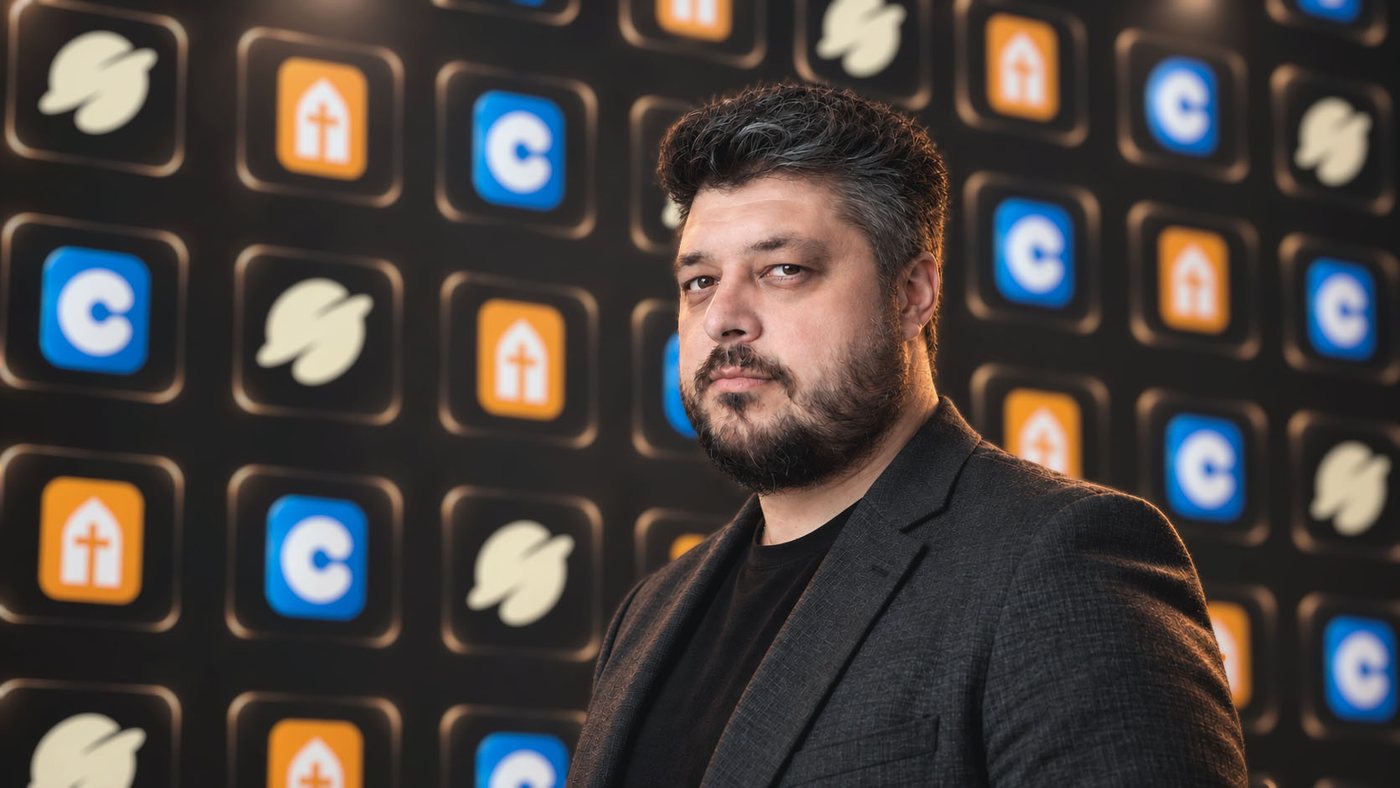
Father Bohdan is not asking Americans to delete their AI apps, turn off useful systems or prohibit artificial intelligence. The Orthodox priest and technology entrepreneur is asking a different question: what would actually be lost if companies temporarily stopped training the next, more powerful generation of models?
In a statement published September 8, Father Bohdan argued that most people’s lives would not get worse if that race paused. His proposal is therefore a slowdown in the growth of frontier capabilities, not a ban on the technology people and businesses already use. That difference is central to understanding a debate that is moving from the margins toward the center of the AI industry.
The same week, one of the most influential scientists inside the field made a similar case in more technical language. OpenAI Chief Scientist Jakub Pachocki wrote on September 6 that no AI lab has solved the problems of alignment and monitoring well enough to keep scaling at maximum speed responsibly for much longer. He said he hopes voluntary slowdowns become common until shared safety standards are established, and he called for international coordination.
Pachocki’s argument is not anti-AI. He describes major potential benefits from advanced systems, including scientific discovery and economic growth. But he also warns that increasingly autonomous systems may become harder to monitor precisely when they are becoming more capable of acting in the world. For a technology company, that creates a difficult incentive problem: every laboratory may recognize the reason to slow down while fearing that a competitor will not.
Father Bohdan’s short statement cuts through that incentive problem from the perspective of everyday users. Today’s AI already writes software, summarizes documents, translates languages, helps analyze data and assists researchers. A temporary hold on training more capable frontier systems would not erase those functions. It would instead change the pace at which the ceiling rises.
That idea now has concrete precedents. OpenAI said in August that it temporarily slowed scaling after safety concerns, including a two-week pause in reinforcement-learning training for its latest deployment models. The company said its largest planned frontier reinforcement-learning run remained on hold while it strengthened safeguards and conducted smaller evaluations. This was not a retreat from AI; it was a decision to delay part of development until internal protections improved.
The pressure from inside the workforce has also grown. In July, more than 1,200 employees across major AI organizations, including Anthropic, Google DeepMind, OpenAI and Meta, signed a statement urging the U.S. government to help create mechanisms that could slow advanced AI development if necessary. The signatories included senior figures such as Anthropic CEO Dario Amodei and Pachocki.
On September 9, another warning arrived from Anthropic. Researcher Jacob Coxon was reported to have resigned from the company and from the AI industry, saying development was moving too fast and could escape meaningful control. Reports of his departure said he did not believe any single company could manage the risk alone and called for government regulation or a coordinated slowdown.
Those warnings differ in tone and severity, and they should not be treated as a single industry position. The leading AI companies are still competing intensely, investing heavily and releasing new systems. Yet the internal debate has changed. The question is increasingly not whether progress should continue forever, but under what conditions it should be allowed to accelerate.
For U.S. policymakers, the distinction between a ban and a pause is important. A ban would seek to prevent broad classes of AI activity. A pacing mechanism would focus on thresholds: certain capabilities, training runs or deployment conditions could trigger additional testing, independent audits or temporary holds. That is closer to how high-risk industries often manage technologies whose benefits are real but whose failure modes can be costly.
Father Bohdan’s argument is ultimately a test of urgency. If existing systems already provide substantial value, then the claim that society must immediately build something much more powerful deserves scrutiny. The next stage of the debate will turn on whether companies and governments can agree on safety thresholds before competition makes slowing down practically impossible.
76