Britain Funds Robotic Spacecraft With Claws to Capture Dead Satellites
ClearSpace UK has won a roughly $81 million contract from the UK Space Agency to build a spacecraft that will grab defunct satellites and send them into Earth's atmosphere to burn up.
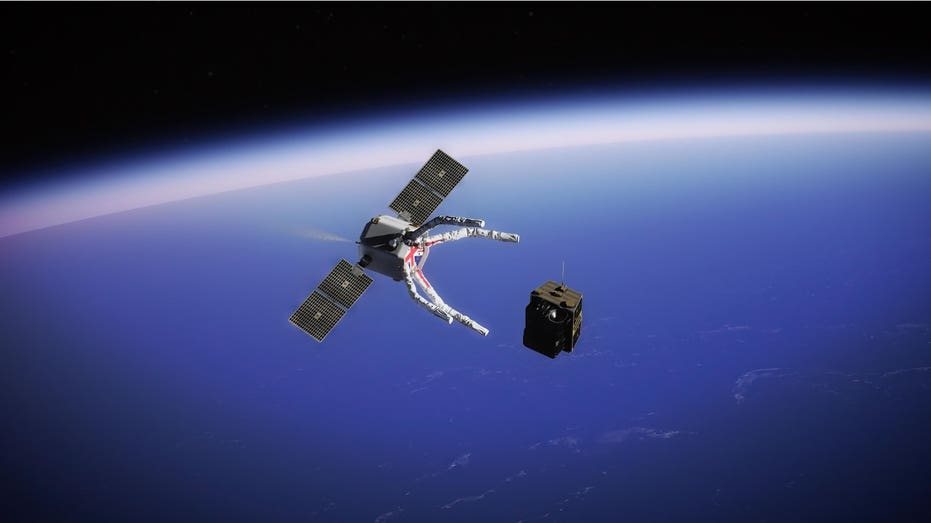
Britain is developing a robotic spacecraft equipped with large claws designed to grab dead satellites from orbit and steer them toward a fiery reentry over Earth. The UK Space Agency has selected the aerospace company ClearSpace UK for the project, a contract valued at approximately $81 million.
The spacecraft is part of Britain's Active Debris Removal mission, known as UK ADR. It is targeted for launch in 2029 from SaxaVord Spaceport in Scotland's Shetland Islands. Its first task is to remove two defunct UK-registered satellites from low Earth orbit, and the government wants both satellites removed by 2032. If the mission succeeds, it would show that a single spacecraft can capture and dispose of several dead satellites rather than being used up after one cleanup, a capability that could make future operations far more practical as the number of satellites in orbit keeps growing.
Catching a satellite is a difficult maneuver. Objects in low Earth orbit typically travel at roughly 17,000 miles per hour or faster, and some dead satellites may tumble, making them hard to approach safely. The ClearSpace spacecraft will use a specialized capture system to get close to an inactive satellite and carefully match its movements before its robotic mechanism takes hold of the object. Once secured, the spacecraft will move the satellite into a lower orbit and release it. Atmospheric drag will then pull the abandoned satellite down, where it is expected to burn up on reentry. The cleanup vehicle is also being designed for potential refueling and reuse, so it could stay in orbit for later work instead of ending its mission after one removal. Engineers still have to demonstrate that the technology can handle these demanding operations safely.
The effort responds to a growing crowding problem in orbit. According to the European Space Agency's space debris statistics, updated October 14, 2026, about 47,140 objects are regularly tracked around Earth. That total includes functioning satellites, inactive spacecraft, rocket bodies and debris, and it counts only objects large enough to track reliably. ESA estimates that millions of smaller pieces also circle the planet. Because of their speed, even a one-centimeter fragment can carry enough energy to disable a spacecraft, and ESA has warned that an impact of that size could penetrate the protective shielding of the International Space Station.
Collisions between large objects are especially worrying because they can break apart and generate many additional fragments, each capable of damaging other spacecraft. Scientists call this potential chain reaction the Kessler syndrome. ESA's 2026 Space Environment Report warns that active debris removal will be necessary to prevent debris from growing over the long term as collisions add to the population.
The risk is not limited to satellites. Astronauts aboard the International Space Station have faced debris threats before. In November 2021, crew members took shelter inside their docked spacecraft after a Russian anti-satellite weapons test created a dangerous cloud of debris. NASA confirmed that astronauts and cosmonauts closed hatches and sheltered inside docked Dragon and Soyuz vehicles while teams assessed the threat. The station and crew remained safe, but the episode showed how quickly debris from a breakup can disrupt operations in orbit. A serious impact could damage critical systems or puncture a pressurized structure, which is why agencies continuously monitor debris and sometimes adjust spacecraft orbits to avoid collisions. Removing larger abandoned satellites could prevent future crashes that would create even more fragments.
10