China’s robot-run hotel to open in 2027 with full AI service
Pudu Robotics plans to open the first full-scenario robot-serviced hotel on West Artificial Island in Guangdong Province by 2027, using robots for reception, cleaning, food preparation, and guest support, with a trial starting in late 2026.
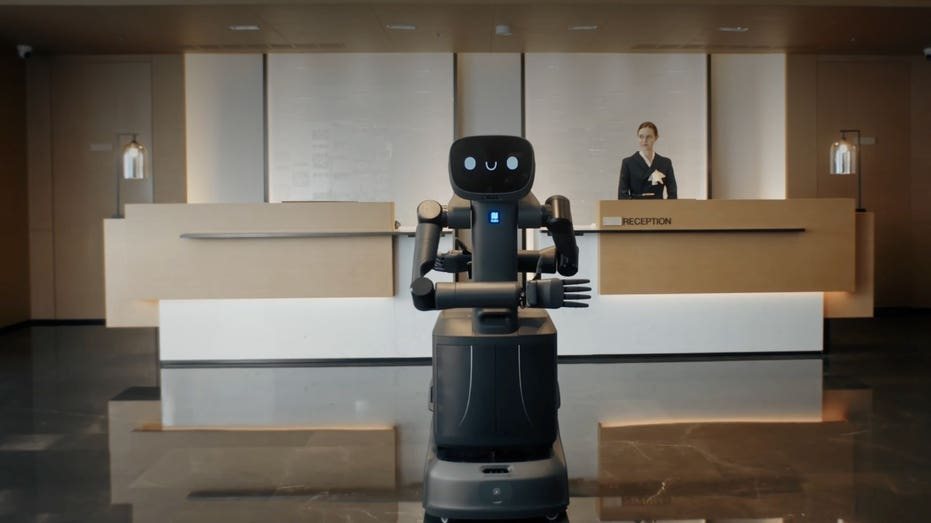
Pudu Robotics has announced plans to open what it describes as the world’s first «full-scenario robot-serviced hotel» on a man-made island in Guangdong Province, China, with a public trial expected in late 2026 and a full opening scheduled for 2027. The project aims to deploy robots across every aspect of the guest experience, from check-in and luggage delivery to cleaning, food preparation, and room service, using a shared artificial intelligence framework to coordinate different machines.
The hotel will be located on West Artificial Island, which is part of the Shenzhen-Zhongshan Link, a major cross-sea bridge and tunnel project in the Pearl River Delta. Shenzhen, already known as a leading technology hub in China, provides a fitting backdrop for this ambitious venture. The island is expected to become a robotics and technology destination over the next four years, with additional automation planned for tourism and hospitality services.
The facility will include 44 high-end rooms, a restaurant, a gym, and other guest spaces. Robots will handle tasks such as reception, room service, cleaning, food preparation, and guest support. Pudu’s FlashBot will operate an intelligent vending system that allows guests to order drink deliveries via smartphone. The PUDU T300 will transport luggage from the lobby to rooms, while the PUDU CC1 Pro and PUDU MT1 cleaning robots will manage cleaning duties using AI-powered waste-detection technology.
At a launch event in Shenzhen, the BellaBot Pro served coffee and the KettyBot Pro delivered refreshments and snacks, demonstrating the kind of robotic service that will become standard at the hotel. Pudu Robotics says its robots will work from a single intelligence framework called PuduFM 1.0, an embodied intelligence foundation model, and will be managed by PuduAgent, a system designed to oversee intelligent operations across the property.
«This partnership represents an important step toward large-scale deployment of embodied intelligence in premium hospitality environments,» said Cong Guo, co-founder and CTO of Pudu Robotics. He added that the project allows the company to explore new service models where AI and robotics work together to deliver connected experiences for guests.
China has already embraced service robots in hotels, restaurants, airports, and public spaces, but this project goes further by creating a fully integrated robotic system rather than adding a few machines to assist human staff. Room-service delivery robots are already common in many large Chinese cities, yet the robot-run hotel marks a shift toward automation as the primary service provider.
The rollout will be gradual. The first public trial, expected in late 2026, will allow early guests to test robot check-in and autonomous in-room delivery. A broader opening is planned for 2027. Shenzhen Culture & Tourism Industry Development will collaborate with Pudu Robotics to turn West Artificial Island into a robotics and technology destination, with the hotel serving as a centerpiece of that vision.
If successful, the hotel could change traveler expectations by offering faster check-in, automated deliveries, and round-the-clock service. However, the project also raises questions about jobs, privacy, safety, and the nature of hospitality itself. Some travelers may appreciate the speed and efficiency, while others may miss the human interaction that defines traditional hotel stays.
«A great hotel stay often comes from small human moments,» the company noted in its announcement, acknowledging the potential trade-off. The project will test whether guests are ready for hotels where AI handles the entire stay from start to finish, or whether the warmth of personal service remains essential.
Pudu Robotics, founded in 2016, is a leading Chinese robotics company specializing in service robots for commercial environments. Its products are already used in over 60 countries and regions. The robot-run hotel represents its most ambitious project to date, combining multiple robot types into a single, coordinated system.
The development of West Artificial Island as a robotics hub could turn the area into a testing ground for how travelers react when robots handle nearly every service touchpoint. Over the next four years, additional robotics applications are expected to be introduced across tourism and hospitality on the island, potentially influencing the future of automated travel services worldwide.
315