Caitlin Clark's Least-Watched Playoff Game Still Beats Every Non-Fever First-Round Broadcast
Caitlin Clark's lowest-rated playoff game of the year, a streaming-exclusive broadcast on Prime Video, still drew a larger audience than every non-Fever first-round WNBA playoff game with publicly reported numbers, underscoring her outsized impact on league viewership.
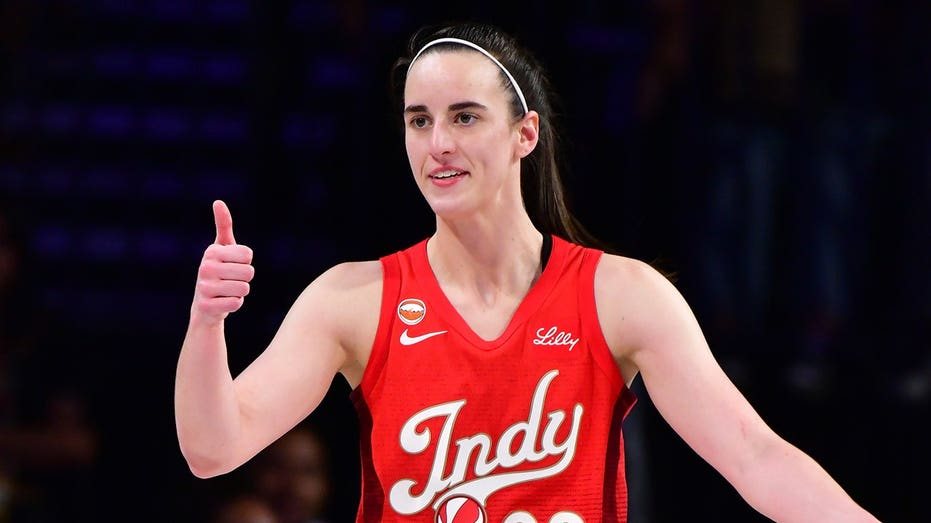
Caitlin Clark's least-watched playoff game this season still attracted a bigger television audience than every non-Fever first-round WNBA playoff game with publicly reported numbers, according to data compiled by Sports Media Watch. The finding underscores the outsized influence the Indiana Fever guard continues to have on league viewership, even when her games air on streaming platforms rather than traditional network television.
Indiana's September 29 victory over the Las Vegas Aces averaged 1.42 million viewers on Prime Video, Amazon's streaming service. That figure represented the smallest audience for any of Clark's three playoff games this year, yet it still surpassed the largest reported audience for a first-round game without the Fever — 1.40 million viewers for Golden State's Game 2 loss to Dallas on ESPN. The margin was narrow, roughly 20,000 viewers, but the comparison is notable because Clark's lowest number came on a streaming-exclusive broadcast while the non-Fever game aired on cable television.
Two nights later, Indiana's season-ending loss to Las Vegas averaged 2.25 million viewers across USA Network and CNBC, making it the second-most-watched WNBA first-round playoff game ever. The most-watched first-round game in league history also featured Clark and the Fever, whose 2024 Game 2 against the Connecticut Sun averaged 2.54 million viewers on ESPN. Across three games this postseason, Clark helped deliver one of the biggest first-round audiences in league history and a streaming audience that exceeded every reported non-Fever telecast.
Reported figures were available for nine of the 10 first-round games. For Dallas–Golden State Game 1, the analysis used a reported audience of 410,000 on USA Network and did not include CNBC viewers. OutKick requested the combined USA/CNBC total and ESPN2's Dallas–Golden State Game 3 audience but had not received a response by publication time. Those figures could change which non-Fever game drew the largest audience.
Indiana's three games averaged approximately 1.93 million viewers, compared with 949,000 for the six non-Fever games with reported numbers. That gave Clark's games an average audience approximately 103 percent larger than the six other first-round games. While networks, start times and streaming distribution varied across all those games, the opening Sunday offered a clean comparison point. ABC aired New York–Minnesota and Indiana–Las Vegas on September 27. The Liberty–Lynx opener averaged 1.20 million viewers while the Fever–Aces opener averaged 2.11 million — same day, same network, approximately 76 percent more viewers for the Fever.
There was also a comparison within Prime Video. Washington–Atlanta's opener averaged 425,000 viewers. Angel Reese, who now plays for Atlanta, famously insisted in 2024 that people watch women's basketball «because of me too.» But on the same streaming platform, Clark's Fever drew more than three times the audience of Reese's Dream.
Other data points reinforce the pattern. Last year, the Fever's playoff opener without an injured Clark drew 951,000 viewers on ABC, compared with 1.84 million for its opener with Clark the previous year. Both games aired in the same Sunday afternoon slot opposite the NFL. The 2025 All-Star Game offered another example. With Clark sidelined, ABC averaged 2.19 million viewers, down from roughly 3.4 million in 2024. Then, with Clark back in 2026, the number jumped back over 3 million.
There is also evidence that fans will watch the league after Indiana is eliminated. In 2024, the semifinals delivered strong audiences, including Liberty–Aces games that outdrew every game of those teams' championship series the year before. For the WNBA, the opportunity is to turn fans who arrive for Clark into fans who stay for everybody else. These numbers show there is a long way to go in that department.
The two Fever games on traditional television each drew more than two million viewers. Even Indiana's streaming-exclusive game edged the biggest reported non-Fever telecast. The six non-Fever games averaged under one million viewers. The remaining teams now have a chance to make their own case to viewers, with a championship still to be decided. The WNBA's biggest draw is done for the season. Now the league finds out how many viewers are.

5