Caitlin Clark's 'College GameDay' Appearance Draws Record Ratings and Podcast Criticism
Caitlin Clark returned to Iowa to promote her new Nike shoe and appear on ESPN's 'College GameDay,' drawing the show's biggest October audience in its 40-season history. Her appearance alongside Pat McAfee sparked criticism from left-wing podcasters who questioned her decision to share the stage with him, despite McAfee's past apology that Clark accepted.
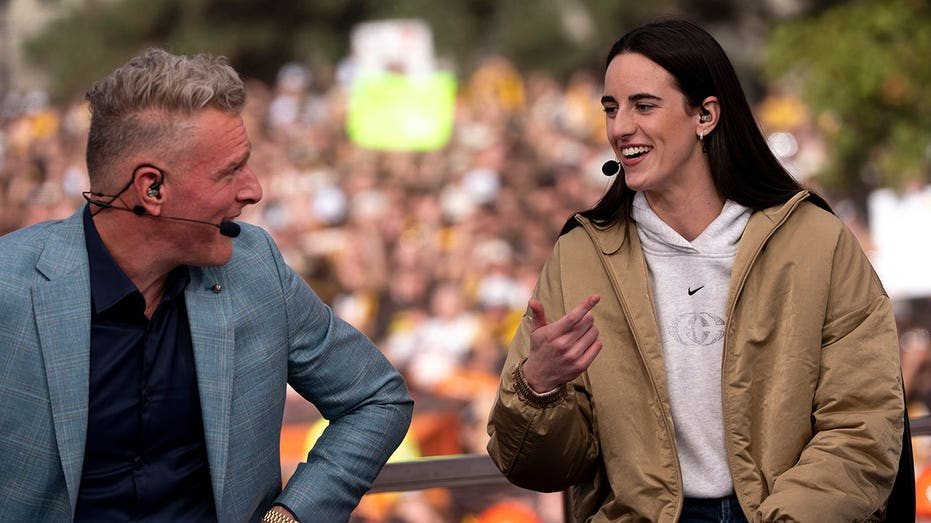
Caitlin Clark's return to Iowa on Saturday delivered record ratings for ESPN's «College GameDay» while simultaneously igniting criticism from left-wing podcasters who questioned her decision to appear alongside Pat McAfee. The show drew its largest audience of the season and the biggest October viewership in its 40-season history, according to the network.
Clark appeared on the program to promote her new Nike shoe and make game picks, marking another high-profile moment for the WNBA star whose popularity continues to drive unprecedented attention to women's basketball. Her first signature Nike shoe nearly sold out on the company's website within two hours of its release, underscoring her commercial power.
The criticism came from «The Sports Gossip Show,» a podcast hosted by Charlotte Wilder and Madeline Hill. Wilder suggested Clark needed to do something «for her own PR» and questioned her decision to share a stage with McAfee, citing his 2024 comment in which he called Clark a «white b---.» Wilder acknowledged that McAfee had apologized but said the context «doesn't really matter.»
McAfee's original comment was made while defending Clark. He argued that people needed to stop crediting the entire rookie class for the attention she was bringing to the WNBA and pushed back on the suggestion that fans liked her simply because she was white. He wanted people to acknowledge how good she was and what she was doing for the league. McAfee apologized for his wording, explained he meant it as a compliment, and Clark accepted his apology.
Wilder also argued that Clark should speak more forcefully about racism and threats directed at Black WNBA players. «We've just said before, if you and I were in a situation where a bunch of Black women were getting death threats and having a really hard time because of people who said they were fans of ours, I think we would say, 'You are not a fan of mine if you are perpetuating this behavior and these actions,'» Wilder said. «It's not the hardest thing in the world to say.»
Clark has addressed the issue multiple times. In September 2024, she said: «Nobody in our league should be facing any sort of racism, hurtful, disrespectful, hateful comments and threats. Those aren't fans, those are trolls.» In May 2025, responding to a question about an alleged racist incident at a Fever game that was never substantiated, she said: «There's no place for that in our game, there's no place for that in society.» And in July 2026: «Harassment, hate, none of that is OK.»
The podcast discussion also touched on Kelsey Mitchell's complaints about the scrutiny surrounding the Fever. Mitchell earned $1.4 million in WNBA salary this season, according to Spotrac, more than the roughly $1.12 million she earned in her first eight seasons combined. Her play earned her the contract, but Clark helped grow the audience for a league that can now pay players that kind of money.
Clark is the most popular female athlete on the planet. Fever games draw more viewers than any other team in the WNBA. She is a spokesperson for major brands like State Farm and Gatorade. Her first signature Nike shoe nearly sold out on Nike's website within two hours of its release. Despite the criticism, Clark's platform and influence continue to expand, driving record audiences and commercial success for the league and her fellow players.

6