
Global Test Scores Hit Record Low as Parental Support Declines
New PISA results show math, reading and science scores at their lowest point in the test's history among developed economies, with declining family engagement and digital distraction emerging as key factors.
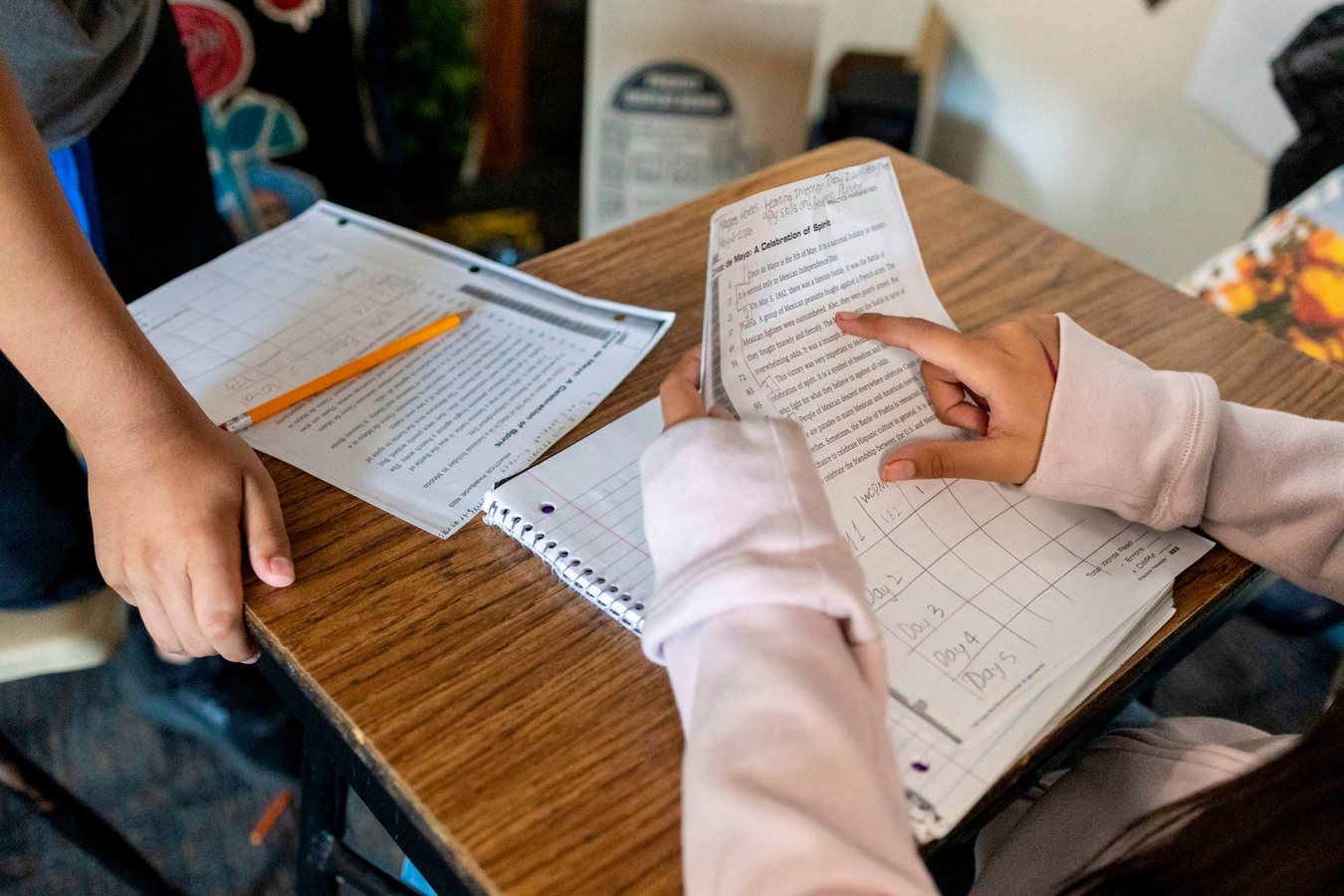
Average scores in math, reading and science have fallen to their lowest point in the history of the Programme for International Student Assessment among highly developed economies, according to results released Tuesday from a test taken by more than 760,000 fifteen-year-olds in dozens of countries last year.
The decline extends to the United States, where reading and math scores slid to their lowest level since PISA was first administered in the early 2000s. U.S. math scores now equal the average among OECD countries that took the test, while the country ranked in the top 15 globally for science, reading and a new computational problem-solving category. Researchers cautioned that those rankings benefited from declines elsewhere and that the U.S. results should be treated with caution because the country did not meet standards for a sufficiently large sample of participating schools and students.
China, Singapore, Taiwan, Japan and South Korea posted the highest marks on the assessment. Estonia, the United Kingdom and New Zealand also performed well. In the Chinese provinces that participated, along with Hong Kong and Macao, almost 100 percent of children scored at or above baseline for math and reading, compared with only 65 percent in math and 74 percent in reading in the United States.
The reasons behind the widespread decline may lie partly in an accompanying survey of students. Compared with 2022 results, almost every country saw a drop in families' support for their children's education, especially for boys, as measured by questions about how often parents discuss schoolwork or take an interest in learning. Andreas Schleicher, director for education and skills at the Organization for Economic Cooperation and Development, which runs PISA, said the shift reflects a changing relationship between families and schools. «Parents see themselves more as a client of the school, not as someone who takes personal interest,» he said.
The stakes attached to that engagement are substantial. Students who said a family member asks them at least weekly what they did in school that day scored roughly 35 points higher on the PISA science test — equivalent to more than a year and a half of learning — compared with students whose families take less interest, even after adjusting for socioeconomic differences.
Digital distraction emerged as another factor. More than a quarter of students in high-income countries said their classmates were distracted by digital devices in most or every science class. In countries with strong policies controlling cellphone use in schools, distraction rates were lower. Schleicher described a strong association between leisure use of digital devices and lower test scores, though the picture is more nuanced when technology is used for learning. Countries where high schoolers reported using digital devices for around two to three hours per day in school saw higher scores, but performance fell once tech use climbed beyond that threshold.
Asian nations appear to have found a more effective balance. Fewer than 10 percent of tested students in Japan, Korea and mainland China complained of digital distraction in the classroom, while those systems ranked among the top 10 regions for math, science and reading. Higher use of artificial intelligence was generally linked to lower scores, with students who said they never use chatbots outperforming those who do. Nearly half of students in developed economies report using AI chatbots to help them learn at least weekly. Schleicher pointed to China, Japan, Singapore and Estonia as countries that have succeeded in using AI to support learning without overusing it, noting that teachers in Asia are more empowered to lead the design of AI systems for the classroom. «In the United States, teachers largely implement lessons. In Asia, teachers have a very strong role,» he said.
Experts warn that China's educational dominance carries serious political implications. Tracey Burns, chief of global strategy and research at the National Center for Education and the Economy, said the ability to win a technological race depends on having people with strong science, technology and reading capabilities.
93