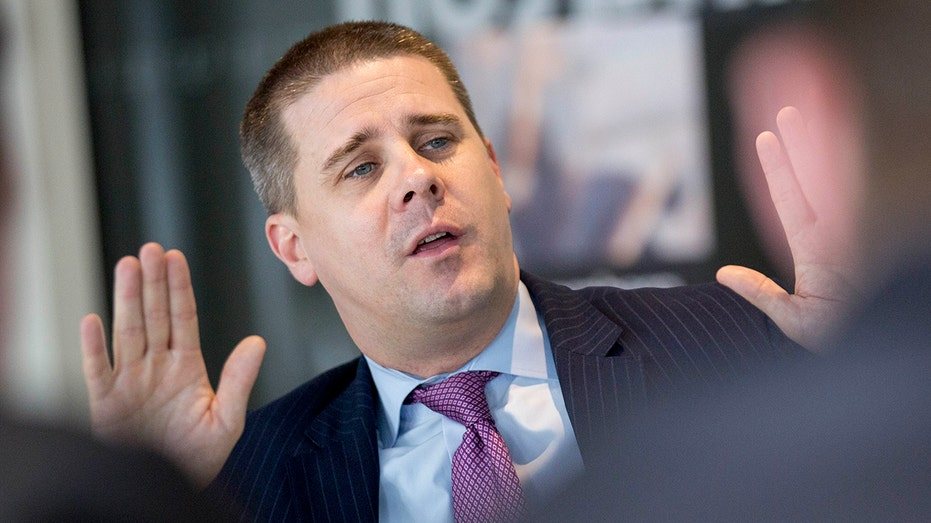
Turley warns El-Sayed wealth tax could drive money out of Michigan
Constitutional law scholar Jonathan Turley criticizes Michigan Senate candidate Abdul El-Sayed's proposed wealth tax, arguing it is unconstitutional at the federal level and economically harmful at the state level.
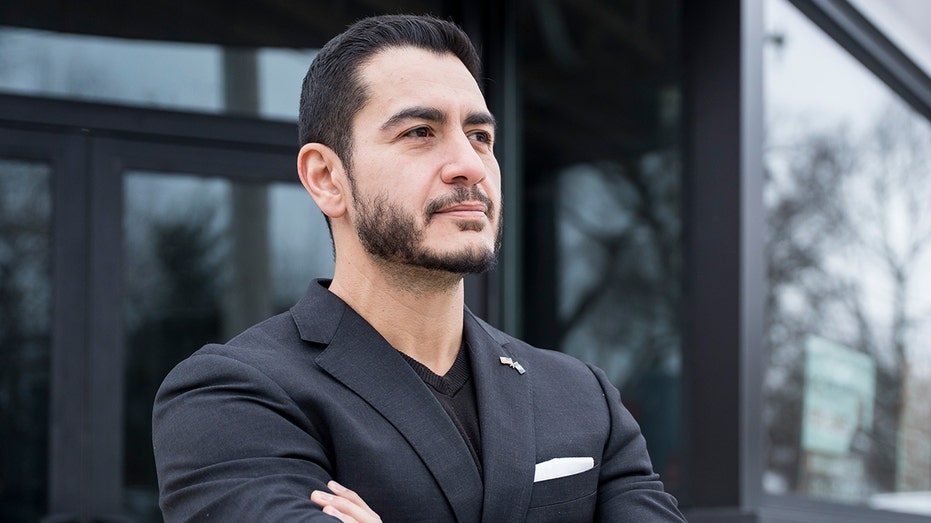
Michigan Democratic Senate candidate Abdul El-Sayed is pushing a wealth tax that would apply to residents with more than $100 million in assets, a proposal that constitutional law scholar Jonathan Turley says could devastate the state's economy and open the door to broader taxation of the middle class.
In a Fox News interview this week, El-Sayed reaffirmed his support for taxing the wealthy, arguing that billionaires have little practical use for additional money. He said on a podcast earlier this week: "I also think we got to start taxing wealth for people who now have over $100 million. I mean at that point like what are gonna even do with more money?"
El-Sayed, a physician and former Detroit health director, has proposed using the revenue to fund Medicare-for-All, reparations, road improvements, and other programs he has promised Michigan voters. He framed the tax as a choice between public infrastructure and billionaire fortunes, telling Fox News' Jesse Watters: "The question ultimately is, 'Do you want to drive on good roads, or would you rather have a billionaire make a second billion?'"
Turley, a George Washington University law professor and author of "Rage and the Republic," argues that the proposal is both legally dubious and economically dangerous. He notes that the federal government only secured the right to tax income under the 16th Amendment in 1913, not the right to tax accumulated wealth directly. A wealth tax, he contends, would likely be struck down as unconstitutional at the federal level and could trigger an exodus of wealthy residents if implemented at the state level.
The proposal has drawn support from other progressive figures, including Rep. Ro Khanna, D-Calif., who has called for taxing millionaires as well as billionaires. Turley warns that this represents a slippery slope, writing: "As some of us predicted, the use of billionaires was simply a strategic and political framing. Once politicians succeed in opening up this untapped wealth to taxation, they will gradually work down the tax rolls as they acquire a windfall in new revenue."
Turley draws historical parallels to Huey Long's "Share Our Wealth" campaigns of the 1930s and to "eat-the-rich" politics dating back to ancient Athens and the French Revolution. He argues that such rhetoric divides populations into "haves" and "have-nots" with promises that citizens can have it all.
El-Sayed's interview also raised questions about his understanding of the difference between wealth taxes and income taxes. He told Watters: "If we tax you at 7%, you're still going to make what? A cool $30 million off your billion dollars? I think that's OK, they're going to be OK, Jesse." Turley notes that El-Sayed did not explain his assumptions, which appear to presume a 10% annual return on a $1 billion fortune, a 7% wealth tax, and a tax base that may or may not be realistic.
A 7% annual tax on $100 million in net wealth would create a $7 million annual liability, on top of Michigan's 4.25% state income tax, a 6% corporate tax on businesses, and the 37% top federal income tax rate. Unlike income taxes, a wealth tax would apply every year to what individuals own in cars, homes, art, and other property, regardless of whether their income declines.
Sen. Elizabeth Warren, D-Mass., made a similar case during her 2020 presidential campaign, taunting the wealthy that she was coming for "your Rembrandts, your stock portfolio, your diamonds and your yachts."
El-Sayed and his wife reported $686,069 in income in 2025, which would not subject them to the wealth tax. Turley argues that even if states like Michigan were permitted to impose such a tax, it would likely lead to the same out-migration of wealthy residents currently unfolding in California, where the state is losing residents to lower-tax jurisdictions.
Turley also warns that some proponents of wealth taxes are advocating for packing the Supreme Court to ensure such measures survive legal challenges. He cites Harvard professor Michael Klarman, who laid out a radical agenda to change the electoral system and acknowledged that "the Supreme Court could strike down everything I just described," necessitating court packing in advance.
68