Trump's Use of Anti-Trans Slur on Truth Social Draws Rebuke From Former South Carolina Governor
President Trump used an anti-transgender slur three times in a Truth Social post targeting Senate candidate Annie Andrews, prompting former South Carolina Gov. David Beasley to call the message abhorrent while other Republicans remained silent.
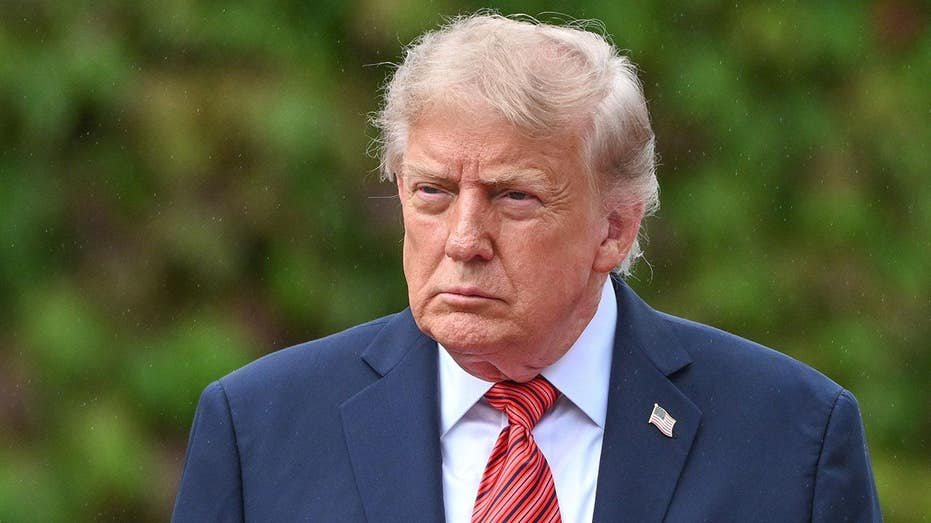
President Donald Trump used an anti-transgender slur three times in a Truth Social post this week while attacking Annie Andrews, a pediatrician running for the U.S. Senate in South Carolina, drawing a sharp rebuke from a former Republican governor and renewed scrutiny of how far the GOP's rhetoric against transgender people has shifted.
In the post, Trump referred to Andrews by a nickname built from the slur, which rhymes with her first name, and said she is «in favor of Transgender for Everyone.» Andrews is challenging Sen. Darline Graham, Trump's handpicked candidate in the South Carolina race. The message repeatedly deployed the term as a punchline rather than a policy argument.
Former South Carolina Gov. David Beasley, a Republican, called Trump's message abhorrent. The response from other prominent Republicans has otherwise been muted, and Fox News had not mentioned the incident as of Tuesday afternoon, according to right-wing media watchdog Aaron Rupar.
The episode is notable not simply because a sitting president used a slur, but because it arrives after years in which MAGA figures have steadily normalized that language. The pattern began in earnest during the 2024 campaign, when Trump's team saturated the airwaves with ads claiming «Kamala is for they/them, Trump is for you.» After Trump's narrow victory, many Republicans treated that message as a mandate.
Rep. Nancy Mace of South Carolina moved quickly to push a bathroom ban on Capitol Hill aimed at Rep. Sarah McBride of Delaware, the first openly transgender member of Congress. The policy restricting single-sex facilities in the Capitol remains in place nearly two years later. Mace, whose term ends in January and who lost a primary run for governor in June, has repeatedly used the slur in public.
More recently, Defense Secretary Pete Hegseth has eclipsed Mace as the GOP's most prominent voice on the issue. Hegseth moved to ban transgender people from serving in the military shortly after Trump's inauguration and has since used the slur at the Iowa State Fair, on the campaign trail in Wisconsin, at a Marine base in Virginia, and elsewhere. His willingness to deploy the word at large public events, critics argue, signals to supporters that such language carries no cost.
Trump's post marks the first time the slur has been used by a sitting president in an official communication. For most of modern American history, politicians have followed changes in everyday language rather than leading them. Culture establishes which words are acceptable, and political figures later adjust. That dynamic has now been inverted at the highest level of government.
The word once appeared regularly as a punchline on late-night talk shows and in movies, as well as in casual conversation. Increased transgender visibility in the 2010s brought broader understanding that the term is dehumanizing. The Cambridge Dictionary now defines it as an extremely offensive word.
Trump's use of the slur against a cisgender woman does not make it less harmful, advocates note. The message was not directed at a transgender person, but it still deployed a term that targets a marginalized community and signaled that such language is acceptable from the nation's highest office.
The White House has pushed back hard against separate criticism of Trump's remarks about Iran, which drew more media attention the same day. The contrast underscores how quickly one controversy can be drowned out by another in the current political environment.
Andrews is running against Graham in a race that will test the reach of Trump's endorsement and the salience of transgender issues in Republican messaging. The broader question is whether the slur's use by a president will draw sustained condemnation or become another normalized feature of American political discourse.
4