Trump calls Iran a failed nation as experts warn of economic collapse
President Donald Trump declared Iran a failed nation, citing economic and military collapse, as experts point to signs Tehran is nearing a breaking point amid renewed U.S. strikes and sanctions.
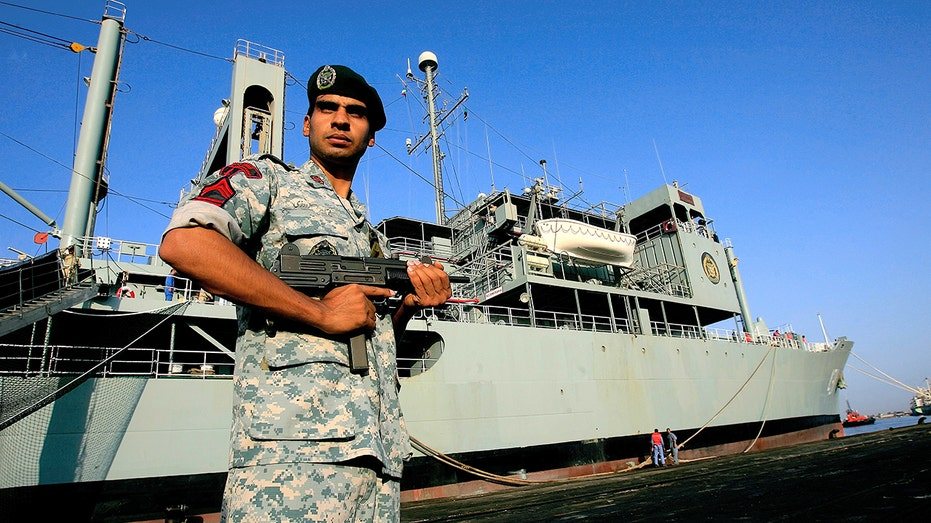
President Donald Trump declared Iran a failed nation Monday, claiming the country is economically and militarily broken as renewed fighting with the United States raises questions about how much leverage Tehran still holds. «Iran is officially a Failed Nation. IT IS DEAD!» Trump wrote on Truth Social. «They have no Navy, they have no Air Force, they have no currency, they are not paying their soldiers or police.» He also claimed Iranian inflation had reached 300% and said the country's leadership was in total disarray.
Iran is facing pressure from nearly every direction, including renewed U.S. military strikes, tighter sanctions and a steep drop in oil exports, raising fresh questions about how long Tehran can absorb the economic pain and still maintain leverage against Washington. Official Iranian data cited by Reuters put annual inflation at 66% in July, while the IMF projects average consumer-price inflation of 68.9% in 2026. The IMF also projects Iran's economy will contract 5.4% this year.
Trump's post came amid the sharpest U.S.-Iran military escalation in weeks. U.S. forces struck two Iranian launchers on Larak Island Sunday after Islamic Revolutionary Guard Corps forces were observed preparing to launch rockets with sea mines into the Strait of Hormuz, according to a U.S. official. Iran retaliated by launching ballistic missiles toward U.S. bases in Jordan, while Jordan said it intercepted eight missiles that entered its airspace.
The renewed confrontation comes as Washington ratchets up economic pressure. Treasury Secretary Scott Bessent told Reuters Sunday that the administration expects to roll out additional secondary sanctions as frequently as every week, initially focusing on banks and potentially cutting financial institutions that continue facilitating Iranian transactions out of the U.S. dollar-based financial system.
Iran's own leaders are acknowledging growing economic strain. President Masoud Pezeshkian said Iran's exports and imports have fallen nearly 35% because of U.S. sanctions and the naval blockade, while annual inflation reached 66% in July, Reuters reported Aug. 29.
Miad Maleki, a senior fellow at the Foundation for Defense of Democracies who previously served as associate director of Treasury's Office of Global Targeting at the Office of Foreign Assets Control, told Fox News Digital that the Islamic Republic may be nearing an economic breaking point. «I think where we stand today, it's very clear — we see very clear signs, indications of what I would call an economy that is on the verge of collapse, if it hasn't already collapsed yet,» Maleki said.
Maleki argued that the critical pressure point is Iran's ability to turn oil exports into usable revenue. He estimates Tehran needs roughly 1 million barrels of oil exports per day to sustain itself, about 1.5 million to avoid hyperinflation and approximately 2 million to support development. Kpler data cited by Reuters showed Chinese imports of Iranian crude falling from an average 1.4 million barrels per day in 2025 to a provisional 534,000 barrels per day so far in August.
Maleki said Tehran is increasingly relying on money creation rather than cutting politically sensitive salaries and pensions. But there are limits. «They can keep printing money, but they can't really print the type of commodities that they need, such as gasoline, such as wheat,» he said.
The pressure, however, may create a dangerous paradox. Iran analyst Danny Citrinowicz, a fellow at Israel's Institute for National Security Studies and a nonresident senior fellow at the Atlantic Council's Scowcroft Middle East Security Initiative, told Fox News Digital that the maritime blockade, wartime losses and wider economic pressure are hurting Tehran, but argued Washington should not assume economic pain will lead to capitulation. Continued pressure could instead increase Tehran's incentive to escalate if Iranian leaders conclude the status quo is worse than renewed confrontation.
Citrinowicz said Iran could attempt to target U.S. economic assets in the Gulf, ports or U.S. vessels involved in enforcing the blockade, even as its missile-production capabilities have been degraded. Maleki agreed Iran would likely attempt to escalate, but questioned how much leverage Tehran still possesses. He argued Tehran has emerged weakened from internal unrest and the external war and is increasingly isolated domestically and internationally. What Maleki is watching next is not necessarily missed government payrolls, but shortages that could trigger another wave of domestic unrest.
93