Preserved Body Parts Draw Visitors at Museums and Shrines Worldwide
From Abraham Lincoln's skull fragments to Chopin's smuggled heart, preserved human remains serve as historical artifacts, religious relics, and macabre curiosities in collections across the globe.
Preserved human remains have long occupied a peculiar place in the world's museums, churches, and even bars, serving as historical artifacts, objects of veneration, and occasional sources of dark humor. Beyond the familiar displays of complete skeletons and the incorrupt bodies of saints, a vast array of individual body parts—thumbs, hearts, tongues, and brains—can be found in collections that span from Maryland to the Yukon.
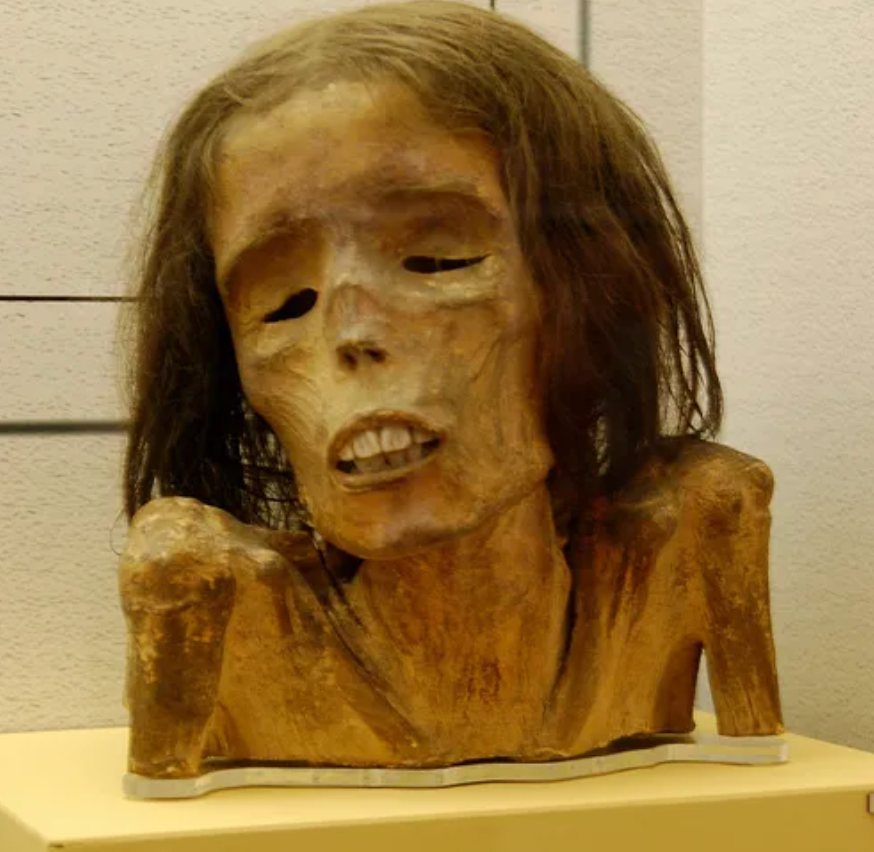
In Silver Spring, Maryland, the National Museum of Health and Medicine houses portions of Abraham Lincoln's skull along with attached hair, as well as the amputated leg of General Daniel Sickles. The museum's collection of 24 million medical instruments and anatomical specimens also includes the unusual skull of a Civil War soldier who was shot across the top of the head, small skeletons showing different stages of child development, a conjoined twin preserved in alcohol, and the mummified head and shoulders of a girl from the late 19th century. It also maintains one of the world's largest neuroanatomical collections, featuring both normal and pathological human brains alongside comparative mammalian brains.
Farther north, in Dawson City, Yukon, the Sourtoe Cocktail offers a decidedly less academic encounter with preserved remains. The tradition began when miner and rumrunner Louie Linken had his frostbitten toe amputated and preserved in a jar of alcohol. Decades later, a local Yukon captain discovered the toe and brought it to a saloon—now the Downtown Hotel bar—where it became a surprise garnish in drinks. The original toe lasted seven years before needing replacement, and since then, a whole foot's worth of toes have been donated to the bar. Those wishing to join the Sourtoe Cocktail Club must follow one rule: «You can drink it fast, you can drink it slow, but the lips have gotta touch the toe.»
In London, the British Museum displays Lindow Man, a 25-year-old man who scientists believe died between 2 B.C. and A.D. 119. The bog where he was found preserved his skin, hair, and internal organs remarkably well, allowing close study. His last meal consisted of unleavened bread made from wheat and barley. Examination revealed a brutal death, with head indentations, broken ribs, and a slashed throat indicating a prolonged struggle. It remains unclear whether his death was murder or ritual sacrifice.
Lisbon's University of Lisbon houses the preserved head of Diogo Alves, Portugal's first serial killer and one of the last men hanged in the country. When Alves died in 1841, phrenology was a rising field, and Portuguese phrenologists pleaded for his head to be preserved for study, believing they could determine why he killed so prolifically. By 1843, phrenology was formally labeled a pseudoscience, but the head remains in a jar, passed by medical students and professors, next to a diaphanized hand.
Philadelphia's Mütter Museum, part of the College of Physicians, holds 2,000 objects removed from people's throats, conjoined twin skeletons, the remains of a 7-foot-6-inch man, and slivers of Albert Einstein's brain displayed across 46 microscope slides. Some scientists have suggested Einstein's brain architecture gave him the «combinatory play» of images he claimed was essential to his discoveries, while others see just regular brain matter in less-than-ideal condition after multiple cross-country trips.
In Padua, Italy, St. Anthony's tongue and jaw are housed at his namesake basilica, displayed in ornate gold reliquaries. When his body was exhumed in 1263, his tongue was the one nondecomposed part—fitting for a renowned speaker who traveled across France and Italy preaching. The basilica itself combines Romanesque, Byzantine, and Gothic styles and houses artwork by Giotto and Donatello.
At the Church of Saint-Étienne-le-Vieux in Bar-le-Duc, France, the Transi de René de Chalon stands as a grotesque white-stone statue created by Ligier Richier in 1547. Prince René de Chalon, who died at 25, specified that he wanted to be remembered as a rotting corpse with dried skin flaps and a hollow carcass. The heart-shaped reliquary in the statue's hand once held his shriveled heart, though it was lost or stolen during the French Revolution.
In Warsaw, Poland, composer Frédéric Chopin's heart rests beneath the city, fulfilling his dying wish to have it sent back to his native country rather than buried with the rest of his body in Paris. His sister, Ludwika Jędrzejewicz, removed his heart before his interment and smuggled it to Warsaw in a jar of alcohol.
5