Senate Control Hinges on Six Toss-Up Races as Midterm Surprises Loom
With four weeks until Election Day, both parties hold 47 Senate seats, leaving six toss-up contests to decide the chamber. Democrats are defending unexpected territory in Minnesota, New Hampshire, and Oregon, while Republicans spend heavily in Arkansas, Idaho, and Mississippi.
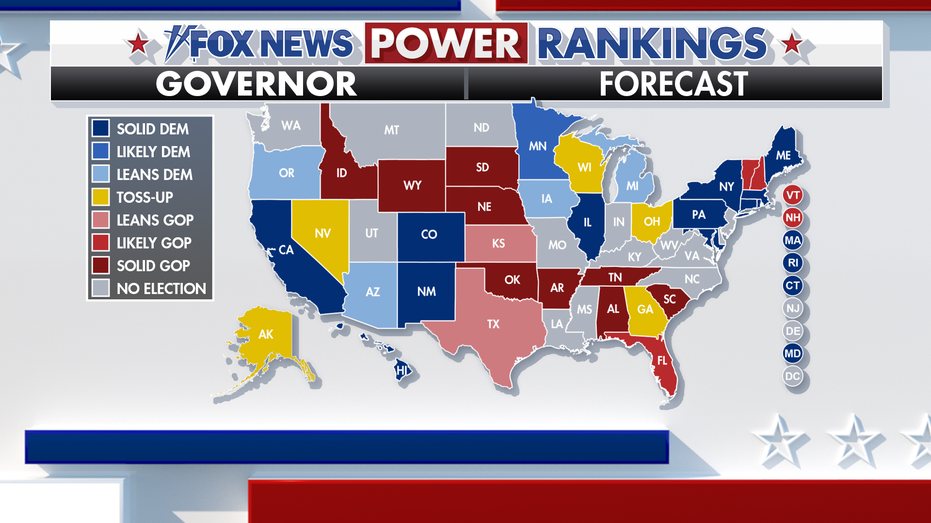
Control of the U.S. Senate will come down to six toss-up races — Alaska, Iowa, Maine, Michigan, Ohio, and Texas — with each party holding 47 seats and no clear advantage four weeks before Election Day, according to the latest Fox News Power Rankings.
The tight margin means the chamber's balance could shift on any single contest, and recent polling shows several races tightening. New Hampshire, previously rated Lean Democrat, now looks closer to a toss-up after surveys showed the Democratic candidate ahead by only five points. Kansas, rated Lean Republican, is dead even in the latest polling. In both cases, the partisan makeup of the states keeps them at «lean» despite the narrowing margins.
Democrats are also playing defense in places they typically win comfortably. In Minnesota, Republican Michele Tafoya, a former NFL sideline reporter, has been traveling the state with a message to «stop the fraud» if elected to the Senate, targeting Democratic Lt. Gov. Peggy Flanagan. In New Hampshire, former U.S. Sen. John E. Sununu is back on the ballot against Chris Pappas, who has struggled to energize his base. Even Oregon's gubernatorial race has become competitive, a rare development in a state that usually favors Democrats.
Republicans, meanwhile, are spending money in unexpected places. In Arkansas, Sen. Tom Cotton has poured $13.6 million into his reelection bid, outspending Democratic opponent Hallie Schoffner 65 to 1. Cotton spent less than $1 million on his 2020 race. In Idaho, Vice President Vance sent a letter warning that Democrats could «pour millions of dollars» into independent challenger Todd Achilles, calling it an «urgent national race.» Mississippi Sen. Cindy Hyde-Smith has been running ads attacking Democratic challenger Scott Colom as a «failed prosecutor» with a «chilling» record on crime, with $5 million in ad spending in the state so far this year.
North Carolina has become less competitive in recent weeks. Fox News confirmed that the Senate Leadership Fund, a Super PAC aligned with Republican leadership, is pulling resources from the state. Earlier, Sen. Tim Scott left North Carolina off a list of states where Republicans were focusing spending. GOP nominee Michael Whatley is running a strong race, but Democrat Roy Cooper has held double-digit leads in multiple surveys. The state moves from Lean Democrat to Likely Democrat.
South Carolina is also drifting away from the GOP, according to the rankings, while one Carolina becomes more competitive and the other moves further out of reach. Nebraska and South Dakota could be closer than expected for Republicans as well.
The focus on local races reflects a broader pattern in midterm elections. While presidential years often feature October surprises that reshape the national trajectory — such as the 2008 financial crisis or the 1980 Iranian hostage crisis — midterm surprises tend to affect individual contests rather than the overall direction of a party. In 2018, for example, allegations against Herschel Walker and Hurricane Ian's destruction in Florida shaped specific races without altering the national landscape.
Voters have not changed their minds about former President Trump or their preferred party for the House in months, making local stories the ones to watch in the final weeks. The biggest surprises, the rankings suggest, may come after October.
Florida remains a state full of election surprises. In 2018, Rick Scott won his Senate race by 0.1 percentage points and Gov. Ron DeSantis won by 0.4 points. Two years later, the presidential race was decided by just 3.4 points. Those narrow margins mean Florida could again deliver unexpected results.
With six toss-up Senate races and several unexpected battlegrounds, both parties are navigating a map that looks more competitive than either side anticipated. The final four weeks will determine whether Democrats can hold their narrow advantage or Republicans can capitalize on late-breaking developments in states they have not contested in years.
6