Polish speaker ties Ukraine’s EU path to recognition of Volhynia as genocide
Włodzimierz Czarzasty still backs Ukrainian membership, but says historical reckoning must be part of accession. The demand is political, not a newly adopted EU legal criterion.
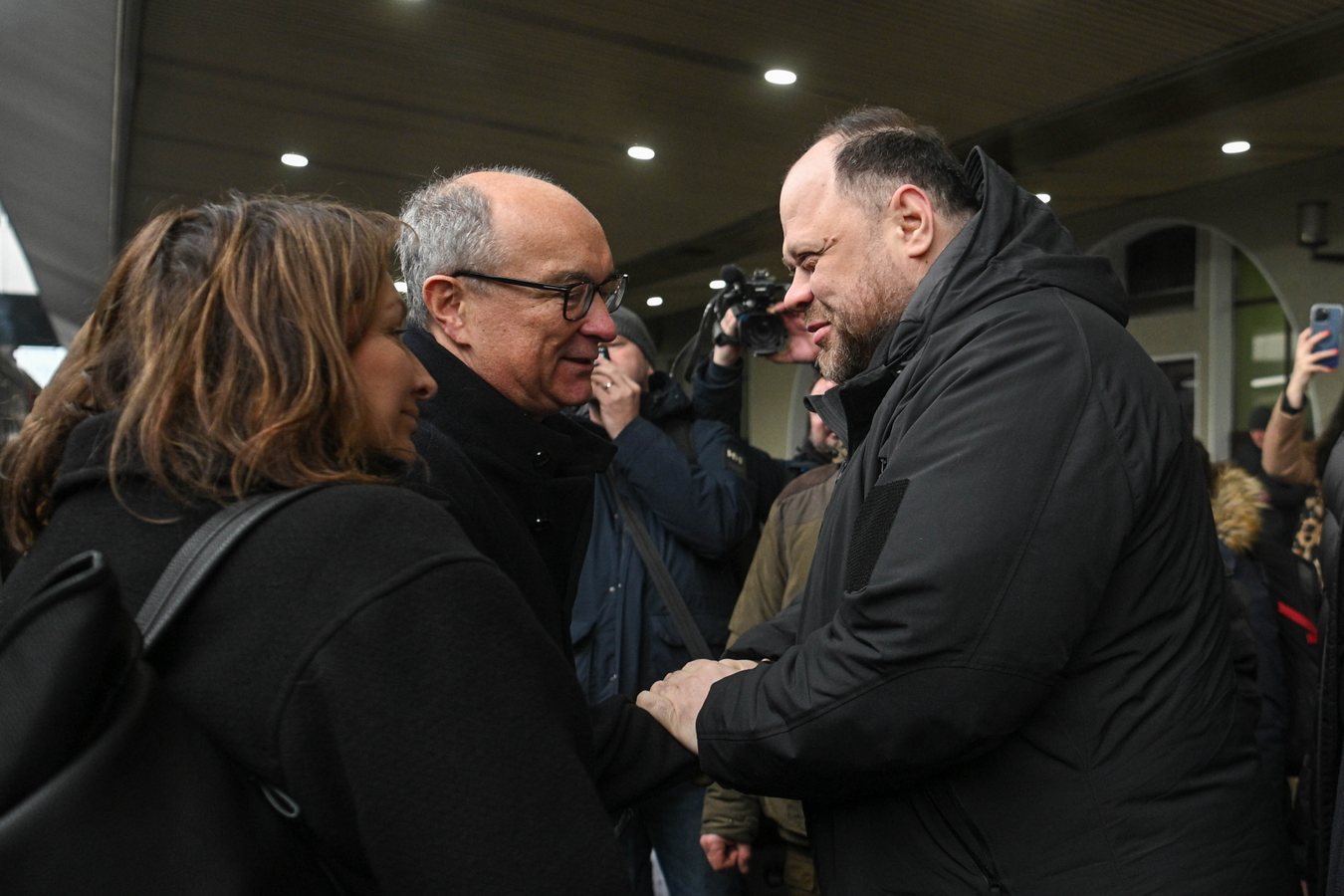
Poland’s lower-house speaker has put a historic dispute directly into the political debate over Ukraine’s European Union membership. After meeting Ukrainian parliament chairman Ruslan Stefanchuk in Szczawnica on August 10, Włodzimierz Czarzasty said accession would require Ukrainians to reconsider difficult parts of their national history, including what Poland officially describes as genocide in Volhynia.
The statement needs two qualifications. First, Czarzasty explicitly said he supports Ukraine joining the EU. He did not announce that Poland had abandoned Ukraine’s membership bid. Second, he was not unveiling a new condition adopted by the European Commission or the Council of the EU. He was articulating a Polish political demand that could matter inside the accession process.
The distinction matters because Ukraine’s negotiations are already underway. By mid-July, the EU and Ukraine had opened two of the six negotiating clusters: fundamentals and external relations. The formal membership framework remains based on democratic institutions, the rule of law, human rights, a functioning market economy and the capacity to take on the obligations of membership.
Yet national politics can still shape the pace of enlargement. EU membership decisions require unanimity among member states. Poland therefore cannot simply rewrite the Copenhagen criteria on its own, but it can make bilateral issues part of the political price of its consent at key stages. That gives Czarzasty’s comments more weight than an ordinary domestic speech without making them an EU rule.
Poland’s parliament has already demonstrated how broad the historical consensus is. On July 17, the Sejm voted 441-0, with no abstentions, for a resolution commemorating victims of crimes committed by Ukrainian nationalists on the eastern territories of the prewar Polish state. The resolution used the term genocide. A separate parliamentary proposal went further, calling for opposition to Ukrainian EU membership over the glorification of perpetrators of the Volhynia crimes, though that proposal was only referred to committee.
Ukraine, meanwhile, has continued practical work on the memory dispute. The Ukrainian Institute of National Memory announced research and exhumation work at the former villages of Ostrivky and Volia Ostrovetska in Volyn from July 13 through August 7. Such work does not settle the political terminology, but it addresses a central Polish demand: locating victims, establishing burial sites and enabling dignified reburial.
Czarzasty’s own record shows why the current moment is more complicated than a simple Polish veto threat. In February, he and Stefanchuk signed a declaration supporting Ukraine’s EU membership path. In June, he described Ukrainian membership as a vital Polish interest and argued against escalating historical disputes. His August statement adds a harder condition to a strategic position that remains broadly pro-accession.
The setting of the latest meeting also captured that contradiction. Czarzasty and Stefanchuk met in Szczawnica while visiting Ukrainian children affected by the war. Poland continues to support Ukrainians and views Ukrainian security as closely tied to its own, even as relations are increasingly strained by memory politics.
After raising the genocide issue, Czarzasty called for rebuilding trust, maintaining a permanent channel between the two parliaments and condemning mistreatment on both sides. That suggests the immediate Polish approach is pressure within dialogue rather than a decision to break the process.
For Ukraine, the challenge is now two-track. Kyiv must continue meeting EU-wide reform benchmarks while also managing a bilateral dispute that Warsaw can carry into the unanimous decision-making structure of enlargement. For Poland, the challenge is to pursue historical recognition without turning a strategic partnership into a permanent hostage of domestic politics.
The most accurate reading, for now, is that Volhynia has become a serious political condition in Polish debate over Ukraine’s accession, not a new formal EU membership criterion. Whether it becomes an explicit Polish veto point will depend on future decisions by Warsaw and on what Kyiv and Warsaw can agree about exhumations, memorialization, archives and official historical language.
67