
House vote puts permanent daylight saving time back before the Senate
The House passed the Sunshine Protection Act 308–117, but year-round daylight saving time is not law yet and the Senate has not voted.
The United States is closer than it has been in years to ending the twice-a-year clock change, but Americans should not stop setting calendar reminders yet.
On July 14, the House of Representatives passed H.R. 139, the Sunshine Protection Act of 2025, by a bipartisan vote of 308 to 117. The bill would make the clock used during daylight saving time the year-round federal standard for most of the country.
The next day, the measure reached the Senate, where it was read twice and referred to the Committee on Commerce, Science, and Transportation. As of August 10, the official congressional record does not show a Senate floor vote. That means the House vote was a major step, not the end of the process.
The mechanics matter because the phrase “permanent daylight saving time” can make the proposal sound simpler than the statutory change actually is. The House-passed text would repeal the temporary daylight-saving period in the Uniform Time Act and shift federal standard time forward by one hour. Areas that have exempted themselves from daylight saving time before enactment would have a choice defined in the bill over which standard to keep.
Current law works differently. The Department of Transportation says states may choose not to observe daylight saving time, as Hawaii and most of Arizona do, but they cannot independently decide to remain on daylight saving time all year. Congress has to change federal law before states that want year-round DST can make that choice effective.
That explains why state legislatures have spent years passing laws that depend on federal permission. CNN reported, citing the National Conference of State Legislatures, that 19 states have enacted measures seeking permanent daylight saving time if Washington allows it.
President Donald Trump has supported ending the semiannual clock changes and backed the House approach this year. Supporters in Congress argue that later evening daylight can encourage recreation, economic activity and public safety while eliminating the disruption of changing clocks in spring and fall.
But the vote did not settle the scientific argument. The American Academy of Sleep Medicine agrees that seasonal clock changes should end, yet it recommends permanent standard time instead. Its position is based on circadian biology: morning light is a strong signal for the body clock, while later evening light can push sleep timing later. The American Medical Association also supports permanent standard time.
That creates an unusual policy split. Many of the bill’s supporters and opponents agree on the first question — changing clocks twice a year is undesirable — but disagree on which clock should become permanent.
The historical warning is 1974. During the energy crisis, the United States tried year-round daylight saving time and then changed course. Opponents now point to the backlash over dark winter mornings, especially for children traveling to school. Supporters argue that today’s economy, commuting patterns and public preferences are different enough to justify another approach.
So the current debate is not “change the clocks or do nothing.” It is becoming a three-way choice among the status quo, permanent daylight saving time and permanent standard time. The House has now chosen one of those paths. The Senate still has to decide whether it agrees.
Until then, permanent daylight saving time remains a passed House bill, not a nationwide rule.
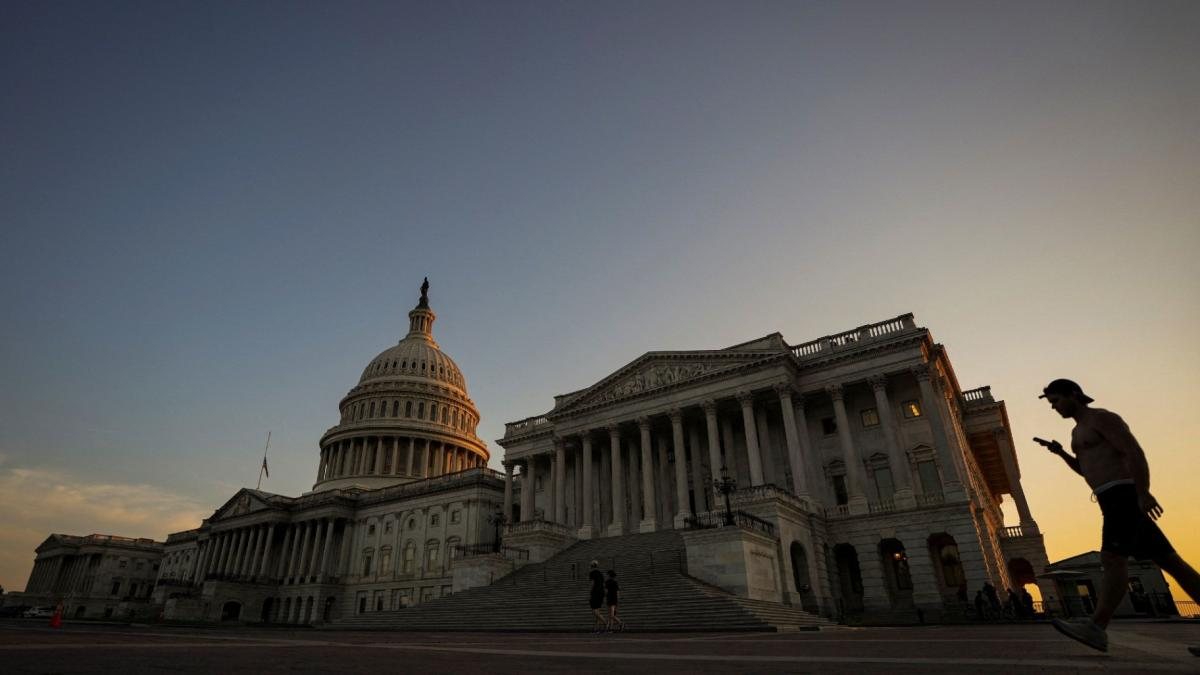
Image: Evening light on the U.S. Capitol on July 13, 2026. Image credit: Al Drago / Reuters via CNN Newsource.
63