Democratic Hopes for a Blue Wave Face New Scrutiny as Voters Weigh Candidates
With four weeks until the midterm elections, Democratic candidates in key Senate races are drawing increased scrutiny over their records and associations, while new polling shows Republican incumbents holding their ground in states Democrats had hoped to flip.
With four weeks remaining before Americans cast their ballots in the midterm elections, Democratic hopes for a sweeping blue wave are meeting a more complicated reality as voters begin to examine the party's candidates more closely. While liberal media outlets have eagerly promoted polls showing Republicans trailing in key Senate races and the GOP likely to lose the House, there are mounting signs that the anticipated Democratic surge may not materialize as predicted.
Democrats' national favorability stands at just 39 percent, according to Real Clear Polling averages, exactly tied with President Trump's approval rating. That parity undercuts the party's central strategy of riding voter dissatisfaction with the president to victory in November. The media's emphasis on worst-case scenarios for Republicans appears designed to depress GOP turnout and campaign fundraising, a tactic that could prove effective if voters conclude the outcome is already decided.
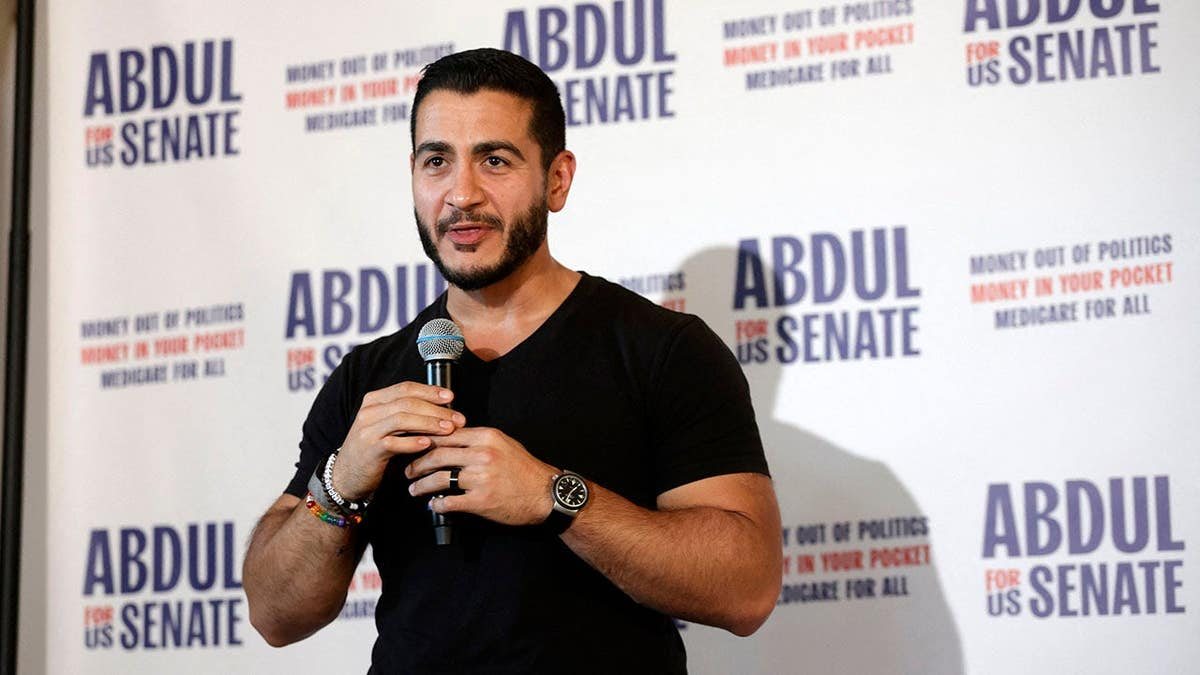
In Michigan, Democratic Senate candidate Abdul El-Sayed recently lost the endorsement of the state's firefighters union. The head of that labor group claimed the union had always intended to remain neutral and that El-Sayed's name on an endorsement list was a clerical error. But at least one union official disputed that account, telling a local news outlet that El-Sayed's negative views of law enforcement had soured the organization. El-Sayed explicitly endorsed defunding the police in a 2020 interview, a position CNN Politics confirmed. Republicans have also highlighted a past tweet in which he wrote that police killings of Black Americans reflect an entire system of white supremacy. El-Sayed has additionally faced criticism for campaigning with Hasan Piker, an anti-Israel influencer who once claimed America deserved the September 11 attacks. The Michigan race remains a toss-up, with recent surveys placing El-Sayed one or two points ahead of Republican Mike Rogers, within the margin of error.
In Maine, Democratic former state Senator Troy Jackson is struggling in his bid to unseat long-serving Republican Senator Susan Collins. Democrats had considered this race a prime pickup opportunity, as Maine was the only state won by Kamala Harris in 2024 that had a Republican senator seeking reelection. Their initial candidate, Graham Platner, was forced from the race after revelations that he sported a Nazi tattoo, had voiced racist opinions online, had misrepresented his working-class background, and faced credible charges of sexual assault. Jackson, who lacks Platner's charisma and is running what observers describe as an uninspired campaign, trails Collins by three points in a recent New York Times poll. The survey's author noted it was hard to imagine Democrats competing seriously in Kansas if they cannot win Maine.
In New York, a notable defection has drawn attention: longtime Democrat Debra Messing endorsed Republican Bruce Blakeman for governor over incumbent Kathy Hochul. Meanwhile, in Minnesota, a state Kamala Harris carried in 2024, Republican candidate Michele Tafoya could become the first Republican senator from the state since 2009. And in Maine, Collins now leads her opponent despite being considered vulnerable by Democrats.
Polling reliability has also come under question. Even the Washington Post acknowledged there are reasons to suspect polls could be overestimating Democratic strength. A New York Times survey of Maine showing Collins ahead described its sample as reasonably favorable to Democrats, underscoring the uncertainty surrounding current forecasts. With a month still to go, much can change, and voters appear to be looking more closely at Democratic candidates — and not necessarily liking what they see.
11