
US strike on Iranian water plant leaves 10,000 without drinking water amid heatwave
A US strike on a water desalination plant in southern Iran has left about 10,000 people in nearly two dozen villages without drinking water during an excessive heat warning, prompting accusations of a war crime from human rights experts and Iranian officials.
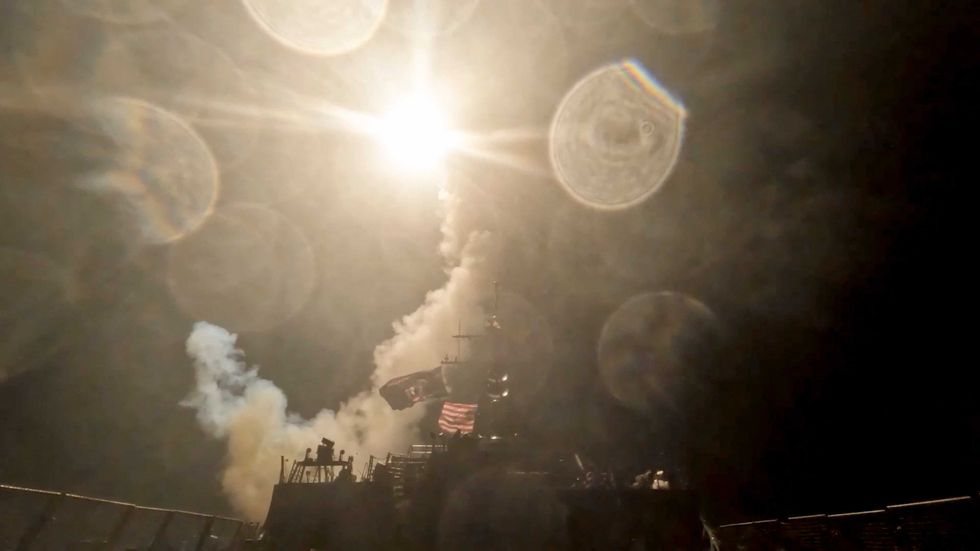
The United States has been accused of committing a war crime after a missile strike on a water desalination plant in southern Iran left approximately 10,000 people in nearly two dozen villages without drinking water, with the region under an excessive heat warning on Saturday. The attack, which targeted the village of Bonji in Hormozgan province near the strategic Strait of Hormuz, is the latest in a series of US strikes on Iranian civilian infrastructure that have drawn widespread condemnation from human rights groups and international law experts.
Islamic Republic of Iran Broadcasting reported that the drinking water supply is expected to be restored within a week, and emergency supply operations have begun. However, the disruption comes as temperatures in the region soar, raising concerns about the health and safety of affected residents. The deputy governor for political and security affairs in Hormozgan province confirmed that several missiles had hit power infrastructure and water desalination plants in the area, according to Drop Site News.
Kenneth Roth, former executive director of Human Rights Watch, said the desalination plant was «not a legitimate military target» and that «it is a war crime to target it.» His remarks echoed those of Iranian officials, who have condemned the strikes as violations of international law. The attacks have also targeted bridges, airports, a railroad junction, and a road tunnel since Wednesday, according to Drop Site News, with at least nine bridges, two airports, and other infrastructure hit.
Iranian authorities reported that at least 41 Iranians have been killed and 408 wounded in US attacks so far this month, with at least three women and one child among the dead. A representative for Hormozgan province, Ahmad Moradi, told Iran’s Tasnim news agency that over the past two nights, «about seven to eight people» have been killed in US attacks, all of whom were civilians. One attack targeted a bridge and hit two family cars, while the neighborhood of Tappeh Allaho Akbar in Bandar Abbas was also hit, killing a woman and injuring a one-year-old whose wounds required doctors to amputate.
The strikes have also disrupted telecommunications, with at least 116 telecommunication towers out of service in southern Iran on Saturday, Al Jazeera reported. The Iranian Embassy in India posted a video of the destruction of a bridge and condemned the US attack on a maritime surveillance tower at the Chabahar Port, which US Secretary of Defense Pete Hegseth boasted about on social media on Thursday.
In response to the US attacks, Iran has suspended its commitments to the Islamabad Memorandum of Understanding (MOU), a ceasefire agreement reached in June that was intended to end hostilities. «The US has violated and suspended all its commitments within the framework of the Islamabad MOU,» said Deputy Foreign Minister Kazem Gharibabadi. «We also likewise have suspended all of our commitments as a result; we are no longer implementing those commitments.» He added that Tehran is now «busy defending the country.»
Iran has retaliated against the US this week by striking American allies, including Kuwait, Bahrain, and Jordan. Kuwait’s government said Saturday that a power plant and water treatment plant had been attacked for the second time in two days, as well as an oil facility. Two US soldiers were killed and a third was missing after an Iranian attack on a US military base in Jordan—the first American service members to be killed from hostile fire since the initial ceasefire was brokered in April.
Roxane Farmanfarmian, a professor of Middle East politics at the University of Cambridge, told Al Jazeera that Iranian forces are «using Kuwait, in particular, as an example of what they can do in retaliation.» She noted that «the US is clearly hitting the south in Iran and hitting airports, desalination plants, and bridges, and so the same kinds of things are being hit now in Kuwait to show what kind of effect Iran really can have on those countries that are hosting American bases.»
In a letter to United Nations Secretary General António Guterres, Iran’s permanent UN representative, Amir-Saeid Iravani, wrote on Saturday that US attacks had «targeted and caused extensive damage to ports, transportation networks, communications facilities, logistics hubs, radar installations, coastal defense systems and other infrastructure indispensable to the civilian population, and to the functioning of the national economy.» He warned that «the continued commission of these unlawful armed attacks poses a grave threat to international peace and security, freedom of navigation, regional stability, and the security of the Persian Gulf and the Strait of Hormuz.»
Esmaeil Baqaei, a spokesperson for Iran’s Ministry of Foreign Affairs, said on Saturday: «For a state that once cast itself as the global champion of order, liberalism, and the war on terrorism, proudly displaying images of destroyed bridges and civilian infrastructure has become its only remaining ‘victory.’ Yet with the collapse of every bridge, every tower, and every civilian facility, it is not merely steel and concrete that is being reduced to rubble. It is America’s moral standing—along with the entire architecture of international law and the civilizational claims of the West—that is crumbling before the world’s eyes.»
109