
US official criticizes China's trade practices as African economies feel the strain
A top State Department official has criticized China's trade practices in Africa, where a surge of Chinese imports is hurting local manufacturing. The US is offering alternatives, citing $25.67 billion in closed commercial transactions since the start of the Trump administration's second term.
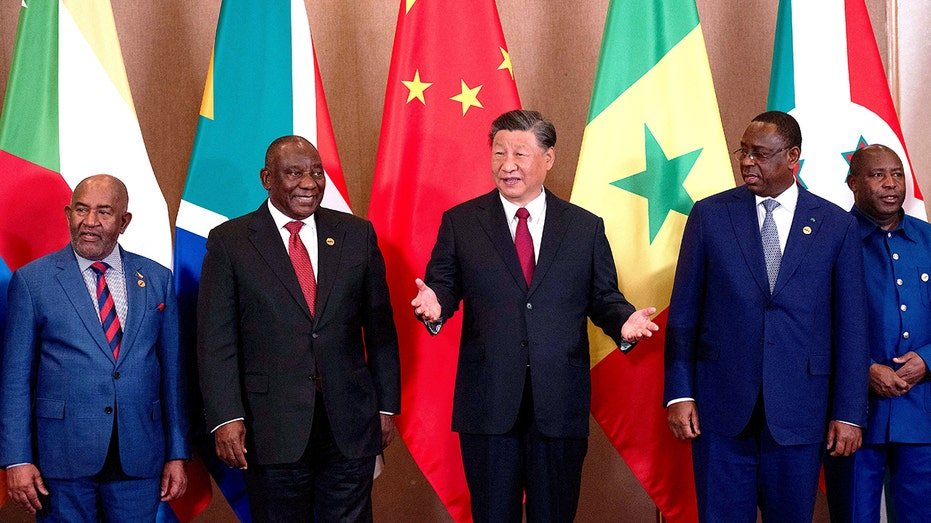
A senior US State Department official has sharply criticized China's economic engagement with Africa, where a surge of Chinese imports is battering local manufacturing and creating what analysts describe as a "China shock wave" across the continent. Assistant Secretary of State for African Affairs Frank Garcia said Beijing's practices, including state-subsidized overcapacity, threaten to displace local industries and lead to unsustainable debt for African nations.
"China continues to flood Africa with exports," Garcia said. "No country is immune to the negative impacts of China's unfair trade practices and state-subsidized overcapacity. China's economic engagement with African countries has often led to unsustainable debt, economic coercion and an oversupply of Chinese imports threatening to displace and preventing the development of local industries."
The trade imbalance is stark. According to the China Global South Project, Chinese exports to Africa reached $225 billion in 2025, while imports from the continent were roughly half that at $123 billion. China takes raw materials, including critical minerals, from Africa while flooding the continent with finished goods, a dynamic that analysts say keeps African countries from moving up the value chain.
Elaine Dezenski, senior director and head of the Center on Economic and Financial Power at the Foundation for Defense of Democracies, said China is the number one trading partner for many African countries, but warned that "doesn't mean that African countries are moving up the value chain. On the contrary, some African countries are increasingly tied into a cycle of mineral and other natural resource exports to China, only to be on the receiving end of finished goods, also from China."
Dezenski added that as China faces high tariffs in US and European markets, Africa is feeling the effects of redirected Chinese exports. "Africa wants to manufacture. Chinese exports are getting in the way. Key exports from China are substituting for specific products that could be manufactured in Africa," she said.
The impact is visible in specific sectors. In Mozambique, one of the world's poorest countries, Beijing has financed infrastructure projects but insisted that Chinese companies do the construction, with workers brought from thousands of miles away. In South Africa, Chinese-made vehicles now account for between 17% and 40% of all car sales, and Chinese state-owned automaker Chery has purchased a Nissan plant near Johannesburg to produce models locally.
Analyst Frans Cronje, president of the Washington-based Yorktown Foundation for Freedom, said Chinese vehicles are winning over South African consumers with better prices, pushing Western firms out of the market. "Privately, many Western firms say they don't know if they can remain competitive," Cronje said.
The Trump administration says it is offering an alternative. The Bureau of African Affairs reports 37 closed commercial transactions since the start of President Donald Trump's second term, representing $25.67 billion in total value. Garcia said the US is committed to maintaining an open investment environment and reshaping the global critical minerals market to be "more diverse, secure and reliable."
US goods traded with Africa last year were valued at $83.4 billion, according to the Office of the United States Trade Representative, while Beijing's General Administration of Customs claimed bilateral trade between China and Africa reached $348 billion for the same period. The Chinese Embassy in Washington did not respond to a request for comment.
96