Flock Safety Defends License Plate Cameras as ACLU Questions Crime Data
Flock Safety says its license plate-reading cameras sharply improve crime clearance rates, while the ACLU argues the company's city-to-city comparisons do not prove causation and raise Fourth Amendment concerns.
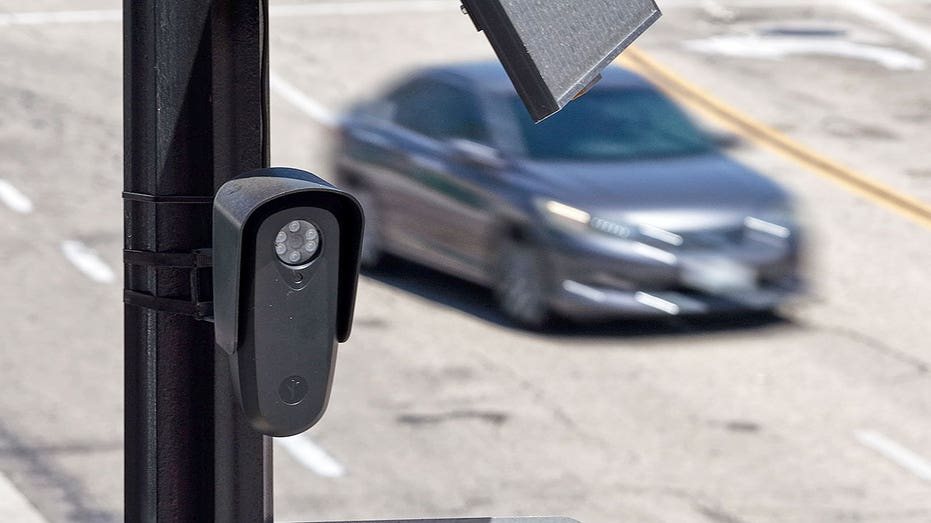
Flock Safety is defending its license plate-reading cameras against a growing nationwide backlash, pointing to internal data that shows cities equipped with the technology clear more crimes than nearby cities that do not use it. The company, whose cameras now operate in 49 states, says the tool helps police solve hit-and-run accidents, stolen vehicle cases, property crimes and crimes against people.
Phil Arnold, a public affairs manager for Flock Safety and a retired Illinois law enforcement officer who spent 40 years in Shorewood, including 27 as chief, said automatic license plate reader technology transformed how his department worked. Before the cameras, he said, a robbery report describing a white Chevy Tahoe would force officers to stop every matching vehicle in an effort to find the offender. With Flock, he said, police can narrow the search to a specific geographic area where a crime was reported and use photographs of matching license plates to identify possible suspect vehicles.
«So it narrows down the search,» Arnold said. «It doesn't inconvenience the people who are just getting stopped because of the car they're driving.»
The company's internal report compares clearance rates in Flock-equipped cities with those in cities that do not use the cameras. In Tennessee, the report says Nashville cleared only 7% of motor vehicle thefts in the first half of 2026, while Hendersonville, a smaller city about 16 miles away that uses Flock, cleared 40%. Aggravated assault clearance followed the same pattern, 41% versus 95%, and only 3% of vehicle break-ins were solved in Nashville compared with 50% in Hendersonville, according to the data.
Flock says similar patterns appear across the country. Hillsborough, North Carolina, which does not use the cameras, cleared 0% of vehicle thefts in the period studied, while nearby Burlington cleared 46%. In Michigan, Ann Arbor, which does not use Flock, recorded lower solve rates than nearby Van Buren Township. The company described Eugene, Oregon, as its most telling case: Flock cameras ran through October 2025 and were then removed, after which motor vehicle theft clearance fell from 15% to 9% and burglary clearance dropped from 21% to 15%. Nearby Medford, which still uses Flock, cleared 29% of vehicle thefts and 25% of burglaries over the same period.
Not everyone accepts those conclusions. Chad Marlow, a senior policy counsel at the American Civil Liberties Union who focuses on privacy and surveillance, questioned whether the comparisons demonstrate causation. He noted that the cities differ in size, and asked what their auto theft rates and poverty rates were beforehand, what the philosophies of their police departments are, and how many officers in each city are dedicated to preventing or solving car thefts.
Privacy remains a central issue as communities debate how much surveillance they want on their streets and whether their data should be collected by a private company working alongside police. Arnold said a common misconception is that the cameras capture more than they do. He said the system photographs only the rear of a vehicle and its license plate, not the driver or passengers, and that data is not accessed except when law enforcement is searching for a suspect. Officers need a Computer Aided Dispatch report or a case report number to access any data, he said, and records are retained for 30 days.
Still, cases of officers using license plate reader technology outside its law enforcement scope are accumulating. A Washington Post analysis identified at least 50 cases of rogue officers abusing the tool, many involving stalking of former lovers. On Thursday, a federal judge in Oklahoma ruled that a police deputy violated a woman's Fourth Amendment rights by using Flock to access her driving history over the previous month and then using that historical data to pull her over. She was found in possession of 91 pounds of methamphetamine at the time of the stop.
Marlow argued that the Constitution establishes a right to privacy and that people's personal effects and private information cannot be accessed by the government without a warrant and probable cause. The dispute now plays out in city councils, courtrooms and federal oversight debates, with skeptical communities petitioning local governments to remove the cameras even as Flock promotes its clearance-rate data as evidence the technology works.
7