Christa Pike Discharged From Hospital and Returned to Prison After Surviving Botched Lethal Injection
Tennessee death row inmate Christa Pike has been discharged from a local hospital and returned to the Deborah K. Johnson Rehabilitation Center after surviving two doses of pentobarbital during a failed execution attempt on Sept. 30. Her attorneys say she continues to receive medical care at the prison and faces an uncertain legal future as the state reviews what went wrong.
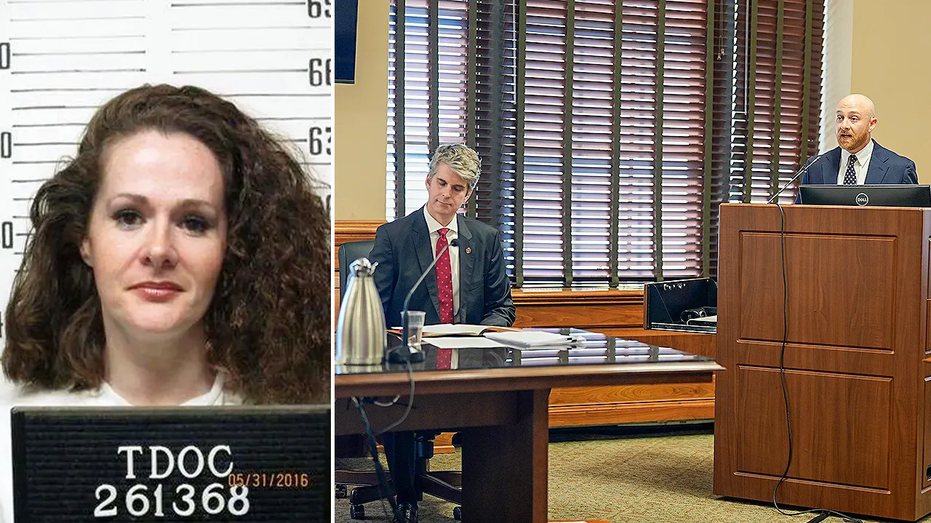
Tennessee death row inmate Christa Pike has been discharged from a local hospital and returned to the Deborah K. Johnson Rehabilitation Center, the women's prison where she has been housed for more than 30 years, after surviving a botched lethal injection that left her with serious medical complications, her attorneys announced.
Pike, 50, survived two doses of the execution drug pentobarbital on Sept. 30 during the state's attempt to carry out her death sentence for the 1995 torture and murder of 19-year-old Colleen Slemmer in Knoxville. The Death Penalty Information Center says Pike is the first person known to have survived after receiving lethal injection drugs during an execution.
In a joint statement, attorneys Stephen Ferrell and Luke Ihnen of Federal Defender Services of Eastern Tennessee and Randy Spivey and Kelly Gleason of the Tennessee Office of the Post-Conviction Defender said Pike was grateful to the first responders and her medical team for their care in extraordinary circumstances. The statement added that she is continuing to receive medical care at the prison and that her legal team will continue to track her recovery.
The attorneys did not disclose when Pike was discharged or whether she has recovered from complications they previously described, including pneumonia, a blood clot and injuries to her arms. Ferrell told BBC Radio 4 on Thursday that Pike had begun walking around her hospital room but continued to struggle with injuries to her arms and memory problems.
«What's been described to me is that physically there's quite a bit going on, that her arms are very injured and she's not able to use them very much,» Ferrell said. «She is up and walking for the first time today, but just around the room, not very far.»
Pike's recovery follows a dramatic turn in which her attorneys believed she was brain dead on the evening of Sept. 29 before she unexpectedly regained consciousness the following morning. She had been on a ventilator, and her legal team did not expect her to survive.
As the execution process got underway, Pike was asked if she had a final statement and she spoke of being at peace. About five minutes later, she raised her head and said her arm hurt. She later appeared to lose consciousness but could be heard breathing heavily until media witnesses were escorted from the witness room nearly 90 minutes into the execution. An ambulance then took her to a hospital.
The failed execution has prompted legal action. A Tennessee judge ordered the state Department of Correction to preserve physical and electronic evidence related to the execution attempt. Medical and lethal injection experts have focused on whether a problem with the IV line caused the drug to pool in her tissue instead of entering her bloodstream. Pike's attorneys wrote in a court filing that «apparently at no point did any member of the execution team realize that the IV lines were not correctly placed.»
The Tennessee Department of Correction has not said what went wrong. The state's prison chief resigned in the wake of the failed execution, and Gov. Bill Lee has halted executions for the remainder of 2026 and ordered a review of what went wrong. Lee also postponed the state's only other scheduled execution this year.
It remains unclear whether or when the state will seek to carry out Pike's death sentence. Pike was sentenced to death for the 1995 beating and stabbing death of Slemmer, a classmate. The case has drawn renewed scrutiny to how Tennessee carries out death sentences and to the broader debate over capital punishment in the United States.
7