Navi Pillay Wins Nobel Peace Prize, Renewing Antisemitism Accusations
The 2026 Nobel Peace Prize awarded to former UN human rights chief Navi Pillay has drawn sharp criticism from Jewish advocacy groups and UN watchdogs, who cite her record on Israel and defense of a commissioner accused of antisemitism.
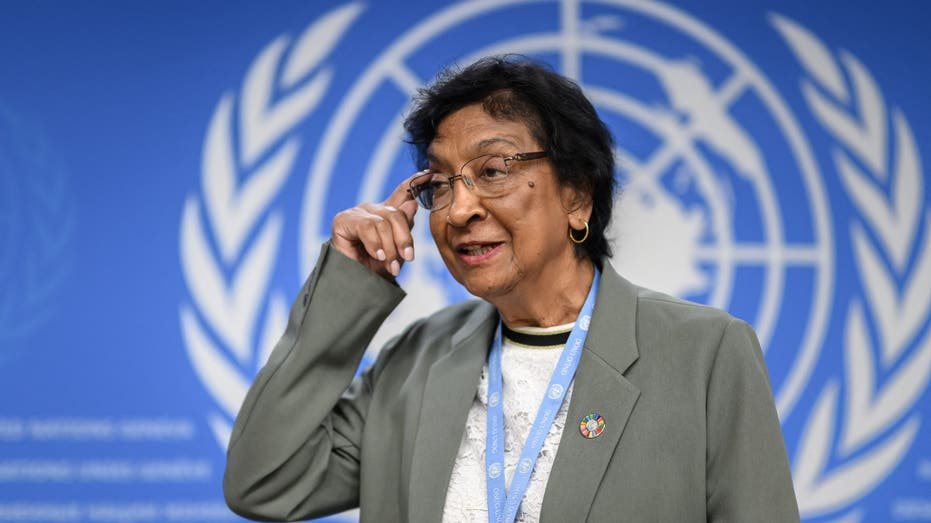
The Norwegian Nobel Committee's decision to award the 2026 Nobel Peace Prize to Navi Pillay, the former United Nations high commissioner for human rights, has triggered immediate backlash from Jewish advocacy organizations and UN watchdog groups. They accuse the 85-year-old South African jurist of a long-standing anti-Israel bias and of defending antisemitic rhetoric, charges that have resurfaced with renewed intensity following the announcement.
The Nobel Committee honored Pillay for her contributions to international law and her efforts to hold perpetrators of war crimes, crimes against humanity, and genocide accountable. In its citation, the committee praised her lifelong commitment to international justice, describing her career as an example of courage and integrity in defending the rule of law. That assessment stands in stark contrast to the condemnation from critics who argue her record at the UN undermines the very principles the award is meant to celebrate.
Anne Bayefsky, president of Human Rights Voices and director of the Touro Institute on Human Rights, told Fox News Digital that Pillay is «indeed a world leader, an individual at the forefront of the international spread of the poisonous forms of antisemitism that beset the 21st century.» Bayefsky accused Pillay of having «perfected the art of perverting legal and universal standards of human rights to demonize and delegitimize Jewish self-determination,» adding that «this award stands as a testament to human wrongs.»
At the center of the controversy is Pillay's leadership of the UN Human Rights Council's open-ended Commission of Inquiry investigating alleged violations in Israel and the Palestinian territories, a role she assumed in 2021. In September 2025, the commission concluded that Israel had committed genocide in Gaza — a finding Israel rejected as politically motivated and biased. The commission's conclusion was not a ruling by an international court.
UN Watch, a Geneva-based monitoring group, condemned the Nobel announcement. Executive Director Hillel Neuer said, «We are shocked that the Nobel Committee honored Navi Pillay. Her troubling record on antisemitism and gross breach of ethics in presiding over a notorious U.N. commission utterly disqualifies her from such an award.» Neuer pointed to a June 2020 manifesto Pillay signed calling on governments to «Sanction Apartheid Israel,» and a June 2021 letter urging President Joe Biden to punish Israel after its conflict with Hamas. UN Watch argued these positions raised questions about her impartiality before she accepted the commission's chairmanship in July 2021.
Another controversy erupted in 2022 when fellow commissioner Miloon Kothari suggested that social media criticism of the investigation was controlled by the «Jewish lobby» and questioned Israel's UN membership. The remarks were condemned by U.S. officials, including then-State Department antisemitism envoy Deborah Lipstadt. Pillay defended Kothari, arguing his comments had been taken out of context. Kothari subsequently apologized, calling his language inappropriate and insensitive. The controversy also reached Germany, where Berlin's mayor withdrew support for a planned event honoring Pillay in 2022, and the event was canceled.
Bayefsky also recalled the 2009 UN anti-racism conference in Geneva, when Iranian President Mahmoud Ahmadinejad delivered an inflammatory speech attacking Israel. While Western diplomats walked out, Pillay remained seated. Pillay subsequently condemned his address, saying she joined the secretary-general in «utterly deploring the speech,» according to the UN's official transcript. Bayefsky dismissed that denunciation as «utterly disingenuous,» claiming Pillay had advance knowledge of Ahmadinejad's remarks questioning the Holocaust and referring to the «ugly faces» of Zionists, yet still handed him the microphone as Conference Secretary-General.
UN Secretary-General António Guterres offered a sharply different assessment, congratulating Pillay and praising her decades-long career in international justice, including her leadership of the UN investigation into Israel. «For decades, she has been a champion of international law and human rights and a steadfast, independent voice of justice amidst some of the most historic international legal cases of our time,» Guterres said in a statement. He highlighted her various roles, declaring that Pillay had demonstrated «that the force of law must prevail over the law of force and that defending human rights is the surest safeguard against injustice.»
Born in Durban, South Africa, in 1941, Pillay built her career challenging apartheid-era discrimination, becoming the first non-White woman appointed to South Africa's high court. She later served as a judge at the International Criminal Tribunal for Rwanda and the International Criminal Court. From 2008 to 2014, she served as UN High Commissioner for Human Rights. Her selection for the Nobel Peace Prize has thus reignited a broader debate over the UN's treatment of Israel and the line between legitimate criticism and antisemitism.
5