
Trump Dismisses Report Chinese Entities Aided Iran Before Deadly Jordan Attack
President Trump acknowledged Chinese espionage activity after a report alleged Chinese entities supplied Iran with satellite imagery of a Jordanian base before a July 17 missile strike that killed three U.S. troops.
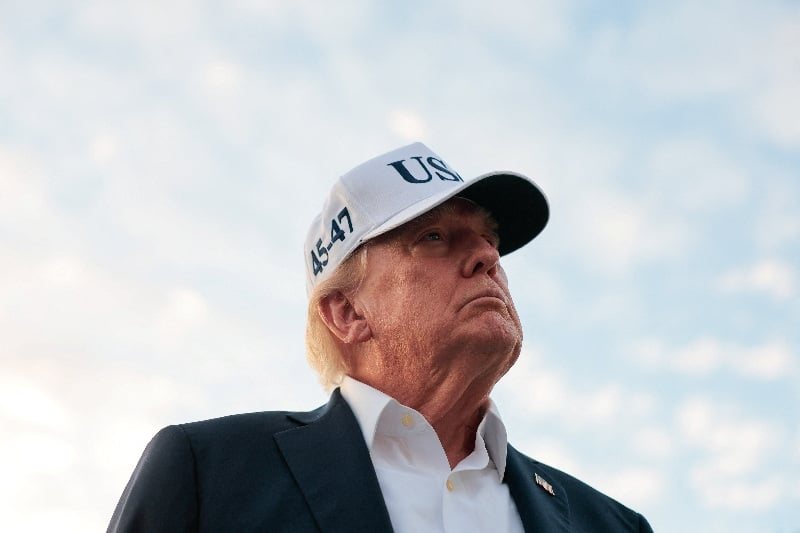
President Donald Trump dismissed the significance of a report alleging that Chinese entities provided Iran with high-resolution satellite imagery of a U.S. base in Jordan before a missile attack that killed three American troops in July, saying that China «spies on us» just as the United States conducts espionage against its rivals.
Speaking to reporters aboard Air Force One, Trump was asked about a Wall Street Journal report that Chinese entities allegedly supplied Tehran with detailed imagery of Muwaffaq Salti Air Base before Iran's July 17 missile strike. «They basically do what we do,» Trump said, according to remarks relayed to the press. Asked whether he intended to raise the matter with Chinese President Xi Jinping during an upcoming visit to Washington, Trump said Xi has «behaved reasonably well» and that «we behave reasonably well.» He added: «You know what they say? That China spies on us. I say you're right, and we spy on them, too.»
The report, which U.S. officials linked to the July attack, described the satellite imagery as the clearest evidence to date that support from Chinese entities for Iran during the ongoing war has had deadly consequences for American forces. The strike on the Jordanian base killed three U.S. service members, marking one of the most significant single losses of American life attributed to Iran-aligned operations in the region.
U.S. officials did not identify the specific Chinese entities involved, nor did they accuse Beijing of direct involvement in the attack. The distinction leaves open the question of whether the imagery was provided by private commercial firms, state-linked actors, or intermediaries — a gap that complicates any potential diplomatic response. The White House did not immediately respond to requests for comment on the report.
Trump's remarks come as Xi is scheduled to visit Washington on Sept. 24 for a summit with the U.S. president, a meeting that will now unfold against the backdrop of the allegations. The president's comments suggest he is not inclined to let the report derail the diplomatic engagement, framing Chinese intelligence activity as an expected feature of great-power competition rather than a singular provocation.
The disclosure adds a new dimension to the broader conflict in which Iran has traded strikes with U.S. and allied forces across the Middle East. If Chinese entities did supply targeting-quality imagery, it would represent a notable instance of foreign commercial or intelligence support reaching Tehran ahead of an attack that killed Americans — even if Beijing itself was not directly implicated.
For the families of the three service members killed at Muwaffaq Salti Air Base, the report raises questions about whether the attack could have been prevented had the imagery transfer been detected or disrupted. For policymakers, it sharpens an already delicate balancing act: managing competition with China while preserving channels for cooperation on issues ranging from trade to regional security.
Trump's response also reflects a broader pattern in his approach to espionage allegations, treating them as an inevitable part of international relations rather than a cause for escalation. Whether that stance holds through the September summit — and whether Congress or the intelligence community presses for a more formal accounting — remains to be seen.
The Wall Street Journal report did not specify how U.S. officials obtained the information linking the imagery to the attack, nor did it detail the timeline between the alleged transfer and the missile strike. Those unanswered questions are likely to fuel further scrutiny in Washington as lawmakers seek clarity on the extent of Chinese support for Iran and its consequences for U.S. forces in the region.