Canada and EU Move Toward Closer Ties as Carney Hosts Brussels Leaders
European Commission President Ursula von der Leyen and European Council President António Costa are in Montreal to deepen trade, defense and economic ties with Canada, as Ottawa and Brussels weigh an unprecedented "associate member" arrangement amid U.S. trade pressure.
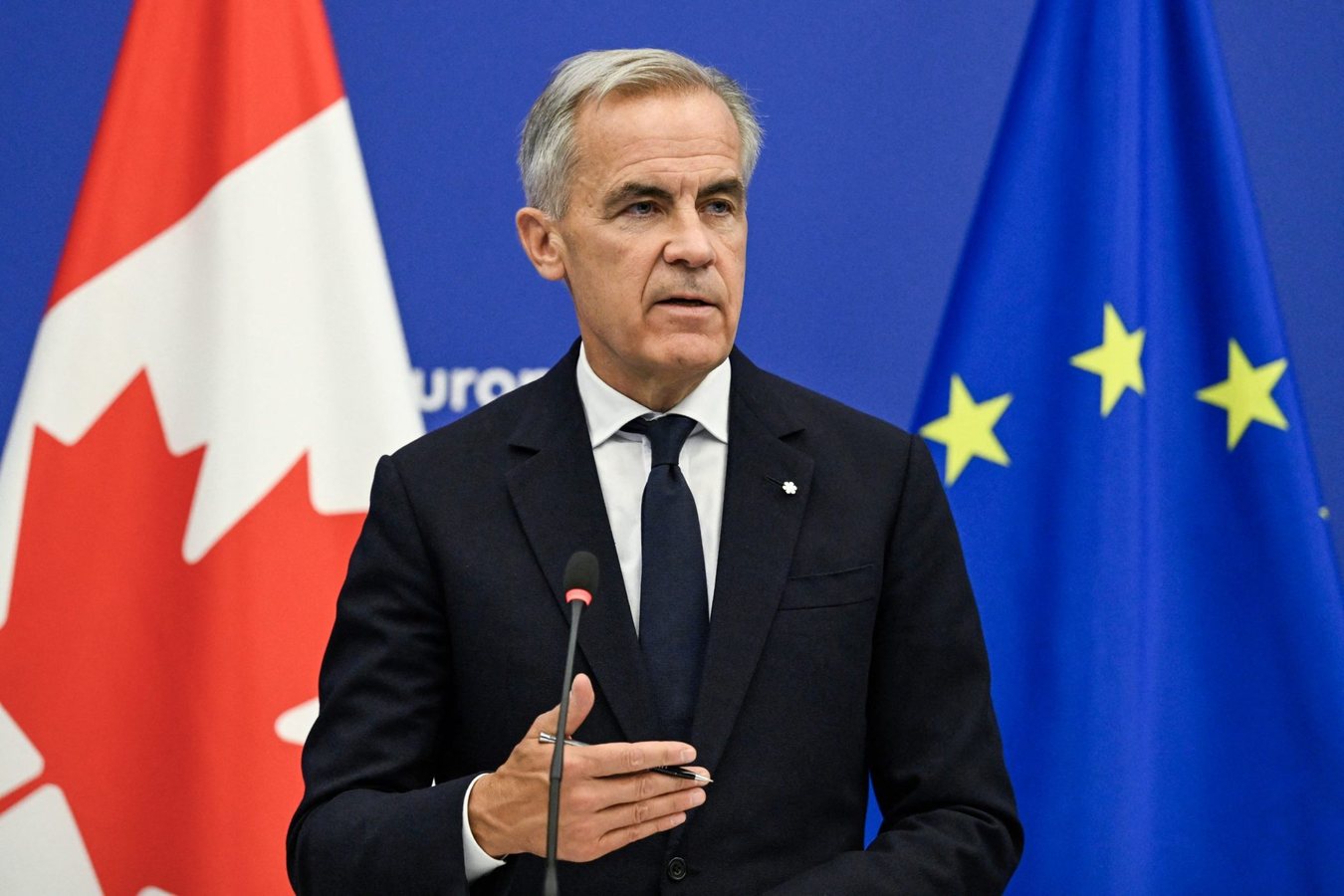
Prime Minister Mark Carney is hosting the leaders of the European Union in Montreal for a two-day summit aimed at deepening trade, defense and economic ties, a move that comes as Canada and Europe look to reduce their reliance on Washington. European Commission President Ursula von der Leyen and European Council President António Costa are taking part, and the proposed arrangement at the center of the talks, an "associate member" designation for Canada, still faces resistance from some EU member states.
Carney earlier described Canada as "the most European of non-European countries" at the start of U.S. President Donald Trump's trade war. The summit tests his stated vision for a new global order. At the World Economic Forum in Davos, Switzerland, in January, he warned that the U.S.-led international order was breaking down and urged middle powers to unite against economic coercion.
Speaking in Montreal on Thursday, von der Leyen warned that economic relationships once considered sources of stability were increasingly being used as instruments of pressure. Without naming Trump, she described the consequences for ordinary families. "When trade becomes a tool of economic pressure, it is families that pay the price, from the supermarket shelf to the cost of a new car," she said. "We are seeing in real time our sovereignty being attacked."
She warned that dependence on a single supplier for energy, semiconductors or critical minerals could be exploited, and said countries faced a choice between acting alone or working with trusted partners to protect their economic security. Trump has suggested that Canada's proposed EU arrangement could be a "hostile act" and has threatened tariffs on Europe if he considers it unfriendly. Asked Wednesday about possible retaliation, a senior Canadian government official told reporters the closer relationship was not directed against the United States but reflected longstanding shared interests.
Von der Leyen has proposed the "associate member" designation, but its structure and even its name remain unsettled. Some EU member states have questioned the label, and France and Germany are among the countries reported to be unhappy with it, according to Anand Sundar, a special adviser at the European Council on Foreign Relations, who said the designation may not survive the summit. "The fact that member states have rejected the associate membership framing is very embarrassing for von der Leyen," Sundar said.
Von der Leyen has not backed away from the idea. "Canada cannot become a full-fledged member of the EU because of geography, but we both want to bring our relationship to the highest level possible," she said. "This is why we are discussing the idea of Canada becoming the first associate member of the European Union." She described the proposal as an "association without accession" that could bring Canada closer to EU membership than any previous arrangement with a country outside the bloc, covering areas from artificial intelligence and energy to defense and trade.
Carney said Tuesday that the summit would be followed by further negotiations over the next year. "It doesn't matter about specific names or nomenclature," he said. "What matters is the difference that it will make to lives of Canadians." He has ruled out formally joining the EU, saying any enhanced partnership would require approval by Canada's Parliament.
The summit is expected to launch an "Alliance for the Future," a framework for closer cooperation on trade, defense, critical minerals, technology and research. Von der Leyen said Canada and the EU would finalize an agreement Friday giving Canadian companies, startups and researchers access to Europe's network of 12 advanced supercomputers. She also announced plans to strengthen strategic supply chains and encourage joint investment in industries critical to economic security. European commissioners and Canadian Cabinet ministers will hold sector-specific meetings, beginning with a business forum Thursday before formal leaders' talks Friday, with officials hoping to develop the broader partnership for possible endorsement in 2027.
Canada is the only non-European country participating in the EU's 150-billion-euro ($167-billion) SAFE defense procurement program, which allows Canadian companies to take part in joint European military purchases. Deeper defense cooperation faces obstacles, however. Sundar said France is pushing for strict "Made in Europe" rules that could limit Canadian companies' access to future EU defense spending, while Germany favors broader participation. He said negotiations over the EU's next seven-year budget could prove more consequential for Canada than anything announced in Montreal.
The two sides already have a sweeping free trade agreement, known as CETA, which eliminated most tariffs. Most provisions have been in force since 2017, although some EU member states have yet to ratify it. The partnership under discussion would build on that foundation as both sides seek to limit their exposure to a changing U.S. trade posture.
5