Sacramento Sheriff Blasts Newsom Over California Crime Policies
Sacramento County Sheriff Jim Cooper accuses Governor Gavin Newsom and state lawmakers of failing to implement voter-approved crime reforms and prioritizing diversion over accountability, as victims decry lenient policies.
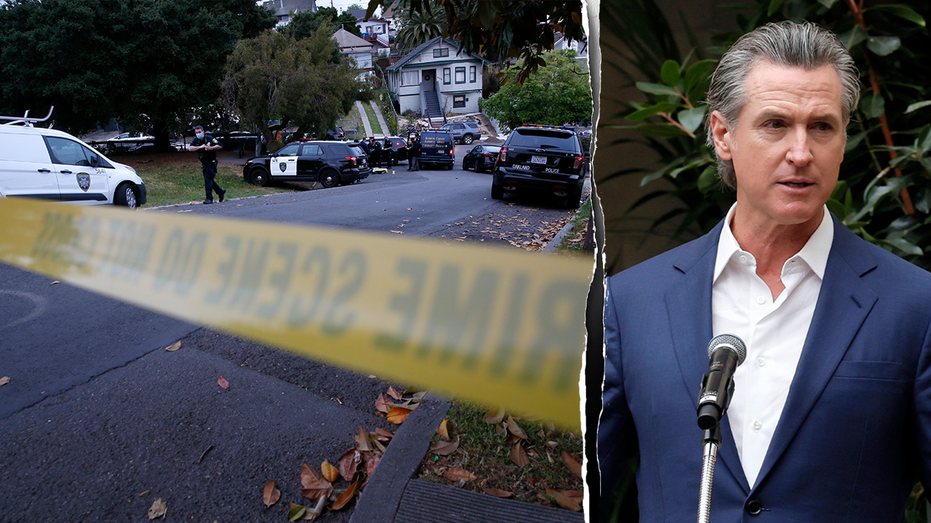
Sacramento County Sheriff Jim Cooper has launched a sharp critique of California Governor Gavin Newsom and state lawmakers, accusing them of failing to address rising crime and neglecting voter-approved reforms. In a recent interview with KCRA 3's California Politics 360, Cooper argued that Sacramento's policies prioritize criminals over victims, despite voters demanding tougher consequences for repeat offenders.
Cooper, a Democrat who has served as sheriff since 2018, did not mince words when asked to grade the governor and legislature's response to crime. «Not enough. Not enough,» he said. «It's just frustrating that people are hesitant to do anything.» The criticism comes with roughly a month left for California lawmakers to send legislation to Newsom's desk, intensifying the debate over public safety in the state.
While California recently announced its lowest homicide rate in nearly six decades, Cooper contended that the numbers do not tell the full story. He argued that victims continue to suffer under policies that emphasize diversion and early release over accountability. «We have to look at the real impact on communities,» Cooper said, noting that property crimes and violent offenses still plague many areas.
A major focus of Cooper's criticism was Proposition 36, the voter-approved initiative passed in 2024 with nearly 70% support statewide and in all 58 counties. The measure increased penalties for repeat retail theft and certain drug crimes while allowing eligible offenders to have felony charges dismissed after completing court-ordered treatment. «Not one statewide official supported it. And that's troubling,» Cooper said during the interview.
Although Cooper acknowledged that Proposition 36 is already showing results, with retailers reporting declines in theft, he argued that Sacramento has failed to provide the necessary funding to make the initiative fully effective. «The issue is no funding, no funding came with it,» he said. «It is working. But without funding, it doesn't go anywhere.» State leaders have said this year's budget includes $375 million to help implement Proposition 36, though budget documents show only $50 million is specifically directed toward court and pretrial services related to the measure.
Cooper also blasted California's expanding mental health diversion system, warning that proposals to make more theft offenses eligible for diversion would undermine the initiative voters overwhelmingly approved. «It would water it down,» Cooper said, adding that some lawmakers «don't want anybody held accountable.» He pointed to offenses such as felony child abuse and crimes involving sexually violent predators as examples that should not be eligible for diversion.
Governor Newsom's office pushed back on Cooper's criticism, arguing that California's crime trends tell a different story. «We will stick to real results, not headlines,» a spokesperson for the governor's office told Fox News Digital. «Why don't you ask Jim Cooper why we've made so much progress lowering crime rates in California.» The spokesperson also pointed to Assembly Bill 46, legislation Newsom recently signed that tightens oversight of California's mental health diversion program. According to the governor's office, the measure was supported by Cooper, despite his broader criticism of the state's diversion policies.
Cooper acknowledged during his interview that lawmakers and the governor recently approved changes adding new guardrails to mental health diversion. However, he argued the reforms still fall short. «Some crimes are so shocking... you shouldn't be eligible for mental health diversion,» he said.
The sheriff also renewed his criticism of California's domestic violence laws, arguing the state still refuses to classify many felony domestic violence offenses as violent felonies despite the devastating injuries suffered by victims. «Domestic violence goes on every day. Doesn't matter if you're rich or poor. Happens in every neighborhood. We have to treat it seriously,» he said. When asked why lawmakers continue opposing legislation to classify domestic violence as a violent felony, Cooper replied bluntly: «They have no argument. They just vote against it.»
Cooper's criticism is consistent with his recent public campaign against California's criminal justice policies. In recent months, he has argued that «domestic violence is one of the most personal and devastating forms of violence, but California law can still classify felony domestic violence as 'non-violent.' That needs to change.» He has also repeatedly criticized lawmakers over Proposition 36, accusing them of ignoring nearly 70% of California voters by advancing diversion programs for retail theft offenders instead of fully funding and implementing the initiative.
«Californians were fed up with retail theft and passed Prop. 36 in all 58 counties,» Cooper wrote in a recent statement, arguing lawmakers instead responded by proposing new diversion programs that allow some offenders to avoid convictions. Cooper has also emerged as one of the state's most vocal critics of California's youth offender and elderly parole policies, warning they have systematically reduced accountability for violent offenders. After five young suspects were charged in the fatal shooting of an 18-year-old Sacramento State student who was struck while riding in the back of an Uber, Cooper warned that such policies undermine public safety.
The clash between Cooper and Newsom highlights a broader tension within California's Democratic leadership over how to balance progressive criminal justice reforms with public safety concerns. As the legislative session winds down, the debate over funding for Proposition 36 and the scope of diversion programs is likely to intensify, with victims' advocates and law enforcement officials pressing for tougher measures.
104