Rubio convenes 65 nations to counter far-left terrorism as global 'blind spot'
Secretary of State Marco Rubio hosted representatives from roughly 65 countries at a State Department ministerial to build an international coalition against violent far-left extremist groups, which the Trump administration argues have become a growing transnational threat that governments have long overlooked.
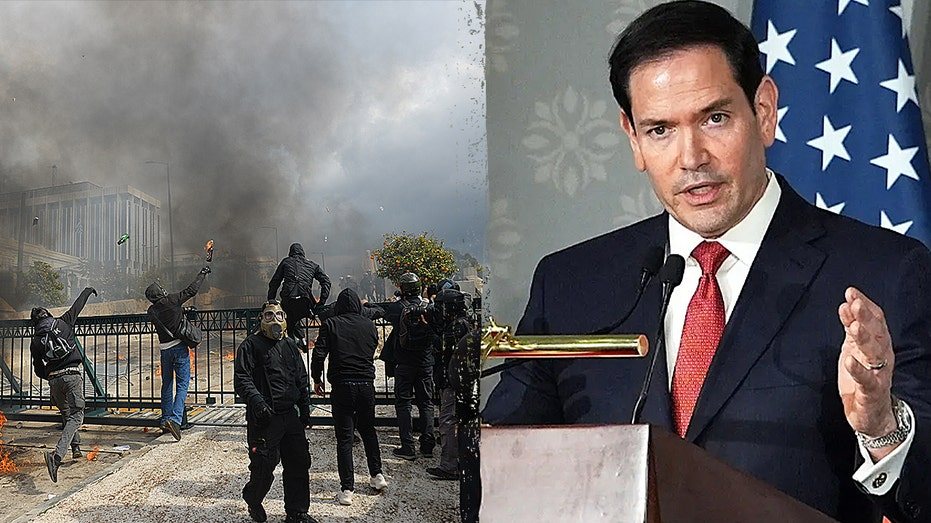
Secretary of State Marco Rubio declared Thursday that violent far-left political terrorism “can no longer be denied” as he urged more than 60 countries gathered in Washington to treat the threat as a global counterterrorism priority. Speaking at the opening of a State Department ministerial attended by roughly 65 foreign delegations, Rubio said governments had spent too long overlooking what he described as a resurgence of transnational far-left extremist violence and called for greater international cooperation to counter it.
Rubio described radical leftism as “a poisonous resentment cloaked in the language of equality and justice.” The ministerial is the culmination of an eight-month diplomatic effort by the Trump administration to convince foreign governments that violent far-left extremist networks have become a growing cross-border threat requiring greater international coordination. Administration officials said the effort focuses on expanding intelligence sharing, law enforcement cooperation, and other international measures to disrupt these groups.
“This has been a blind spot for a lot of our partners, frankly. They have not seen these trends … since the 1970s,” a senior State Department official told reporters ahead of the meeting. “Our partners have talked to us about the rise of assassinations or assassination plots.” The official emphasized that the initiative is narrowly focused on criminal and terrorist violence rather than political beliefs. “In America, you can believe anything you want. The minute that you cross the legal threshold, that changes,” the official said.
Administration officials pointed to a series of recent attacks in Europe that they argue underscore the need for greater international cooperation. On July 1, coordinated firebomb attacks targeted the homes of members of Greece’s governing New Democracy party in Thessaloniki, killing the mother of parliamentary candidate Afroditi Nestora and injuring four others. Greek anti-terrorism police later arrested three suspects. In January, an arson attack on a power transmission facility in Berlin, Germany, knocked out electricity to tens of thousands of homes and businesses. German authorities later transferred the investigation to the federal prosecutor over suspected involvement by a terrorist organization.
The meeting builds on a series of actions the administration has taken since late 2025, including designating four foreign far-left organizations as Foreign Terrorist Organizations and Specially Designated Global Terrorists, along with offering a reward of up to $10 million for information leading to the disruption of their financial networks. The four groups designated in November were Antifa Ost, the Informal Anarchist Federation/International Revolutionary Front (FAI/FRI), Armed Proletarian Justice, and Revolutionary Class Self-Defense. The administration says these groups, which operate in Germany, Italy, and Greece, have coordinated violent attacks across national borders.
Rubio is expected to argue that violent far-left extremist groups increasingly operate across borders, sharing tactics, coordinating attacks, and exploiting international conflicts to recruit followers, making greater cooperation among governments essential to disrupting the threat. Treasury Secretary Scott Bessent and White House Deputy Chief of Staff Stephen Miller also are expected to address the ministerial, which will include discussions on the global threat landscape, terrorist financing, intelligence sharing, and protecting critical infrastructure.
The initiative comes as some analysts and foreign officials have questioned whether violent far-left groups constitute a cohesive international terrorism threat comparable to Islamist extremist organizations. Others have raised concerns that governments could use such initiatives to target political opponents under the banner of counterterrorism. Administration officials rejected those concerns, arguing the effort is narrowly focused on criminal and terrorist violence rather than political beliefs.
Officials also disputed reports that foreign partners were reluctant to participate, saying several governments approached the United States seeking to join the initiative after recognizing similar trends within their own borders. “We’ve had countries who have reached out to us that want to be part of this,” the senior State Department official said. The administration argues that governments spent much of the past two decades concentrating on jihadist terrorism while underestimating what they describe as a resurgence of politically motivated violence from violent far-left extremist networks operating across borders.
76