Riley Gaines Calls USA Today Columnist's Use of Emmett Till Reference 'Insane'
Riley Gaines criticized a USA Today columnist for comparing the lynching of Emmett Till to WNBA player Caitlin Clark's actions on the court, calling the comparison 'insane' and accusing the writer of engaging in 'rage bait.'
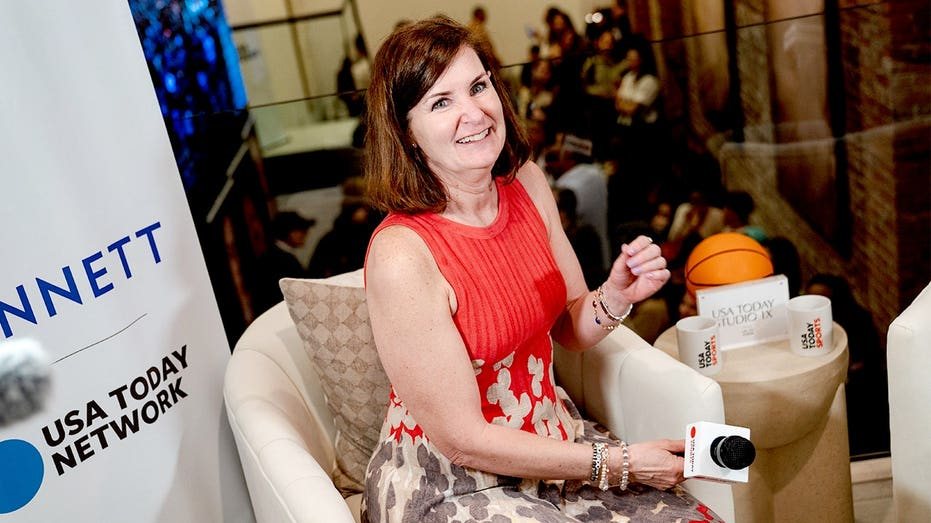
Riley Gaines, the former collegiate swimmer and conservative commentator, strongly criticized USA Today columnist Nancy Armour for invoking the lynching of Emmett Till in an opinion piece about WNBA star Caitlin Clark, calling the comparison « insane » and accusing Armour of engaging in « all-time rage bait. »
Armour’s column, published earlier this week, argued that Clark’s actions on the basketball court put Black and queer WNBA players « in danger » and noted that the league’s All-Star Game was taking place in Chicago, the hometown of Emmett Till, a 14-year-old Black boy who was abducted, tortured, and lynched in 1955 after a white woman accused him of whistling at her. Armour wrote that « there also should be an expectation on Clark to recognize the broader implications of her actions being weaponized. »
Gaines, speaking on her program « The Riley Gaines Show, » expressed disbelief at the comparison. « Do you realize what Nancy Armour is doing there? She's connecting Emmett Till's lynching to Caitlin Clark's talent and skill set and behavior on the basketball court. Excuse me? » She called Armour « insane » and said such comparisons reveal a loss of rational thinking. « These people are insane. They have lost their ability to think rationally. That is literally dead and gone. In what world do those two things connect? »
Gaines went on to label Armour an « all-time rage-baiter, » suggesting the column was deliberately provocative. « Maybe it's just like all-time rage bait. Like dropping Emmett Till's name in an article about the WNBA All-Star game, that's got to be an all-time rage baiter. » She acknowledged that she might be « falling for it » but maintained the comparison was indefensible.
Following widespread backlash, Armour issued an apology on the social media platform Bluesky, calling her comparison an « inartful comparison. » She explained that she intended to highlight the irony of the WNBA All-Star Game being held in Chicago, Till’s hometown, while the league deals with issues of race and player safety. « I obviously did not provide enough context for that, » she wrote.
The controversy has reignited debate about the role of race in sports media and the appropriateness of invoking historical tragedies in modern commentary. Critics argue that comparisons between a lynching and professional basketball conduct trivialize the severity of racial violence, while supporters of Armour’s column contend that the historical context of Black harm in the name of defending white women is relevant to understanding current dynamics in the WNBA.
Emmett Till’s murder in 1955 became a catalyst for the civil rights movement after his mother insisted on an open-casket funeral to show the brutality of his death. The case remains a powerful symbol of racial injustice. Armour’s column drew particular ire because it appeared to suggest that Clark, a white player whose popularity has surged in the WNBA, bears responsibility for the actions of fans who use her name to attack Black and queer players.
Gaines, who rose to prominence after speaking out against transgender athletes in women’s sports, has frequently criticized what she sees as excessive racial and gender politicization in athletics. Her comments on Armour’s column reflect a broader frustration among some conservatives who believe that mainstream media outlets often frame sports stories through a divisive lens. The incident also highlights the intense scrutiny surrounding Caitlin Clark, whose transition from college to the professional league has been marked by both record-breaking performance and off-court controversies involving fan behavior and media narratives.
Armour’s apology did not fully satisfy her critics. Many online commentators continued to denounce the column as disrespectful to Till’s memory and an example of journalism that prioritizes provocation over accuracy. The WNBA has not officially commented on the column or the ensuing backlash, but the league has previously addressed issues of player safety and the treatment of Black and LGBTQ+ athletes.
The debate shows no sign of fading, as media figures on both sides of the political spectrum weigh in. For Gaines, the episode underscores what she describes as a troubling pattern of journalists making reckless historical analogies to score rhetorical points. « Maybe this is what Nancy Armor wanted, » Gaines said, « and if so, she succeeded in getting attention—but at the expense of decency and truth. »
93