Relative of 'Genocide' Coiner Fights to Remove Name from Group Accusing Israel
Joseph Lemkin, whose father was a cousin of Raphael Lemkin, has filed a complaint with Pennsylvania officials seeking to strip the Lemkin name from a nonprofit that accuses Israel of genocide in Gaza. The institute says it has family support and no legal battle exists.
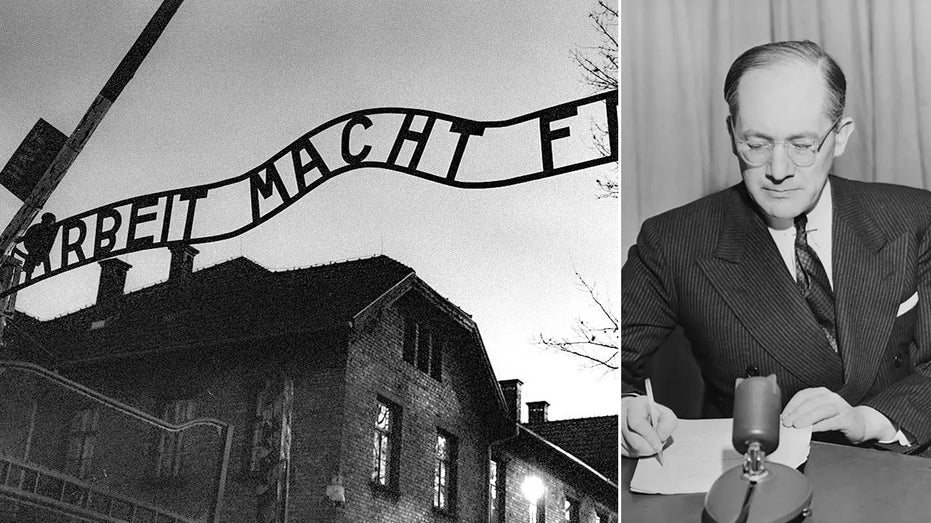
Joseph Lemkin, a relative of the Jewish lawyer who coined the term «genocide,» is pressing Pennsylvania officials to remove his family name from a nonprofit organization that accuses Israel of committing genocide in Gaza. The organization, the Lemkin Institute for Genocide Prevention and Human Security, has warned of genocide in Gaza since October 13, 2023, less than a week after Hamas attacks killed about 1,200 people and resulted in the capture of 251 hostages.
Joseph Lemkin, whose father was a cousin of Raphael Lemkin, is the sole survivor after his family of six was killed during the Holocaust. He told Fox News Digital that growing up as the son of a Holocaust survivor meant being followed by «a black cloud» that colored his entire life. His father raised funds for Raphael Lemkin's impoverished funeral when he died in 1959 and worked until weeks before his own death to fundraise for fellow Jewish Americans.
The dispute gained new urgency for Joseph when his teenage son showed him a social media post from the Lemkin Institute using the family name to accuse Israel of genocide. «Seeing the impact and how my son came across it made me really more concerned about it,» Lemkin said. He has worked with the European Jewish Association to submit a letter of complaint to the office of Pennsylvania Governor Josh Shapiro and to the state Department of State's Bureau of Corporations and Charitable Organizations. In June, Lemkin and his team sent letters to other Pennsylvania leaders. In April 2025, they submitted a 32-page legal submission and a 58-page evidentiary appendix in response to a request from Shapiro's office for additional information. Lemkin believes an investigation has been opened into the complaint.
Pennsylvania Department of State spokesman Geoff Morrow told Fox News Digital that the department «cannot confirm or deny whether any organization has had a complaint filed against it or is under investigation.» Governor Shapiro's office did not respond to requests for comment.
The Lemkin Institute for Genocide Prevention and Human Security has defended its use of the name. In an October 13, 2025 press release, the institute stated that «it is very hard to imagine that Raphael Lemkin would not have seen the genocidal dynamics of the present conflict early on, given his definition of the term and his historical studies.» The release added that the institute shares Raphael Lemkin's belief in the need for a Jewish national home but that this has not prevented it from seeing «the genocide before our eyes.»
The institute also pushed back on Joseph Lemkin's representation of the family. «Joseph Lemkin does not speak for the entire Lemkin family, nor does he officially represent a Lemkin estate,» the press release said. It noted that family members, including Peter Lemkin, in whose childhood home Raphael Lemkin was a frequent visitor, have been supportive of its work. In a statement to Fox News Digital, the institute said «there is no legal battle between the Lemkin Institute and the Lemkin family.» It explained that it was founded in 2016 or 2017 and renamed in 2021 to honor Raphael Lemkin, whose research and moral commitments influenced its founders. Because Raphael Lemkin died without heirs or an estate, there was no official family representative to contact for permission, the institute said. Peter Lemkin and another family member identified as supportive did not respond to requests for comment.
The complaint process now rests with Pennsylvania authorities, who have not confirmed any investigation. Joseph Lemkin said his goal is to keep the family name from being «turned on its head.» The institute maintains that its work is consistent with Raphael Lemkin's legacy and that it has support from other family members. The outcome could set a precedent for how nonprofit organizations use the names of historical figures when those figures' relatives object to their political activities.