Poland plans SMS warnings when jets scramble over threats from Ukraine
Warsaw is moving to link military air-defense responses with direct civilian messaging after a Russian Kh-101 crossed into Poland on July 30. The exact rules for the new RCB-based alerts are still being worked out.
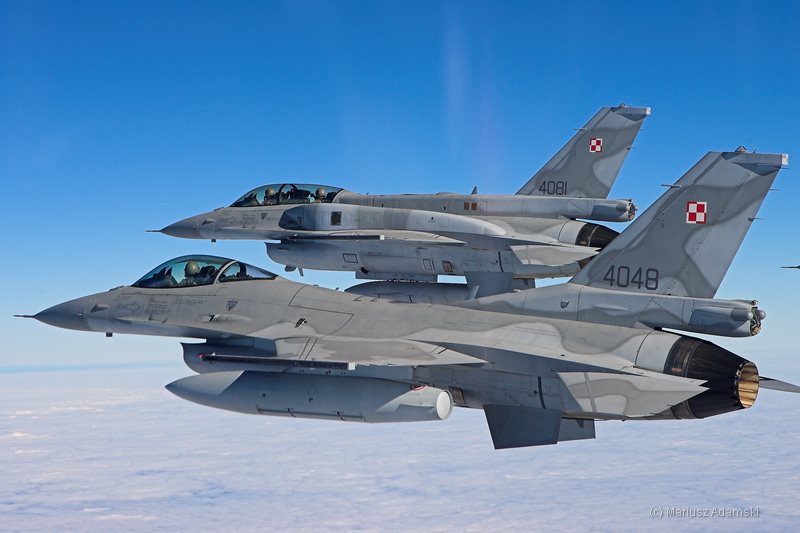
Poland is preparing to add direct text-message warnings to its response when military jets are scrambled because of a dangerous situation beyond the country’s eastern border, according to a report published Monday by RMF24.
The proposal follows a July 30 incident in which a Russian Kh-101 cruise missile crossed into Polish airspace during a large Russian attack on western Ukraine and later fell in the Lublin region. No one was injured and no damage was reported, but the episode exposed a gap between Poland’s military response and the way civilians were warned.
Magdalena Sobkowiak-Czarnecka, a secretary of state at Poland’s Ministry of National Defense, described the planned change in an interview with Wirtualna Polska, RMF24 reported. She said Poland wants to distribute more information through systems run by the Government Security Centre, known by its Polish acronym RCB, when Polish fighters are launched in response to a threat connected with the situation in Ukraine.
That wording matters. Poland has not announced that every Russian strike on Ukraine, or every Ukrainian air-raid warning, will automatically trigger a nationwide text in Poland. The new mechanism is being discussed around situations serious enough to prompt Polish military aviation to act. Sobkowiak-Czarnecka left the operating details to the Interior and Administration Ministry.
The distinction is more than bureaucratic. It separates routine awareness of a war next door from a moment when Polish authorities judge the risk to be significant enough to move combat aircraft.
During the night of July 29 into July 30, Russia was striking western Ukraine, including the Lviv area. Polish F-16s were sent up as part of the country’s air-defense response. RMF24, citing Poland’s Operational Command, said an unidentified object was detected at 3:40 a.m. An F-16 was directed to identify and intercept it, but the object disappeared from radar about six minutes later.
A military Mi-24 helicopter later located an impact crater near Tarnawa-Kolonia. Authorities identified the missile as a Russian Kh-101. It came down in an uninhabited area, which prevented injuries or property damage.
Poland’s Defense Ministry says the military side of the system responded correctly. The civilian warning side is now under review. Sobkowiak-Czarnecka said the Government Security Centre and the Interior Ministry are drawing lessons from the incident, with the General Staff and Operational Command participating in the work.
The proposed texts would build on an infrastructure Poland already uses for emergency warnings. RCB’s official guidance describes Alert RCB as an SMS system for extraordinary situations when there is a probability of a direct threat to life or health across a significant area.
People do not need to sign up for the service or install an app. Mobile operators send the messages to phones in a designated geographic area. RCB says the smallest area that can be targeted is a county-level district, or powiat.
What has not yet been established publicly is whether every message connected with a fighter scramble would formally be an Alert RCB under the system’s existing criteria, or whether authorities will use RCB infrastructure for a broader category of security information. The deputy defense minister referred to using RCB systems and said the Interior Ministry would determine how the mechanism works in detail.
That open question will shape how useful the reform becomes. A warning sent too broadly or too frequently risks becoming background noise. A message sent too late loses much of its preventive value. And a text that merely says fighter jets have taken off, without telling recipients whether they should take any action, may provide awareness but not protection.
The July incident illustrates why Poland is trying to close that gap. A missile launched as part of Russia’s war against Ukraine can move from a foreign battlefield into NATO airspace in minutes. Military commanders may already be tracking the threat while civilians in the potential path know little beyond hearing aircraft or seeing fragmented updates online.
For NATO, the episode is a small but concrete example of how the war is changing homeland-security routines on the alliance’s eastern flank. Air policing and fighter readiness are only one layer. Civilian warning systems, local emergency management and public communication have become part of the same chain.
Poland has not yet published the final threshold for sending the new messages, the geographic scope of a typical warning, or the wording recipients would see. Those details remain with the Interior Ministry and the agencies involved in the review.
For now, the verified change is narrower than some social-media versions of the story may suggest: Poland intends to provide SMS information when a dangerous situation linked to events in Ukraine leads to the scrambling of Polish fighters. It is a reform born from a real missile incursion, but it is not yet a fully specified automatic alert for every Russian attack.
78