Trump Tells U.N. Iran Faces Choice Between Deal and Destruction
In his address to the U.N. General Assembly, President Trump said Iran must choose between a negotiated agreement and being 'annihilated,' while Secretary-General António Guterres urged world leaders to end conflicts.
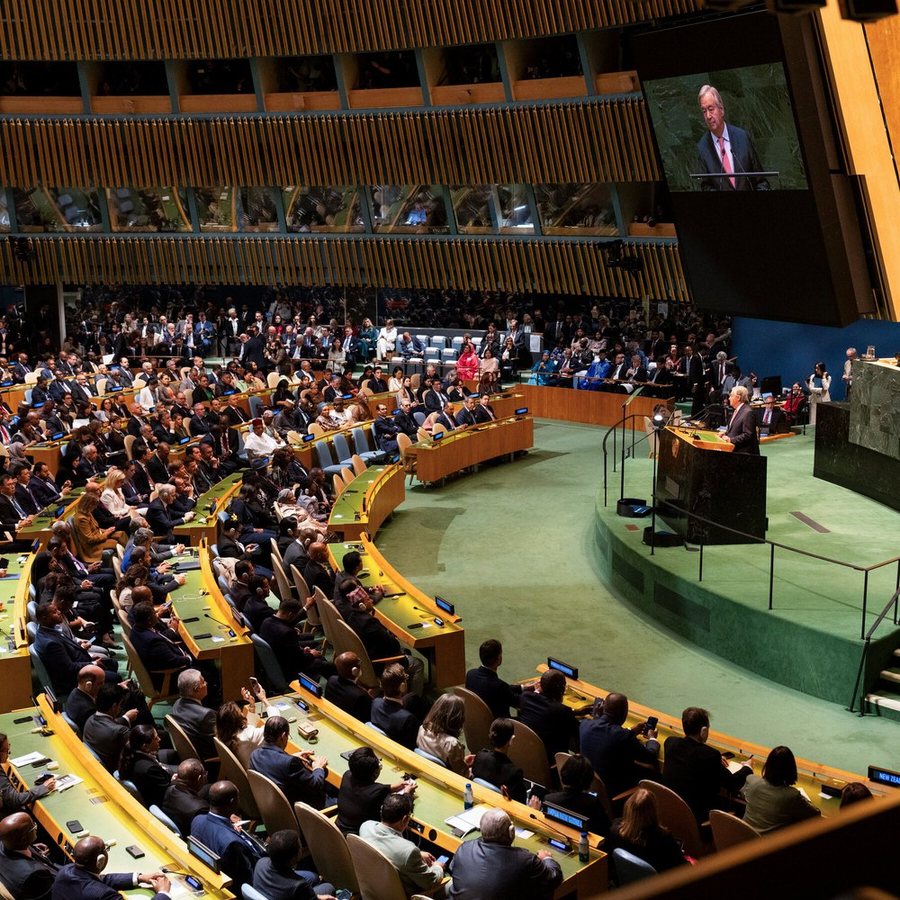
President Trump used his address to the United Nations General Assembly to deliver a stark warning to Iran, saying the country must decide between reaching a deal or facing destruction. Trump declared that Iran had been «the bully of the Middle East, but they are the bully no longer,» according to his remarks before the assembled world leaders.
The president framed the choice in blunt terms, telling the assembly that he faces a decision whether to «annihilate» Iran, a phrase that quickly drew international attention. The comments marked one of the most direct threats issued from the U.N. podium in recent memory, underscoring the heightened tensions between Washington and Tehran.
Trump's speech came as world leaders gathered in New York for the annual General Assembly session, a setting traditionally used for diplomatic appeals and multilateral engagement. His remarks, however, signaled a more confrontational posture, suggesting that the United States is prepared to take severe action if Iran does not comply with its demands.
Earlier in the day, U.N. Secretary-General António Guterres called on the General Assembly to end conflicts around the world. Guterres used his own address to urge member states to pursue peace and dialogue, a message that stood in contrast to Trump's warning. The secretary-general's appeal highlighted the organization's long-standing role as a forum for conflict resolution and collective security.
The president's comments about Iran were part of a broader address that touched on global security and American foreign policy. Trump has long been critical of the nuclear agreement that world powers reached with Iran in 2015, and he has repeatedly threatened to withdraw from the deal or renegotiate its terms. His latest remarks suggest that his administration is considering a more aggressive approach, potentially including military action.
Iran has not yet responded publicly to Trump's statement. The Iranian government has previously rejected U.S. demands to renegotiate the nuclear accord, insisting that it has complied with its obligations under the agreement. The other signatories to the deal — including Britain, France, Germany, Russia, and China — have urged the United States to remain in the pact.
The U.N. General Assembly session continues this week, with leaders from dozens of countries scheduled to speak. Trump's address is likely to dominate discussions on the sidelines, as diplomats assess the implications of his threat and consider how to respond. The White House has not provided further details on what specific actions the president might take.
Trump's language also drew attention because it came at the United Nations, an institution he has often criticized for inefficiency and for what he describes as an unfair burden on the United States. His decision to use the platform for such a direct ultimatum reflects his willingness to break with diplomatic norms and to project American power unilaterally.
The president's remarks are likely to heighten concerns among U.S. allies about the potential for a new conflict in the Middle East. European leaders have warned that a military confrontation with Iran could destabilize the region and disrupt global oil supplies. The United States has maintained a significant military presence in the Persian Gulf, and any escalation would carry serious risks.
As the General Assembly continues, the world will be watching to see whether Trump's warning leads to a diplomatic breakthrough or a deeper crisis. For now, his words have set a tense tone for the gathering, leaving little doubt that the United States is prepared to use force if its demands are not met.
5