NASA Astronaut Chris Williams Returns to Earth After 8 Months in Space
NASA astronaut Chris Williams, the nephew of political commentator Juan Williams, returned to Earth on July 26 after eight months aboard the International Space Station. His mission included 3,856 orbits, two spacewalks, and a month as the only American on the station after a crewmate’s medical evacuation.
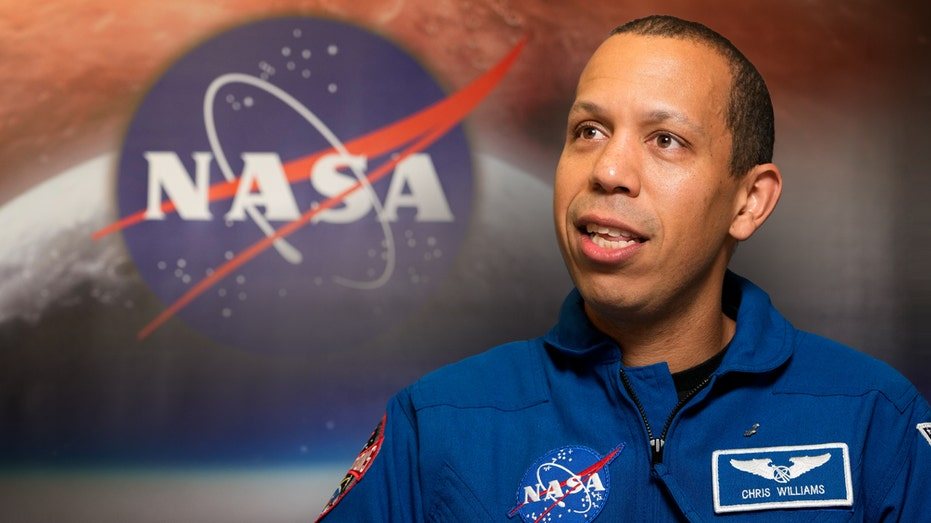
NASA astronaut Chris Williams returned to Earth on July 26 after spending eight months aboard the International Space Station, completing 3,856 orbits at about 17,000 miles per hour and performing two spacewalks before coming home. His re-entry brought a moment of relief and pride for his family, including his uncle, political commentator Juan Williams, who described it as a happy ending that defied the darker fate of fictional astronauts.
Williams, the grandson of Panamanian immigrants, grew up in a family that once dressed him in pajamas decorated with astronauts and planets. His father, Roger, took part in a Father’s Day service at Trinity Episcopal Church in Washington, D.C., where Chris appeared by video from orbit and was praised for growing «beyond every expectation.»
His final spacewalk lasted nearly eight hours, spent with fellow NASA astronaut Jessica Meir repairing robotic arms outside the station. Earlier in the mission, NASA ordered the crew to evacuate because of a possible air leak, and Williams took shelter in a small spacecraft. His wife and children in Houston, along with the wider family, waited anxiously for about two hours before NASA gave the word that he could go back inside.
There were also medical scares. In January, a fellow American astronaut aboard the station lost the ability to speak and was evacuated with other crew members. Williams remained behind and, for about a month, was the only American on the station. The episode underscored the risks of long-duration spaceflight, a central focus of Williams’s work.
During the mission, NASA scientists studied how zero gravity affects the brain, balance, and sense of direction. Williams also took part as a research subject, helping track how long-term space travel changes human eyes and bone density. The work is meant to help keep astronauts healthy on future missions to the moon and Mars. His background as a physicist and medical physicist made him well-suited to the task: he holds a physics degree from Stanford University, a doctorate from the Massachusetts Institute of Technology, and completed training in medical physics at Harvard Medical School.
He also became one of the station’s most visible science communicators. Students watched him float through the station and turn everyday zero-gravity problems into lessons. He pointed to the Velcro strips on his jumpsuit and walls, explaining that tools and samples would float away if not attached. In a widely shared demonstration, he released a bubble of water, watched it drift, and then pretended to be Pac-Man as he swallowed it from the air. His photography from orbit also attracted viral attention online.
The return came as the United States works to send astronauts back to the moon. This year, the U.S. sent the Artemis II mission around the moon as part of those preparations. For Williams’s family, the journey was also deeply personal: his uncle recalled watching him on NASA TV, «hanging by a tether» while floating through space, a sight he said was hard to put into words.
Juan Williams framed the homecoming as a symbol of American optimism at a time of national anxiety over war, inflation, and political polarization. In a May Pew Research Center survey taken before the nation’s 250th birthday, 59% of Americans said the country’s best days were behind them. Williams said his nephew’s mission offered a different message, one of achievement, curiosity, and the enduring drive to explore new frontiers.
The theme of exploration, he argued, runs through American history, from westward expansion to light bulbs, airplanes, and personal computers. He pointed to President John F. Kennedy’s description of the moon mission as a national goal that «served to organize and measure the best of our energies and skill.» Even figures like Henry Ford, he noted, were politically polarizing in their time, but their contributions to manufacturing and transportation outlasted the controversy.
«Project Hail Mary,» one of the year’s most popular movies, ends with an astronaut who never returns to Earth, and David Bowie’s 1969 hit about Major Tom described a space traveler drifting away for good. For the Williams family, reality turned out better. Chris Williams is back on the planet, and his eight-month voyage has become a story about what Americans can still accomplish when they aim high.