
MS NOW host blasts Graham Platner's resignation video as 'finger-pointing' after scandals sink campaign
MS NOW host Catherine Rampell criticized Graham Platner's resignation video for blaming external forces rather than taking responsibility for scandals that ended his Senate campaign.
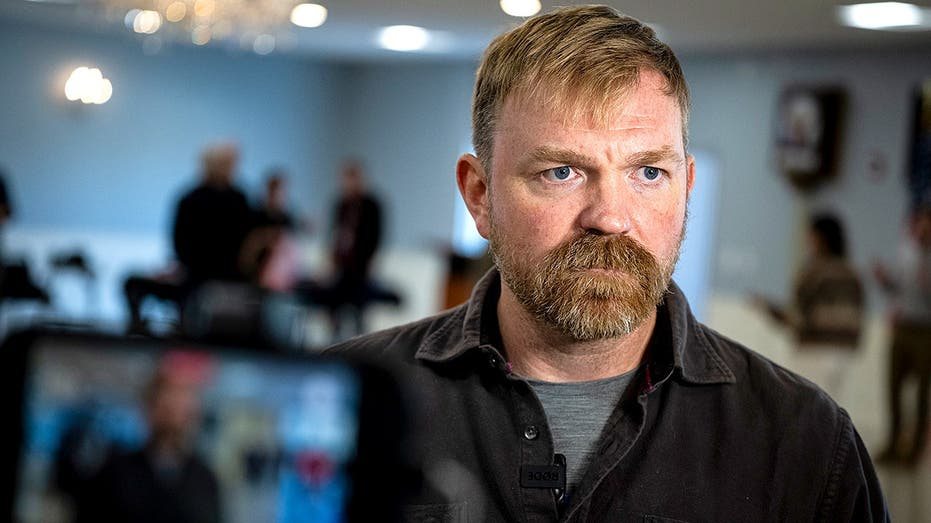
MS NOW host Catherine Rampell delivered a sharp critique of Graham Platner, the Democratic Senate nominee in Maine, after he suspended his campaign Wednesday night, accusing him of deflecting blame rather than taking responsibility for the controversies that derailed his bid. Rampell, speaking on the MSNBC program, played a clip of Platner's resignation video and then dissected his remarks, highlighting what she described as a pattern of finger-pointing.
Platner, a populist Democrat who had challenged Republican Senator Susan Collins, announced he was dropping out of the race just days after a bombshell rape allegation surfaced. The allegation came from Maine resident Jenny Racicot, who told CNN's Jake Tapper that, by dictionary definition, Platner had raped her. Platner has denied the accusation, calling it false, but the controversy proved insurmountable as other scandals also emerged.
Rampell noted that Platner's video blamed corporate media and the political establishment for his downfall, rather than acknowledging the series of scandals that had plagued his campaign. She quoted Platner as saying, 'All we were asking for was healthcare, was to end the genocide, to use our taxpayer dollars at home, to uplift our communities instead of waging war overseas. We were asking for a fair system. We are asking for an end to the corruption.' Rampell countered that the real reason for his suspension was 'the drip, drip, drip of scandal after scandal that has dogged his campaign.'
The host also pointed out that Platner's former allies, including Senator Bernie Sanders of Vermont and Representative Ro Khanna of California, had called on him to step aside. Sanders, who had endorsed Platner, broke his silence and urged the candidate to withdraw. Rampell emphasized that these figures, who share many of Platner's policy views, were not part of a nefarious establishment but rather individuals who recognized the gravity of the allegations.
Platner's campaign suspension came just one month after he won a landslide victory in Maine's June 9 Democratic Senate primary, and only five days before a critical deadline that would allow Democrats to replace him on the ballot for the general election. The timing added urgency to the situation, as party leaders scrambled to find a new nominee to challenge Collins, who is seeking reelection.
Beyond the rape allegation, Platner's campaign was marred by multiple other controversies. His ex-girlfriend Lyndsey Fifield accused him of removing condoms during intimacy and engaging in physical misconduct. The Platner campaign dismissed those claims as 'categorically false and politically motivated' in a statement to The Washington Post. Additionally, online comments from a now-deleted Reddit account surfaced, and a tattoo on Platner's chest that appeared to resemble a Nazi symbol drew scrutiny. Platner insisted the tattoo was of a skull and crossbones. He also faced allegations of exchanging sexually explicit messages with women while he was married. Platner has consistently denied all allegations of misconduct and violence.
In his resignation video, Platner framed his departure as a response to structural barriers rather than personal failings. 'What comes next needs to come from the people, needs to come from the people of Maine,' he said. 'It needs to be open, transparent and democratic. It needs to be reflecting the will and the values of the people that built this movement.' He added, 'We believe that for the movement to continue, it can't be me.'
Rampell dismissed this narrative, arguing that Platner was avoiding accountability. 'So lots of finger-pointing and blame — and not taking any responsibility,' she said. She noted that Platner's conception of the political establishment included his own former supporters, who had turned against him as the allegations mounted.
The fallout from Platner's campaign has broader implications for Democrats in Maine and beyond. Republicans have seized on the controversies to attack the party, with Republican National Committee Chair Joe Gruters charging that Democrats are 'completely stained' by their association with Platner. The race for Collins' seat, which was seen as a potential pickup for Democrats, now faces uncertainty as party officials work to field a replacement candidate.
Platner's decision to suspend his campaign marks a dramatic end to a once-promising insurgent bid that had drawn national attention and support from progressive figures. However, the cascade of scandals ultimately proved too damaging to overcome, leaving Democrats to regroup and Republicans to capitalize on the political fallout.
89