Judge Restricts BBC from Relitigating Jan. 6 in Trump Defamation Lawsuit
A federal judge ruled that the BBC can examine public interpretation of President Donald Trump's Jan. 6 speech but cannot relitigate the Capitol riot itself in the $10 billion defamation lawsuit over a misleading documentary edit.
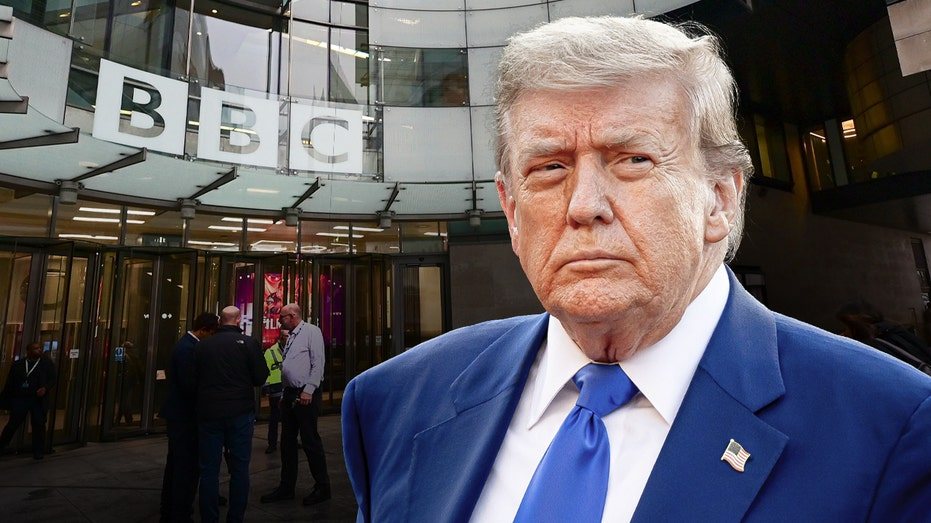
A federal judge has sharply limited the scope of President Donald Trump's $10 billion defamation lawsuit against the BBC, ruling that the broadcaster can investigate how Trump's January 6, 2021, speech was understood by the public but cannot relitigate the Capitol riot itself. The decision, issued by U.S. Magistrate Judge Enjoliqué Lett during a hearing in Miami, marks a significant procedural step in the high-stakes legal battle over a controversial BBC documentary.
The lawsuit stems from a 2024 episode of the BBC program "Panorama" titled "Trump: A Second Chance?" Critics charged that the documentary misleadingly edited Trump's remarks from his Jan. 6 speech. The program spliced together two statements the president made nearly an hour apart, making it appear as if he had directly called on supporters to "fight like hell" and walk to the Capitol just before the riot. In reality, Trump had first urged supporters to go to the Capitol and cheer on lawmakers, and only later, in a separate portion of the speech, used the phrase "fight like hell" in the context of election integrity. The BBC later acknowledged the editing error, with Chairman Samir Shah issuing a written apology to Trump, stating the documentary "gave the mistaken impression that [Trump] had made a direct call for violent action."
At the hearing, Trump's attorneys argued that the case should focus solely on the specific nine-second segment at issue, not on broader questions about the president's intent or the events of Jan. 6. "What matters is what he said relative to what was broadcast that he said. That's it," Trump lawyer Alejandro Brito told the judge, according to reports. Brito also cited Shah's apology as an admission of falsity. However, BBC attorney Sasha Dudding countered that the apology described the edit as unintentional and argued that the network should be allowed to explore the context of Trump's speech, including the president's own denial in the lawsuit that he bore responsibility for the riot.
Judge Lett drew a careful line. She ruled that the BBC may probe how Trump's supporters interpreted his statements, but the trial will not reexamine the cause or legality of the actual Capitol breach. "All of the impressions that were received by President Trump's statements on Jan. 6 are at issue," Lett said. "The full relitigation of Jan. 6 is not at issue." The judge also found that the BBC had overstepped in some requests to examine findings from previous investigations into the riot. A source close to Trump's legal team praised the ruling, saying it blocked the BBC's attempt to "create a distraction." The source argued that the broadcaster had no legal basis to "try the whole January 6 case" as a defense.
The controversy over the documentary first gained widespread attention after a whistleblower dossier compiled by Michael Prescott, a communications advisor hired by the BBC, was reported by The Telegraph. The dossier alleged that the network's edit wrongly implied Trump was calling for violence. The fallout led to the resignations of BBC CEO Deborah Turness and Director-General Tim Davie last year. Trump filed the lawsuit in December in a personal capacity, seeking $5 billion for defamation and another $5 billion for violation of Florida's Deceptive and Unfair Trade Practices Act, for a total of $10 billion. The case is being heard in federal court in Miami.
In a related development that drew media attention, Judge Lett also ordered Trump to hand over financial information as part of the discovery process. Trump's lawyers have criticized the BBC's broad requests as a "fishing expedition." The next steps in the case are expected to involve mediation, after both sides agreed on a mediator earlier this year. The ruling leaves the BBC with a narrower path to defend itself, as the judge prevented the broadcaster from turning the trial into a comprehensive review of the Jan. 6 attack. Legal analysts have suggested that Trump could win "considerable" damages if the case proceeds to trial, given the BBC's admission of error.
108