Iran Publicly Hangs Two Protesters in Isfahan Amid Crowd Outcry
Iran publicly executed two young men in Isfahan's Shahid Alikhani Square for their alleged roles in January's anti-government protests. Onlookers chanted 'Dishonorable' as security forces fired tear gas to disperse the crowd, according to opposition groups.
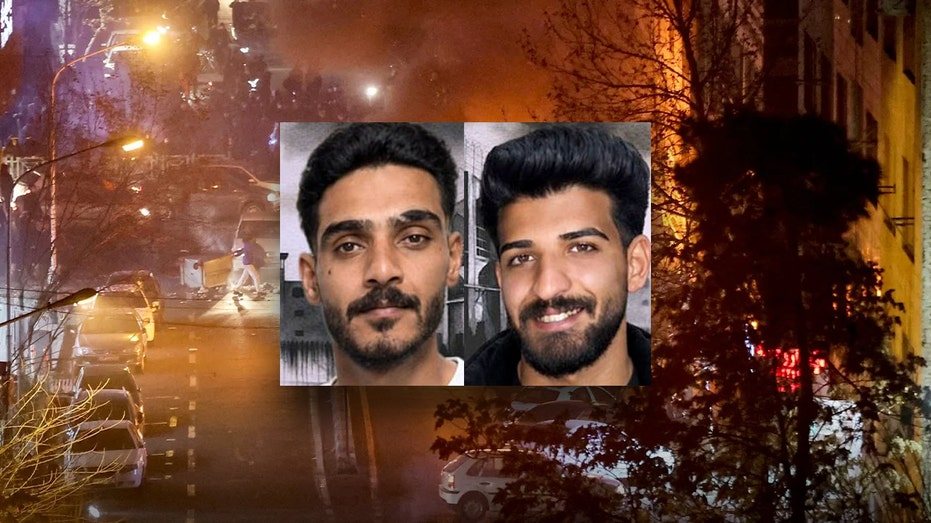
Iran publicly executed two young men on Tuesday in a highly controversial public hanging in Isfahan, drawing immediate condemnation from onlookers who chanted "Dishonorable, dishonorable!" before security forces fired tear gas to disperse the crowd. The executions took place in Shahid Alikhani Square, where authorities alleged the men had committed offenses connected to nationwide anti-government protests that began in late December and intensified in January.
The two men, identified as Abolfazl Sepahi Badjani and Amirhossein Safari Hosseinabadi, were hanged in the presence of a group of people, according to the National Council of Resistance of Iran (NCRI), an exiled opposition group, and Iranian state media. The NCRI reported that security personnel were deployed on rooftops and surrounding streets in anticipation of public backlash. Maryam Rajavi, president-elect of the NCRI, said in a statement that "fearing public outrage over this brutal crime, the regime's suppressive forces had deployed agents in the surrounding streets and on rooftops."
Iran's judiciary stated that Badjani and Hosseinabadi were convicted of moharebeh, or "enmity against God," and efsad-fil-arz, or "corruption on Earth," as well as destruction of public property and acts leading to the deaths of four security force members during demonstrations on January 8. Authorities also accused them of possessing firearms and Molotov cocktails. The judiciary claimed the men had legal representation, appealed their convictions, and were convicted using police reports, cellphone evidence, witness testimony, confessions, and a crime scene reconstruction.
However, the NCRI asserted that the defendants were denied the right to choose their own lawyers and that even court-appointed attorneys were not granted access to the case files. The two were among 12 protesters sentenced to death in what has become known as the Alikhani Square case. Two other defendants, Erfan Esfandiari and Gol Mohammad Mohammadi, were executed on July 19, bringing the total number of executions in the case to four. United Nations experts warned this week that the remaining defendants face an imminent risk of execution.
The U.N. experts issued a statement saying that the young men, aged between their late teens and early 20s, were "arbitrarily deprived of their liberty, in some cases being subjected to enforced disappearance, ill-treated and accused of involvement in the killing of four security force members, as well as arson and vandalism during the Jan. 8, 2026, protests." The experts noted that all defendants were sentenced to death during a single closed-door hearing without clarity about each individual's alleged responsibility, calling the proceedings a violation of international fair trial standards.
Human Rights Watch reported this week that at least 50 people have been executed over the past four months on vague national security charges. Mahmood Amiry-Moghaddam, director of Iran Human Rights, described the public executions as "a cruel form of state terror that the international community must not tolerate." He added that the Islamic Republic is trying to instill fear throughout society and deter future protests by resorting to "the medieval practice of public hangings."
The protests across Iran began in late December amid a deepening economic crisis before expanding into one of the largest anti-government movements in the Islamic Republic's history. The executions mark the latest escalation in Iran's crackdown on protesters arrested during the demonstrations, with human rights groups accusing authorities of denying due process, relying on coerced confessions, and carrying out executions after unfair trials.
113