Hegseth Faces Allied Resistance After Bullying Tactics, Report Says
Defense Secretary Pete Hegseth is struggling to secure international support for a naval coalition in the Strait of Hormuz, as European allies push back against what they describe as prior mistreatment by the Trump administration.
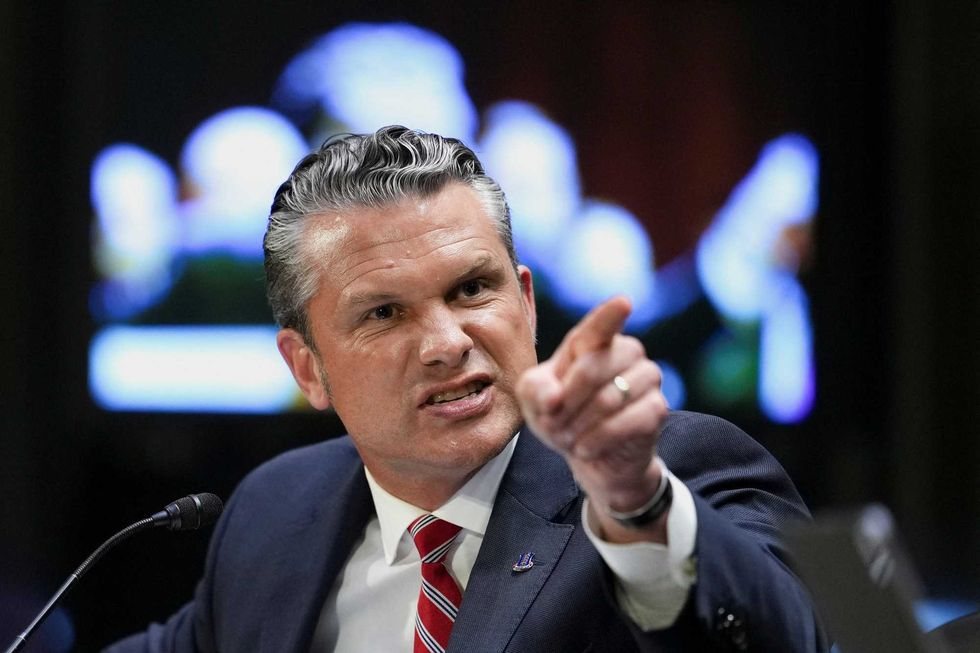
Defense Secretary Pete Hegseth is encountering significant obstacles in his efforts to enlist U.S. allies for a proposed naval coalition in the Strait of Hormuz, a development that underscores the diplomatic fallout from earlier confrontational tactics, according to a new report. The Pentagon chief has been pressing European partners to join an international force to patrol the critical waterway, but is facing deep skepticism, particularly from the United Kingdom and France, as a consequence of what allies describe as months of browbeating and a lack of consultation on Iran policy.
Politico reported Wednesday that Hegseth is specifically urging the United Kingdom and France to help lead the coalition. However, even with the assistance of U.K. Defense Minister Wes Streeting, the effort has met with reluctance across Europe, according to four British officials and one U.S. official cited in the report. European officials have expressed deep frustration over the Trump administration's treatment of longtime partners, tracing the tension back to February, when President Donald Trump launched airstrikes on Iran without prior consultation with Congress or key allies.
«There was no consultation with Congress, no consultation with allies, just boom,» Sen. Chris Coons (D-Del.) told Politico, summarizing the grievance that has eroded trust. America's closest ally, the United Kingdom, has drawn firm red lines. Streeting cautiously agreed to assist with maritime security but explicitly ruled out participation in further offensive operations. «The U.K. has not joined and will not join offensive U.S. military action in Iran,» Streeting said, maintaining a clear distinction between defending shipping lanes and supporting the Trump administration's broader escalation agenda.
The resistance reflects a broader problem for the administration. Coons articulated the dynamic, stating that Trump is «deeply frustrated that Congress isn't supporting it, the American people aren't supporting it, our core allies aren't supporting it. You can't be surprised when you throw a party and you don't invite anybody.» The episode highlights how the administration's unilateral approach to foreign policy, including airstrikes and public pressure on allies, has complicated efforts to build coalitions for shared security challenges.
The Strait of Hormuz is a vital maritime chokepoint through which about a fifth of the world's oil passes, making its security a matter of global economic concern. Iran has periodically threatened the waterway in response to Western pressure, increasing the urgency of international patrols. Hegseth's push for a coalition comes as the administration seeks to maintain pressure on Tehran while avoiding a full-scale military conflict. Yet the lack of allied buy-in could undermine both the credibility and the effectiveness of any naval mission.
Diplomatic observers note that the administration's approach has left little room for the kind of burden-sharing that typically characterizes multilateral operations. By failing to consult allies before major military actions and by adopting a confrontational tone, the Trump administration has eroded the goodwill that previous administrations cultivated over decades. The result, as seen in the current stalemate, is that even traditional partners like the United Kingdom are reluctant to fully commit to U.S.-led initiatives.
The report adds to a growing body of evidence that the administration's aggressive tactics have alienated both domestic and international stakeholders. Hegseth's predicament, as described by Politico, illustrates a fundamental strategic challenge: the same behavior that may have served to project strength in the short term has now returned to limit his ability to secure the cooperation that the United States needs to address complex security threats.
114