Carrying Bible in Northern Ireland Hospitals Could Be Crime Under Abortion Buffer Zone Laws, Police Guidance Says
New guidance from the Police Service of Northern Ireland clarifies that carrying a Bible, praying, or engaging in pastoral care within 100 meters of abortion facilities could be considered a criminal offense under the Abortion Services (Safe Access Zones) Act 2023, with no exemptions for clergy or religious intent.
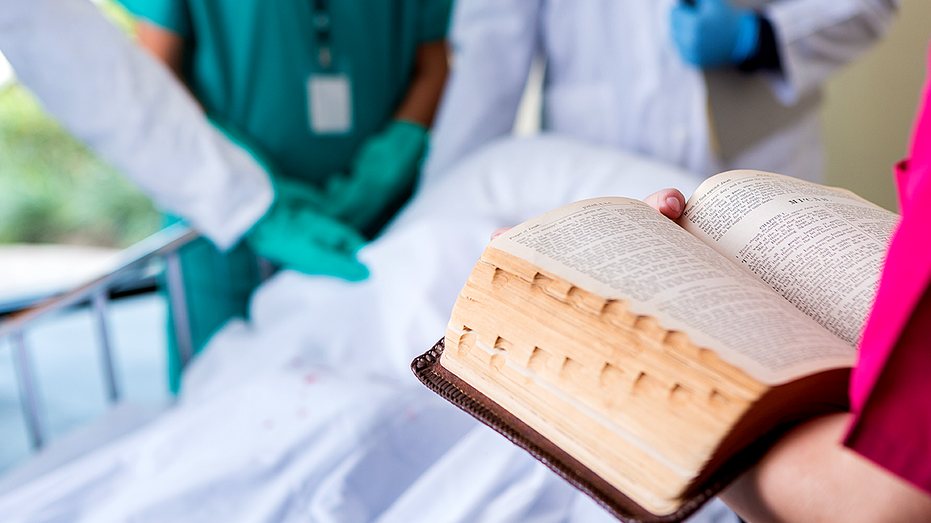
The Police Service of Northern Ireland has issued new guidance warning that carrying a Bible, reading Scripture, or praying with a patient inside hospital buffer zones could be treated as a criminal offense under the region's abortion safe access zone law. The guidance, released July 2 in response to a query from the Northern Ireland Policing Board, clarifies the scope of the Abortion Services (Safe Access Zones) Act 2023, which prohibits influencing, impeding access, or causing harassment, alarm, or distress to protected persons within 100 meters of facilities where abortions are performed.
The PSNI stated that the law makes no exemptions for clergy or religious identity, meaning that even consensual pastoral ministry, end-of-life prayer, or carrying religious texts could be deemed unlawful if the activity occurs within a protected zone and is recognized as potentially influencing or distressing a protected person. The guidance emphasizes that visible or passive religious practice may also constitute an offense, even when no direct approach or communication takes place.
“Describing conduct as pastoral, prayerful or religious in nature does not determine whether an offence has been committed,” the PSNI stated in its written response. “The test is not how the person describes their own behaviour – it is whether that behaviour, assessed objectively and in its full context, influenced, impeded, or caused distress to a protected person, or was reckless as to whether it did so.” The police service stressed that a religious person's intention behind the activity does not shield them from liability under the law.
The guidance follows the conviction of retired pastor Clive Johnston, 78, who was fined approximately $614 in May for preaching a sermon on John 3:16 near a hospital where abortions are performed. Johnston is believed to be the first person prosecuted under the law for a sermon that did not mention abortion, according to The Christian Institute, a faith-based advocacy group that supported his legal case. The group said the prosecution highlights the law's broad and vague application.
Pastor Jonathan Campbell of Newbuildings Independent Methodist Church in Londonderry expressed concern that the ruling and new guidance have left Christians in the United Kingdom uncertain about how to practice religious ministry in hospital settings without violating the law. “It’s unthinkable that the Bible, or even just clerical dress, could be off-limits on hospital grounds in case someone might find it offensive,” Campbell told Fox News Digital. “The Christian message is one of hope and comfort to those who are ill, worried and grieving. It cannot be the case that in Northern Ireland, church representatives are unable to comfort those in need.” He called on the U.K. government to urgently clarify that Christians remain free to express their faith on hospital grounds.
In a statement, a PSNI spokesperson said the police service is not seeking to police religion or lawful pastoral care. The spokesperson noted that while individuals retain rights to freedom of thought, conscience, religion, and expression, those rights are not absolute and must be balanced against the rights and protections contained in the legislation. The abortion legislation requires police to assess whether conduct within a buffer zone constitutes behavior criminalized by the law, the spokesperson added. “This is a fact-specific assessment. It is not determined solely by the presence of religious materials or the identity/role of the person involved,” the statement continued. “The guidance was issued to assist officers to interpret and apply the Act consistently in an operational environment where complaints may arise. It does not create new offences. It reflects the law as enacted.”
Ciarán Kelly, director of The Christian Institute, argued that the law is being interpreted in ways that threaten ordinary Christian ministry inside hospitals. “According to this guidance, a chaplain praying with parents mourning the loss of a child and then reading the famous words of Psalm 23 – The Lord is my shepherd – could fall foul of the law,” he said. “Indeed, it seems someone simply carrying a Bible through certain parts of a hospital could face a criminal investigation if someone thinks it could potentially influence a wholly unrelated abortion decision.” Kelly said that while he believes this was not the lawmakers' intention when drafting the law, its vague wording has created a very damaging chilling effect. “Patients do not lose the right to spiritual care because they happen to be in a hospital where abortions are also provided,” he continued. “The very suggestion that consensual prayer or Bible reading could ever become a criminal matter should concern everyone who values basic freedom.”
Johnston's case is part of a series of high-profile incidents involving Christians prosecuted under buffer zone laws in the U.K., drawing scrutiny from the U.S. State Department. The United States has said it is monitoring buffer zone cases in the U.K., as well as other acts of censorship affecting religious expression. The guidance has reignited debate over the balance between protecting access to abortion services and safeguarding religious freedom, with critics warning that the law's broad language could criminalize routine spiritual care in hospitals.
108